
The Pros and Cons of Buying a Fixer-Upper
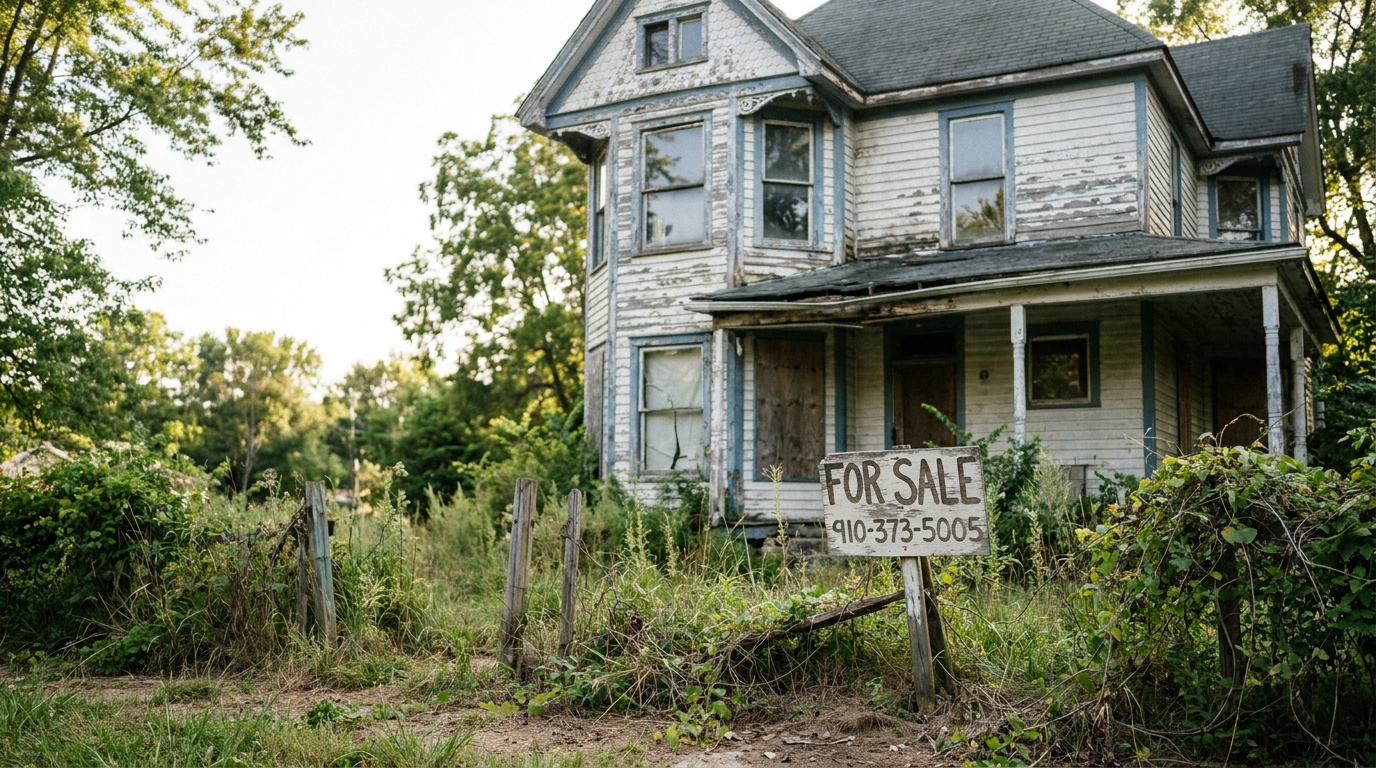
Buying a home that needs work can be one of the smartest financial moves you make — or one of the most expensive lessons you learn. Fixer-uppers attract buyers with the promise of below-market prices and the opportunity to build equity through sweat and strategy. But beneath peeling paint and dated kitchens, there can lurk problems that turn a dream project into a financial nightmare. Understanding both sides of the equation before you make an offer is the difference between a calculated risk and a costly mistake.
The Discount Reality: How Much Are You Actually Saving?
The most common draw of a fixer-upper is the price. Distressed properties typically sell at a 10% to 30% discount compared to move-in-ready homes in the same neighborhood, according to data from the National Association of Realtors. In hot markets, that discount can be narrower — closer to 10% to 15% — because competition drives up even imperfect properties. In slower or rural markets, discounts can occasionally exceed 30% when the home has significant structural or cosmetic issues.
The critical calculation is whether the purchase discount outpaces the cost of repairs. If a move-in-ready home in your target neighborhood sells for $400,000 and you find a fixer-upper at $320,000 (a 20% discount), you have $80,000 of theoretical cushion. Whether that cushion is enough depends entirely on what the house needs — which brings us to the real numbers behind renovation categories.
Top Renovation Cost Categories
Kitchen Remodels: A mid-range kitchen remodel costs between $26,000 and $82,000 depending on scope and location, according to Remodeling Magazine’s Cost vs. Value Report. Full gut renovations with custom cabinetry, new appliances, and layout changes can push well past $100,000. Minor refreshes — cabinet refacing, new countertops, updated fixtures — can land between $10,000 and $20,000 and often recoup a strong percentage at resale.
Bathroom Updates: A mid-range bathroom remodel averages $24,000 to $35,000 for a full replacement of fixtures, tile, and vanity. A primary bathroom expansion with double vanities, walk-in showers, and heated floors can reach $50,000 or more. Basic cosmetic updates hover around $5,000 to $12,000.
Roof Replacement: Replacing a standard asphalt shingle roof on a 2,000-square-foot home typically costs $8,000 to $15,000. Metal roofing runs significantly higher, from $15,000 to $30,000. Roof issues are non-negotiable — a failing roof leads to water intrusion, which cascades into mold, rot, and structural damage.
Electrical Systems: Upgrading an outdated or undersized electrical panel costs $1,500 to $4,000. Rewiring an entire home — often necessary in older houses — ranges from $8,000 to $20,000 or more depending on square footage and accessibility. Permits and inspections add to the total.
HVAC Systems: Replacing a central heating and cooling system runs $5,000 to $12,500 for a standard installation. In older homes without existing ductwork, adding forced-air systems can push costs to $25,000 or higher. Heat pump systems, increasingly popular for their efficiency, cost $4,000 to $8,000 installed.
Hidden Surprises That Can Blow Your Budget
The visible problems in a fixer-upper are actually the easy part. It’s what hides behind the walls and beneath the floors that creates the real risk.
Foundation Issues: Foundation repairs are among the most feared items in a home inspection report. Minor crack repairs can cost $500 to $3,000, but significant settling, bowing walls, or pier-and-beam failures commonly run $10,000 to $40,000. Severe cases requiring underpinning or full foundation replacement can exceed $100,000. Always request a separate structural engineer’s evaluation if your inspector flags any foundation concerns.
Asbestos: Homes built before 1980 may contain asbestos in insulation, floor tiles, popcorn ceilings, roof shingles, or pipe wrapping. Undisturbed asbestos is often left in place, but renovation work disturbs it — triggering required professional abatement. Asbestos removal costs typically range from $1,500 to $3,000 for localized areas and up to $30,000 for whole-home remediation, according to the Environmental Protection Agency guidelines on asbestos-containing materials.
Knob-and-Tube Wiring: Found in homes built before the 1940s, knob-and-tube wiring lacks a ground wire and cannot safely handle modern electrical loads. Many insurance companies refuse to cover homes with active knob-and-tube, or charge significantly higher premiums. Full replacement often overlaps with the general rewiring costs mentioned above but can be complicated by plaster walls, which are harder to access than standard drywall.
Lead Paint: Homes built before 1978 may have lead-based paint. While intact lead paint is not an immediate hazard, sanding or disturbing it during renovation creates serious health risks. Lead paint testing costs $250 to $700, and full abatement can run $10,000 to $30,000 depending on the size of the home and the extent of affected surfaces. The EPA’s Renovation, Repair and Painting Rule requires certified contractors for work in pre-1978 homes.
Financing Your Fixer-Upper
One of the biggest misconceptions among first-time fixer-upper buyers is assuming they need all-cash to make the deal work. In reality, several financing products are specifically designed for renovation purchases.
FHA 203(k) Loan: The Federal Housing Administration’s 203(k) program allows buyers to finance both the purchase price and renovation costs in a single loan. The standard 203(k) is used for major structural repairs and requires a HUD-approved consultant. The limited (formerly “streamlined”) 203(k) covers up to $35,000 in repairs and is designed for cosmetic upgrades. Down payment requirements start at 3.5%, making this accessible for buyers with limited cash. The trade-off is a complex approval process, required contractor bids upfront, and FHA mortgage insurance.
Conventional Renovation Loans: Fannie Mae’s HomeStyle Renovation loan and Freddie Mac’s CHOICERenovation loan are conventional equivalents to the 203(k). They allow higher loan limits, include primary and investment properties, and often have fewer restrictions on renovation scope. Down payments start around 5%, and mortgage insurance can be removed once you reach 20% equity — an advantage over FHA products.
HELOC After Close: Some buyers purchase a fixer-upper with a standard conventional loan and then tap a Home Equity Line of Credit once they’ve built equity through renovations or market appreciation. This works best when the home’s post-renovation appraised value rises significantly above the purchase price, giving the lender sufficient collateral. HELOCs currently carry variable interest rates that can fluctuate, so this approach requires careful financial planning and an understanding of rate risk.
DIY vs. Hiring Contractors: Finding the Right Split
Labor typically accounts for 30% to 50% of total renovation costs, so your ability and willingness to do work yourself has a direct impact on the project’s economics. However, not all work is DIY-appropriate.
Tasks well-suited for competent DIYers include painting, tile work, cabinet installation, flooring, landscaping, and basic demolition. These are areas where mistakes are recoverable and permits are not always required. On the other end of the spectrum, electrical, plumbing, structural work, roofing, and HVAC should almost always involve licensed professionals. Unpermitted work in these categories can void your homeowner’s insurance, cause problems at resale, and create genuine safety hazards.
A smart hybrid approach targets licensed contractors for structural, mechanical, and permit-required work while reserving cosmetic and finishing work for yourself. This combination can reduce overall labor costs by 20% to 35% while keeping the most critical systems code-compliant and insurable.
Renovation Timeline Reality
Most first-time fixer-upper buyers significantly underestimate how long a renovation takes. A bathroom remodel that a contractor quotes as a two-week job often stretches to four to six weeks once permits are factored in, materials are ordered, and tradespeople are sequenced. Whole-home renovations that buyers expect to finish in three to four months commonly run six to twelve months.
The ripple effect is financial as well as logistical. If you’re paying rent somewhere else while the renovation runs over schedule, carrying costs mount quickly. A mortgage of $1,800 per month plus $1,500 in rent adds up fast over six additional months of unexpected delays. Build a 20% to 30% schedule buffer into your planning timeline, and a 15% to 20% contingency fund into your renovation budget. These numbers feel conservative until the moment they become necessary.
Pre-Offer Inspection Checklist
Before making an offer on a fixer-upper, conduct or commission a thorough walkthrough using this checklist as a minimum baseline:
- Foundation and structure: Look for cracks wider than 1/8 inch, doors that stick or won’t close, floors that slope, and walls that bow inward or outward
- Roof condition: Check age of shingles, visible sagging, missing or curling material, and condition of flashing around chimneys and skylights
- Water intrusion: Stains on ceilings, walls, and in basement or crawl space; musty smells; efflorescence (white mineral deposits) on concrete
- Electrical panel: Identify brand (certain panels like Federal Pacific and Zinsco have documented failure rates), age, amperage, and presence of knob-and-tube or aluminum branch wiring
- Plumbing: Note pipe material (galvanized steel pipes in older homes corrode internally), water pressure, drain speed, and presence of any polybutylene pipe
- HVAC: Ask for service records, check age of units, inspect ductwork for disconnections or significant leakage
- Asbestos and lead indicators: Note construction date and the presence of floor tiles, popcorn ceilings, or pipe insulation that may warrant testing
- Crawl space and attic: Check for adequate insulation, ventilation, pest evidence, and moisture damage
- Windows and exterior: Assess condition of caulking, siding, grading (ground should slope away from foundation), and condition of all window seals
Always follow up with licensed specialists — structural engineer, electrician, HVAC technician — for any item flagged by your general home inspector.
Fixer or Skip: A Decision Framework
Before making a final decision on any distressed property, answer these five questions honestly:
- Does the discount exceed realistic renovation costs plus a 15% contingency? If your $80,000 discount is facing $75,000 in likely repairs, the margin is dangerously thin.
- Are the problems cosmetic or structural? Cosmetic issues are manageable and predictable. Structural, foundation, or systems issues are not.
- Can you finance the full scope of work? If the purchase price maxes out your financing and you have no cash reserve for renovations, you are likely undercapitalized for a fixer project.
- Do you have the bandwidth for the timeline? If you need to be in the home in 60 days or can’t absorb carrying costs during a 12-month renovation, the project may not fit your life circumstances.
- Is the neighborhood trajectory upward? Even a beautifully renovated home will underperform at resale in a declining market. Confirm that comparable sales support your expected post-renovation value.
If you can answer yes to all five, a fixer-upper can be an exceptional wealth-building vehicle. If two or more answers are no — or honestly unclear — consider whether the risk profile matches your financial position and risk tolerance. There is no shame in passing on a project that doesn’t pencil out. The goal is a home that builds wealth, not one that consumes it.
Sources and Further Reading:
- Remodeling Magazine, Cost vs. Value Report — www.remodeling.hw.net/cost-vs-value
- National Association of Realtors, distressed property pricing data — www.nar.realtor/research-and-statistics
- U.S. Department of Housing and Urban Development, FHA 203(k) Loan Information — www.hud.gov/program_offices/housing/sfh/203k
- Fannie Mae HomeStyle Renovation Loan — www.fanniemae.com/homebuying-guide/homestyle-renovation
- EPA, Asbestos in the Home — www.epa.gov/asbestos/asbestos-your-home
- EPA, Renovation, Repair and Painting Rule (Lead Paint) — www.epa.gov/lead/renovation-repair-and-painting-program
- HomeAdvisor/Angi, national cost estimator for home projects — www.angi.com/cost-guides
