
Why Walking Might Be Better Than the Gym
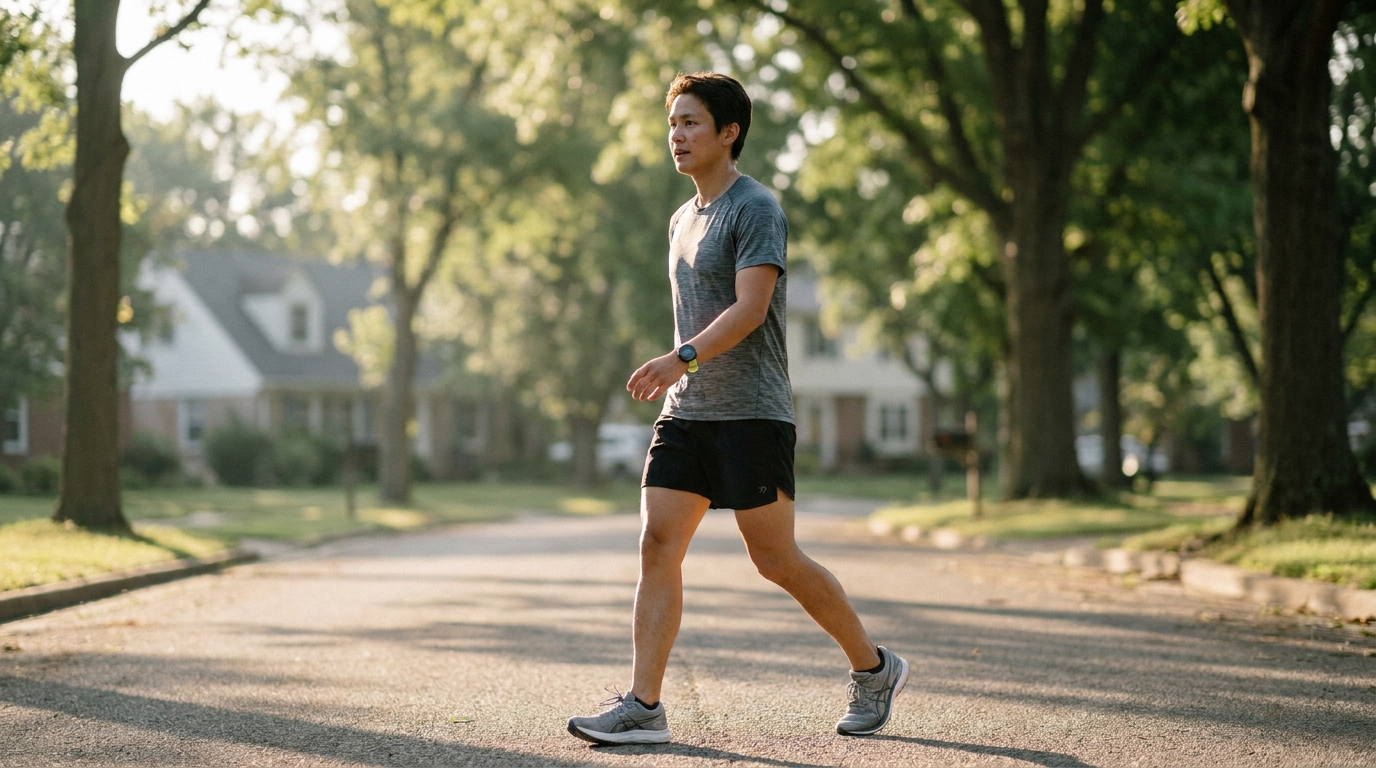
The gym has long been celebrated as the gold standard of fitness. Rows of gleaming machines, barbells loaded with iron, and the collective hum of effort have made it synonymous with “working out.” But a growing body of research is quietly challenging that assumption. Walking — yes, the thing you do to reach the refrigerator — is proving itself to be one of the most powerful, accessible, and underrated tools for long-term health. This article breaks down exactly why walking can rival a gym membership, where it falls short, and how to combine both for an approach that actually fits real life.
The Research Behind 7,000–10,000 Steps and Mortality
The famous “10,000 steps” target originated not from science but from a Japanese marketing campaign for a pedometer in 1965. That hasn’t stopped researchers from investigating it, and what they found is remarkably compelling — with some nuance worth knowing.
A landmark 2021 study published in JAMA Internal Medicine followed over 4,800 adults and found that walking approximately 7,000 steps per day was associated with a 50–70% lower risk of mortality compared to walking fewer steps. Crucially, benefits plateaued around 7,000–10,000 steps for older adults, suggesting you don’t need to obsessively chase higher numbers. A separate 2019 study in JAMA Internal Medicine led by Dr. I-Min Lee of Harvard found that women who averaged around 4,400 steps per day had significantly lower mortality rates than those walking 2,700, with benefits leveling off near 7,500 steps.
The takeaway is clear: moving your body consistently across the day, accumulated through something as democratic as walking, has real, measurable consequences for how long and how well you live. You don’t need a barbell to access those benefits.
Brisk Walking vs. Strolling: Intensity Matters
Not all walking is created equal. The difference between a casual stroll and a purposeful, brisk walk is the difference between a gentle warm-up and genuine cardiovascular training.
The American Heart Association defines brisk walking as a pace that elevates your heart rate and breathing — typically around 3 to 4.5 miles per hour, where you can still hold a conversation but feel mildly breathless. Research consistently shows that brisk walking delivers stronger cardiovascular benefits than slow strolling at the same step count. A 2022 meta-analysis in the British Journal of Sports Medicine found that faster walking pace was independently associated with lower risk of cardiovascular disease, cancer, and all-cause mortality.
A practical way to gauge effort is the “talk test”: if you can sing, you’re strolling; if you can speak in short sentences but not perform an aria, you’re brisk walking. For those who prefer numbers, brisk walking typically lands in the Zone 2 heart rate range (roughly 60–70% of max heart rate), which is associated with aerobic efficiency and metabolic health — the same intensity elite endurance athletes prioritize for a significant portion of their training.
Rucking: How a Weighted Vest Turns a Walk Into Strength Training
One of walking’s most cited limitations is that it doesn’t build muscle. Rucking challenges that assumption directly. Rucking — walking with a loaded backpack or weighted vest — has roots in military training and has entered mainstream fitness culture through communities like GORUCK and the broader functional fitness movement.
Adding 10 to 30 pounds to your body during a walk dramatically increases the muscular demand on your legs, glutes, core, and posterior chain. Research on weighted walking shows increased caloric expenditure of 30 to 40% compared to unloaded walking at the same pace. Over time, rucking builds functional lower-body and back strength, improves posture, and elevates cardiovascular demand without the joint stress of running.
A weighted vest is one of the more cost-effective tools you can add to your routine. Quality weighted vests range from $50 to $200, with well-reviewed options from brands like Henkelion, Rogue, and Bear Komplex. Entry-level rucksacks suitable for rucking start around $30 to $60, while purpose-built GORUCK bags range from $195 to $395 depending on the model. For someone already walking daily, the marginal investment of adding weight is one of the simplest ways to extract more physiological benefit from existing behavior.
Hill Walking and Zone 2 Cardio
Flat-ground walking is valuable, but hill walking is where things get genuinely interesting from an exercise physiology standpoint.
Zone 2 cardio — sustained aerobic effort at a moderate intensity — has become a buzzword in longevity and performance circles, championed by researchers and physicians like Dr. Peter Attia. The benefits include improved mitochondrial density, better fat oxidation, and cardiovascular efficiency. The challenge with traditional gym-based Zone 2 (stationary bikes, ellipticals) is that it can be mind-numbingly boring.
Hill walking naturally induces Zone 2 without requiring you to monitor a screen. Walking up even a modest incline of 5 to 8% elevates heart rate into that target range for many people, delivering the same mitochondrial adaptations as a cycling session. Research on incline walking shows it also increases activation of the glutes and hamstrings by up to 635% compared to flat walking, according to a study published in the Journal of Biomechanics. For those without hills, a treadmill incline of 8 to 15% accomplishes the same thing.
If you’re hiking actual terrain, the added cognitive engagement of navigating a trail compounds the mental health benefits — which are covered below.
Recovery and Joint Impact: Walking’s Hidden Advantage
Here is where walking genuinely outperforms many gym modalities: it is extraordinarily easy on the body. Running produces ground reaction forces of 2.5 to 3 times body weight with each stride. Heavy barbell squats, deadlifts, and jumps all carry injury risk that requires careful programming, adequate recovery, and technical proficiency to manage.
Walking, even brisk or loaded walking, produces ground reaction forces close to 1 to 1.2 times body weight. This makes it accessible to people with knee issues, lower back sensitivity, and those recovering from injury. For gym-goers who train hard two to four days per week, walking on off days functions as active recovery — promoting blood flow, reducing muscle soreness, and keeping the aerobic system engaged without adding meaningful training stress. This is one reason many strength coaches explicitly program daily walking alongside lifting blocks rather than treating them as mutually exclusive.
Mental Health and Creativity: The Underrated Return
The psychological benefits of walking may be its most underappreciated selling point. A 2014 study from Stanford University found that walking — particularly outdoors — increased creative output by approximately 60% in participants, with benefits persisting even after they sat back down. This divergent thinking boost occurs regardless of whether the walk is indoors or outdoors, though outdoor walks have the edge.
On the mental health front, research published in JAMA Psychiatry has found that even modest increases in physical activity — including walking — are associated with meaningful reductions in depression risk. Walking in natural environments specifically reduces activity in the brain’s subgenual prefrontal cortex, a region associated with rumination and negative self-referential thought, according to a 2015 study from Stanford.
For many people, a walk is the most reliable mood regulation tool they have access to daily. It requires no equipment, no commute, and no social performance. That frictionlessness is itself a feature.
Why the Gym Still Wins for Muscle Mass
With all of these walking benefits laid out, it would be dishonest not to acknowledge where walking simply cannot compete: building and maintaining skeletal muscle mass.
Progressive resistance training — lifting weights that challenge the muscle and are gradually increased over time — creates a mechanical stimulus that walking, even loaded walking, cannot fully replicate. Muscle mass is a critical determinant of metabolic health, insulin sensitivity, fall prevention in aging, and even cognitive resilience. Research consistently shows that adults lose 3 to 8% of muscle mass per decade after age 30 without resistance training, a process called sarcopenia.
A weighted vest walk is not a substitute for a properly programmed squat, Romanian deadlift, row, or press. The gym — or home-based resistance training — remains irreplaceable for anyone who wants to preserve or build lean tissue. The goal is not to choose between walking and lifting, but to understand what each does best.
The Walk + 2x Lift Template
A practical template that leverages the strengths of both approaches looks something like this:
Monday: Strength training (full body or upper focus, 45–60 minutes)
Tuesday: 30–60 minute brisk walk or ruck
Wednesday: Strength training (full body or lower focus, 45–60 minutes)
Thursday: 30–60 minute hill walk or incline treadmill session
Friday: Strength training (optional) or rest
Saturday: Longer walk, hike, or ruck (60–90 minutes)
Sunday: Easy walk or full rest
This structure satisfies step count goals, delivers Zone 2 cardio across the week, provides the active recovery that makes lifting sustainable, and keeps strength training at a frequency sufficient for muscle maintenance and growth. Total gym time sits at roughly 90 to 120 minutes per week — an achievable commitment for most adults — while daily walking handles the cardiovascular, metabolic, and mental health load.
Walking won’t win a bodybuilding competition. But it may help you live longer, think more clearly, recover faster, and feel better across the full span of your life. In a fitness culture obsessed with intensity, the humble walk is the long game hiding in plain sight.
This article is intended for general informational purposes only and does not constitute medical advice. Consult a qualified healthcare professional before beginning any new exercise program.
Sources and Further Reading:
– Saint-Maurice PF, et al. (2020). Association of Daily Step Count and Intensity With Mortality Among US Adults. JAMA Internal Medicine. https://jamanetwork.com/journals/jamainternalmedicine/fullarticle/2734709
– Lee IM, et al. (2019). Association of Step Volume and Intensity With All-Cause Mortality in Older Women. JAMA Internal Medicine. https://jamanetwork.com/journals/jamainternalmedicine/fullarticle/2734766
– Stamatakis E, et al. (2022). Pace and All-Cause Mortality. British Journal of Sports Medicine. https://bjsm.bmj.com/content/56/22/1324
– Oppezzo M & Schwartz DL. (2014). Give Your Ideas Some Legs: The Positive Effect of Walking on Creative Thinking. Journal of Experimental Psychology. https://psycnet.apa.org/record/2014-14435-001
– Bratman GN, et al. (2015). Nature Experience Reduces Rumination. PNAS. https://www.pnas.org/doi/10.1073/pnas.1510459112
– GORUCK Bags: https://www.goruck.com
– Rogue Weighted Vest: https://www.roguefitness.com
– Bear Komplex Weighted Vest (Amazon): https://www.amazon.com
