
Why Walking Might Be Better Than the Gym
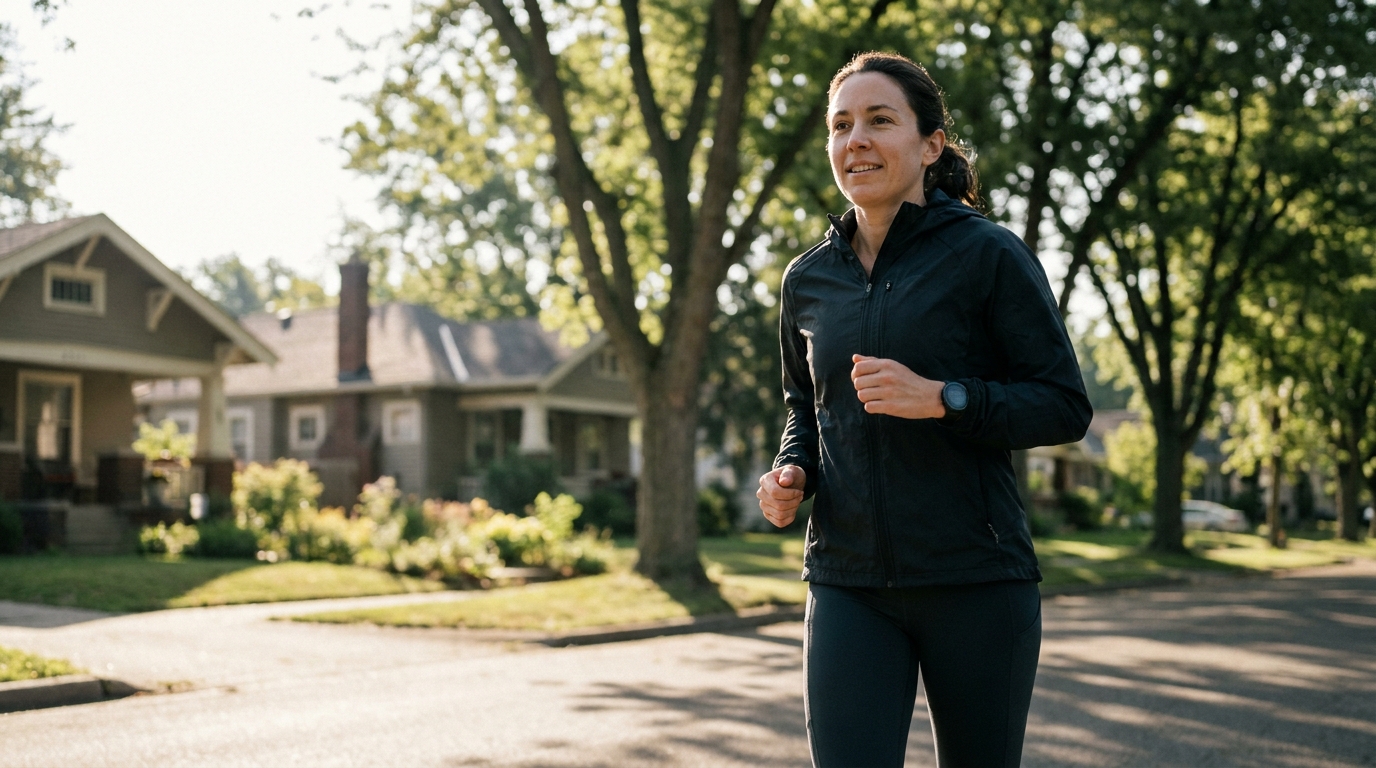
Most people treat exercise as an either/or decision: you either join a gym or you don’t bother. But a growing body of research suggests that one of the most ancient forms of human movement — walking — can deliver health benefits that rival, and in some specific areas even surpass, what people achieve through structured gym training. That doesn’t mean you should cancel your membership tomorrow, but it does mean that if you’ve been dismissing your daily walk as “not real exercise,” it’s time to reconsider.
What the Research Says About Steps and Mortality
The idea that 10,000 steps per day is the golden target is more marketing than medicine — it originated from a Japanese pedometer campaign in the 1960s. The actual science tells a more nuanced, and in some ways more encouraging, story.
A landmark 2021 study published in JAMA Internal Medicine tracked over 4,800 adults and found that people who walked around 7,000 steps per day had a 50–70% lower risk of early death from all causes compared to those walking fewer than 7,000 steps. Crucially, the benefits plateaued after about 10,000 steps for younger adults, and even earlier — around 6,000–8,000 steps — for those over 60. More steps beyond that threshold didn’t meaningfully add to longevity outcomes.
A 2022 meta-analysis in The Lancet Public Health reinforced these findings across 15 studies and nearly 50,000 participants, concluding that each additional 1,000 steps per day was associated with a 15% reduction in all-cause mortality — up to a point. The takeaway isn’t that more is always better, but that consistent moderate-volume walking is a genuinely powerful health intervention, not just a light warm-up for “real” exercise.
Brisk Walking vs. Strolling: Intensity Actually Matters
Not all walking is created equal. The speed and effort at which you walk dramatically changes its physiological impact. A casual window-shopping stroll is pleasant but metabolically mild. Brisk walking — typically defined as a pace fast enough to raise your heart rate and make conversation slightly effortful, roughly 3 to 4.5 mph for most people — enters cardiovascular training territory.
Research from the British Journal of Sports Medicine found that brisk walkers had significantly lower risks of cardiovascular disease, type 2 diabetes, and certain cancers compared to slow walkers, even when total step counts were similar. This suggests that intensity is an independent variable worth paying attention to.
A practical way to gauge brisk walking is the “talk test”: you should be able to speak in short sentences but not hold a fully comfortable, uninterrupted conversation. If you’re strolling and narrating a podcast recap with ease, you’re probably not working hard enough to tap into meaningful cardiovascular adaptations.
Rucking and Weighted Vests: Adding the Strength Dimension
One of the legitimate criticisms of walking as a standalone workout is that it provides minimal resistance stimulus. Your muscles aren’t being challenged enough to grow or maintain mass in the way that lifting weights demands. Rucking — walking with a weighted backpack — directly addresses that gap.
Popularized in military training and brought to mainstream fitness largely through companies like GORUCK, rucking adds load to a movement your body already knows, increasing caloric burn, muscular engagement across the posterior chain (glutes, hamstrings, lower back, and upper back), and cardiovascular demand without the joint stress of running.
Studies on load carriage suggest that adding 10–20% of your body weight in a pack can increase energy expenditure by 30–45% compared to unweighted walking at the same pace. A weighted vest achieves a similar effect with more evenly distributed load, making it slightly easier on the spine for some users.
For beginners, starting with 10–15 lbs and building gradually is advisable. Quality rucksacks from GORUCK typically range from $195–$395, while reliable weighted vests from brands like Hyper Vest or 5.11 Tactical run between $80–$200 depending on capacity and fit.
Hill Walking and Zone 2 Cardio
Zone 2 cardio has become one of the most discussed concepts in longevity and performance circles, largely due to the influence of physicians and researchers like Dr. Peter Attia. Zone 2 refers to aerobic exercise performed at roughly 60–70% of your maximum heart rate — an intensity where your body primarily burns fat, builds mitochondrial density, and improves metabolic efficiency without excessive recovery cost.
The challenge is that for reasonably fit individuals, flat walking often doesn’t elevate heart rate enough to reach Zone 2. Hill walking solves this elegantly. Walking uphill at a moderate-to-brisk pace — whether outdoors or on a treadmill with incline — can push your heart rate squarely into Zone 2 without the joint impact of jogging. It also activates the glutes and calves more aggressively than flat walking.
Treadmill incline walking has become a popular indoor protocol for exactly this reason. The “12-3-30” method — 12% incline, 3 mph, 30 minutes — went viral on social media for good reason: it delivers a meaningful Zone 2 stimulus for most people and is highly repeatable. For outdoor walkers, finding routes with sustained elevation or deliberately choosing hillier paths achieves the same effect.
Recovery and Joint Impact: Walking’s Underrated Advantage
One of the areas where walking genuinely outperforms intensive gym training is recovery. High-intensity resistance training and vigorous cardio create muscular damage that requires 24–72 hours of recovery. That’s not a flaw — it’s the mechanism by which muscles grow. But it also limits training frequency and can accumulate fatigue if managed poorly.
Walking, by contrast, is low-impact and actively promotes recovery. It increases circulation, helps clear metabolic byproducts like lactate, reduces muscle stiffness, and keeps the lymphatic system moving. Many elite athletes use walking as an active recovery tool on rest days for exactly these reasons.
From a joint health perspective, walking is far gentler than running (which generates ground reaction forces of 2–3 times body weight) and most resistance training. For individuals with knee issues, hip arthritis, or those returning from injury, walking often remains accessible when other forms of exercise are not. The compressive forces involved in walking actually help maintain cartilage health over time, as cartilage relies on movement-driven fluid exchange for nutrient delivery rather than direct blood supply.
Mental Health and Creativity: The Cognitive Benefits
The mental health benefits of walking are among the most well-documented and consistently replicated findings in exercise science. A 2018 meta-analysis in JAMA Psychiatry found that regular physical activity — including walking — reduced the odds of depression by 35%. Even a single 10-minute walk has been shown to immediately improve mood, reduce anxiety, and increase energy levels.
Walking outdoors in natural settings amplifies these effects. Research from Stanford University found that participants who walked in nature for 90 minutes showed reduced activity in the subgenual prefrontal cortex, a brain region associated with rumination and depressive thinking, compared to those who walked in an urban environment.
Perhaps less expected is walking’s impact on creative thinking. A Stanford study published in 2014 found that walking increased creative output by an average of 81% compared to sitting. The effect was present whether participants walked on a treadmill or outdoors, suggesting movement itself — not scenery — is the primary driver. This is why so many writers, philosophers, and scientists throughout history, from Darwin to Beethoven to Nietzsche, famously structured their thinking time around long daily walks.
Why the Gym Still Wins for Muscle Mass
It’s important to be honest here: if building or preserving meaningful muscle mass is your primary goal, walking — even with a weighted vest — cannot replicate what resistance training achieves. Muscle hypertrophy requires progressive mechanical tension and sufficient protein synthesis stimulus. Free weights, machines, and bodyweight training with adequate loading provide this; walking does not, at least not to the same degree.
Sarcopenia — the age-related loss of muscle mass — is one of the most significant drivers of functional decline and metabolic disease in older adults. Resistance training is the most effective tool we have for combating it. Walking complements a strength training program but is not a substitute for it in this regard.
Additionally, gym training allows precise targeting of specific muscle groups, accommodates progressive overload in a measurable way, and can be structured to address postural imbalances or athletic performance needs that walking simply cannot address with sufficient specificity.
The Walk + 2x Lift Template
Rather than framing this as walking versus the gym, the most practical and evidence-supported approach is to combine both. A simple weekly structure that works well for most general health goals looks like this:
Monday: Strength training (full body or upper body focus, 45–60 minutes)
Tuesday: Brisk walk or hill walk, 30–45 minutes
Wednesday: Strength training (full body or lower body focus, 45–60 minutes)
Thursday: Brisk walk or ruck, 30–45 minutes
Friday: Optional light walk or rest
Saturday: Longer walk (60–90 minutes outdoors if possible, for mental health and Zone 2 benefit)
Sunday: Rest or gentle movement
This template provides two resistance training sessions per week — enough stimulus for muscle maintenance and moderate growth — while using walking on the remaining days to accumulate steps, support cardiovascular health, manage stress, and enhance recovery rather than impede it.
The beauty of this structure is its flexibility. The walks require no equipment, no commute, and no membership fee. The lifting sessions can be done at a commercial gym, a home setup, or anywhere with access to resistance. Together, they cover the physiological bases that neither activity can fully address alone.
Finding Your Balance
Walking is not a consolation prize for people who can’t make it to the gym. It’s a genuinely powerful health tool with a robust evidence base behind it — one that delivers cardiovascular benefits, supports mental wellbeing, enhances recovery, and is sustainable for virtually any fitness level. Adding load through rucking or incline work extends its utility even further.
The gym, on the other hand, remains irreplaceable for building and preserving muscle mass, improving structural strength, and achieving specific performance goals. Neither walking nor lifting is complete without the other.
The best exercise routine is one you’ll actually do consistently. For many people, a foundation of daily walking supplemented by two solid lifting sessions per week is not a compromise — it’s an optimal strategy.
This article is intended for general informational purposes only and does not constitute medical advice. Consult a qualified healthcare provider before beginning any new exercise program.
Sources and Further Reading
- Paluch AE, et al. (2021). Daily steps and all-cause mortality. JAMA Internal Medicine. https://jamanetwork.com/journals/jamainternalmedicine/fullarticle/2783711
- Del Pozo Cruz B, et al. (2022). Steps per day and all-cause mortality. The Lancet Public Health. https://www.thelancet.com/journals/lanpub/article/PIIS2468-2667(21)00302-9/fulltext
- Kelly P, et al. Walking pace and health outcomes. British Journal of Sports Medicine. https://bjsm.bmj.com
- Oppezzo M, Schwartz DL. (2014). Give your ideas some legs: The positive effect of walking on creative thinking. Journal of Experimental Psychology. https://psycnet.apa.org/record/2014-14435-001
- Bratman GN, et al. (2015). Nature experience reduces rumination. Proceedings of the National Academy of Sciences. https://www.pnas.org/doi/10.1073/pnas.1510459112
- Schuch FB, et al. (2018). Physical activity and depression. JAMA Psychiatry. https://jamanetwork.com/journals/jamapsychiatry/fullarticle/2680311
- GORUCK rucksacks: https://www.goruck.com (price range $195–$395)
- Hyper Vest weighted vests: https://www.hypervest.com (price range approx. $80–$160)
- 5.11 Tactical weighted vests: https://www.511tactical.com (price range approx. $120–$200)
