
Why Pickleball Is Taking Over America
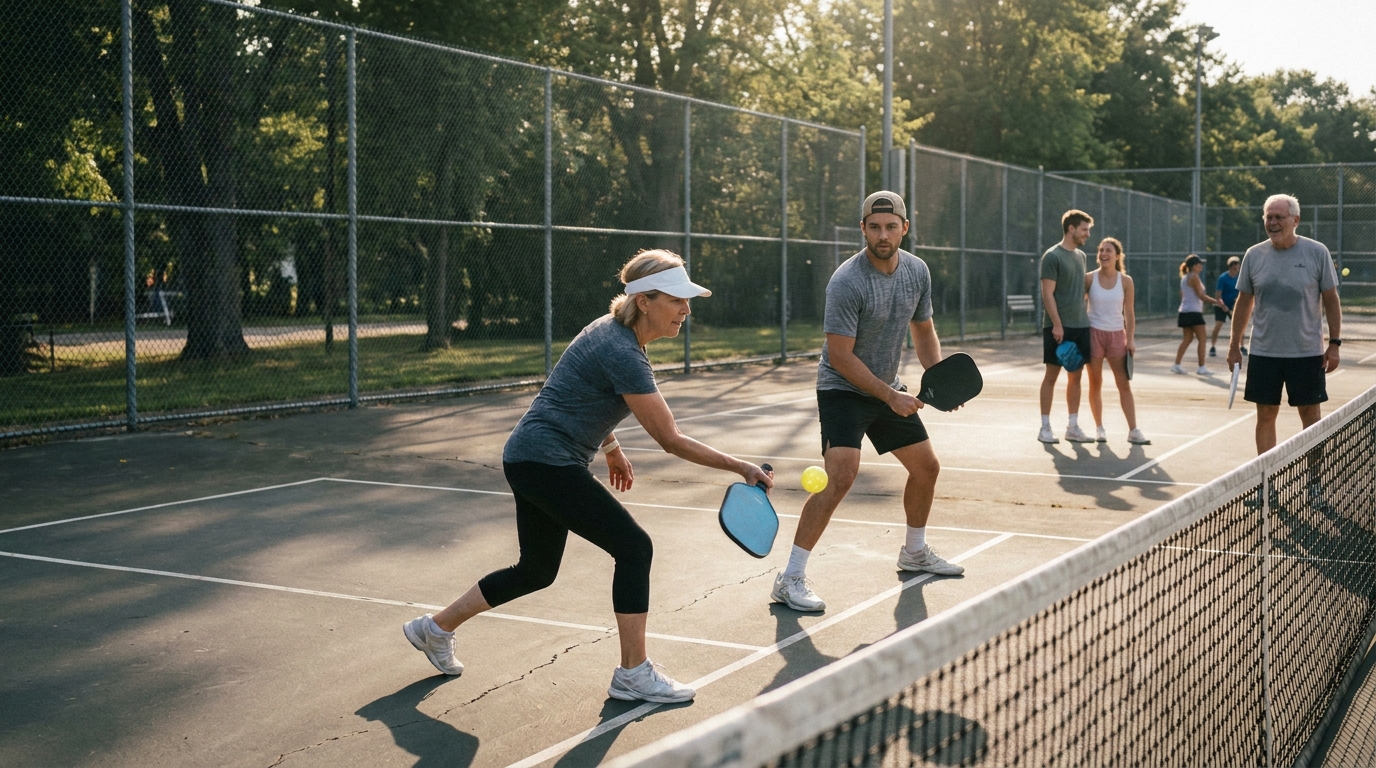
America’s fastest-growing sport isn’t played on a football field or a basketball court. It’s played on a surface roughly the size of a badminton court, with a perforated plastic ball and a paddle that looks like it belongs in a game room. Pickleball has moved from retirement community recreation rooms to mainstream sports culture with stunning speed, and the numbers make it impossible to ignore.
The Growth by the Numbers
The Sports & Fitness Industry Association (SFIA) reported that pickleball participation in the United States surpassed 36.5 million players in 2022, representing a 158.6% growth over three years. By 2023, the Association of Pickleball Professionals (APP) estimated that number had climbed past 48 million. USA Pickleball, the sport’s national governing body, reports that the number of registered players has grown by over 40% year-over-year for the past several consecutive years. For context, tennis — a sport with decades of infrastructure investment — claims roughly 23 million active players in the U.S. Pickleball didn’t just catch up; it lapped the competition.
Who Is Actually Playing?
The stereotype of pickleball as a retiree pastime is rapidly becoming outdated. While it’s true that players aged 55 and older represented the sport’s earliest adopters and still make up a significant portion of the base, the fastest-growing demographic is now 18 to 34-year-olds. According to the SFIA’s 2023 Topline Participation Report, players under 35 now represent the largest share of new participants entering the sport. The median age of a pickleball player has dropped from 53.5 years in 2021 to closer to 38 years in 2023. College clubs, professional athletes from other sports, and even professional pickleball leagues with broadcast deals have helped accelerate this demographic shift dramatically.
Why Pickleball Works for Almost Everyone
The sport’s appeal is rooted in a rare combination of accessibility, social dynamics, and physical demands that few other sports can replicate across such a wide population.
Low barrier to entry. Unlike tennis, which requires significant time investment to develop basic rally consistency, pickleball’s smaller court and underhand serve mean that a complete beginner can have a genuinely fun rally within their first hour of play. The learning curve is forgiving enough that first-timers rarely feel hopeless.
Social by design. The standard format is doubles on a court that keeps players in close proximity. Post-rally banter is natural. The sport’s culture of rotating partners through open play formats means players regularly meet new people. Many regular players describe the social aspect as the primary reason they keep coming back, even above the exercise itself.
Low-impact mechanics. The smaller court means less ground to cover. The underhand serve and dink-heavy strategy at the kitchen line (the non-volley zone) reduce the explosive loading on joints that makes tennis and racquetball punishing over time. Older players can continue well into their 70s and 80s with appropriate technique, and younger players recovering from knee or shoulder issues often find it a viable path back to competitive sport.
The Court Availability Boom
One of the most visible signs of pickleball’s growth is the physical transformation happening in communities across the country. Cities are converting underutilized tennis courts into dedicated pickleball spaces, with four pickleball courts typically fitting into the footprint of one tennis court. USA Pickleball’s Places2Play database listed over 10,000 locations with public pickleball courts in 2023, compared to fewer than 3,000 a decade prior. Major chains like Life Time Fitness and LA Fitness have added dedicated pickleball courts. Purpose-built pickleball facilities like Chicken N Pickle and Ace Pickleball Club locations are opening across metropolitan areas, complete with food service, leagues, and open play scheduling managed through apps. Outdoor parks that once sat empty on weekday mornings are now filling up with players before 8 a.m.
Gear Basics: Getting Started Under $100
One of pickleball’s most practical advantages is how little equipment you need to play well. Here is what matters:
Paddle ($30–$80 for beginners). Entry-level paddles from reputable brands like Selkirk, Onix, and Paddletek offer solid performance without the price tag of professional-grade carbon fiber options. A mid-range beginner paddle in the $40–$60 range is sufficient for your first year of play. Avoid buying the cheapest unbranded options — paddle face quality directly affects control.
Ball ($10–$15 for a pack). Outdoor balls (like the Dura Fast 40) are harder and better for asphalt and concrete surfaces. Indoor balls are lighter and softer. Most recreational play uses outdoor balls, so start there.
Court shoes ($25–$50 for entry level). Running shoes lack the lateral support needed for the side-to-side movement in pickleball and increase ankle sprain risk. Dedicated court shoes from brands like K-Swiss, HEAD, or even budget-friendly options from Fila provide the proper sole grip and support. A complete starter setup — paddle, three-pack of balls, and court shoes — can be assembled for under $100 with thoughtful shopping.
Sources: Paddle pricing via Pickleball Central; shoe pricing via Amazon and major retailers; ball pricing via Fromuth Pickleball.
How to Actually Get Started
Find free public courts. The Places2Play tool on USA Pickleball’s website allows you to search by zip code for courts near you, filtering by indoor/outdoor and public/private access.
Use open play apps. Apps like Pickleheads, Playtime Scheduler, and Pickleball Brackets help you find organized open play sessions where all skill levels are welcome and partners are rotated. These sessions are often free or carry a minimal drop-in fee of $5–$10.
Take one lesson. Most facilities offer group intro clinics for $20–$40. A single structured introduction to grip, kitchen positioning, and the two-bounce rule prevents the formation of bad habits that are harder to correct later.
Basic Rules and Scoring
Pickleball is played to 11 points, win by 2, and points can only be scored by the serving team. Games are typically played as best of three. The most important rules to understand as a beginner:
- The two-bounce rule: After the serve, each team must let the ball bounce once before volleying. This prevents immediate net-rush dominance and keeps early rallies manageable.
- The kitchen (non-volley zone): The 7-foot zone on each side of the net cannot be entered to volley the ball. You may step in after a bounce. This rule is central to pickleball strategy and creates the dinking game that defines competitive play.
- Serving: Serves are underhand, contact made below the waist, and the paddle must move in an upward arc at contact. The serve is directed cross-court into the opposite service box.
- Faults: Hitting out of bounds, volleying from the kitchen, or failing to clear the net ends the rally.
Common Injuries to Avoid
Despite being lower impact than many racket sports, pickleball has its own injury profile — one that has grown as participation has surged. Orthopedic clinics have reported significant increases in pickleball-related injuries, with the most common being:
Tennis elbow (lateral epicondylitis). Often triggered by improper grip pressure or excessive wrist movement during groundstrokes. Focus on a relaxed grip and let the paddle do the work.
Achilles and calf strains. Common among older players returning to lateral movement sports after sedentary periods. A proper warm-up, gradual intensity buildup, and court shoes (not running shoes) significantly reduce risk.
Knee strain. Sudden direction changes on hard courts stress the knee joint. Learning proper split-step technique and avoiding lunge overextension is key.
Falls. The number one injury risk, particularly for older players moving quickly toward the kitchen line. Non-slip court shoes and spatial awareness training are the best prevention.
The Pickleball-vs-Tennis Debate
The rapid conversion of tennis courts into pickleball facilities has created genuine tension in some communities. Tennis players argue that public courts built for tennis are being permanently repurposed for a sport with lower athleticism demands and shorter rallies. Pickleball advocates counter that unused and poorly-maintained tennis courts serve no one, and that pickleball’s accessibility brings far more people into active sports participation. The more productive framing may be coexistence: portable pickleball nets and temporary court line tape allow tennis courts to serve both populations without permanent conversion, a model that many parks departments are now adopting as standard policy.
Your First 30 Days: A Beginner Plan
Week 1 — Gear and Orientation
Purchase a beginner paddle and court shoes. Watch two to three introductory YouTube videos from channels like Pickleball 411 or Third Shot Sports to understand court layout, basic rules, and the two-bounce rule before stepping on a court.
Week 2 — First Contact
Attend one open play session using Pickleheads or the Places2Play finder. Focus solely on getting the ball in play. Do not worry about strategy or scoring yet. Arrive early and ask experienced players for one tip.
Week 3 — Structured Learning
Book a group beginner clinic at a local facility. Focus on kitchen positioning and learning the difference between a dink and a drive. Play at least two additional open play sessions this week.
Week 4 — Building Habit and Community
Aim for three sessions this week. Introduce yourself to regulars. Begin tracking your serve consistency. By the end of 30 days, you will have a working understanding of scoring, basic shot selection, and where to position yourself in doubles play — enough to feel genuinely competitive in beginner open play.
Pickleball’s rise is not a fad sustained by novelty. It solves real problems: it gives older adults a competitive social sport with manageable physical demands; it gives younger players a fast entry point into racket sports; and it turns underused infrastructure into active community spaces. The sport will continue evolving, but its foundation — low cost, high social return, accessible to almost any body — is built to last.
