
The Pros and Cons of Buying a Fixer-Upper
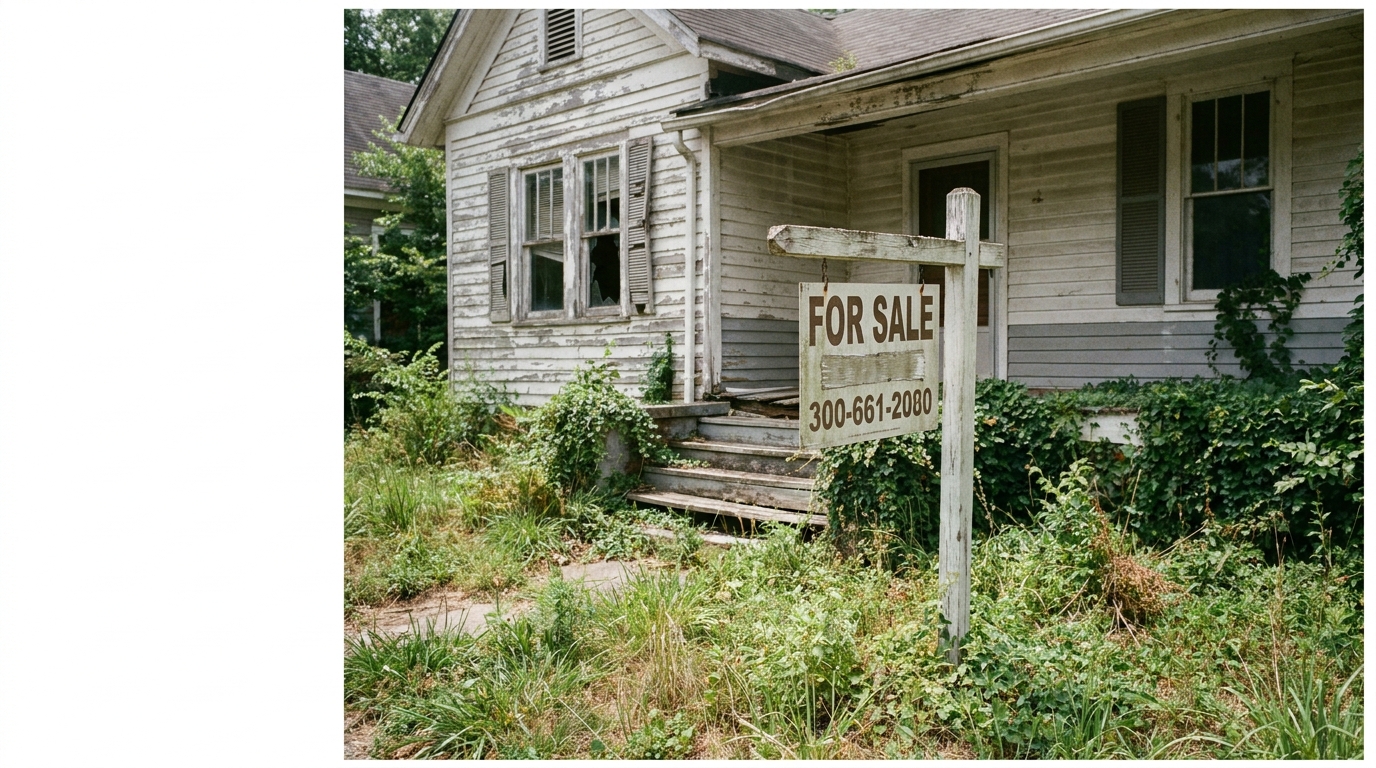
Buying a fixer-upper can feel like stumbling onto a hidden treasure—a chance to snag a home below market value, build sweat equity, and personalize every square foot to your taste. But the same house that sparks visions of HGTV glory can quietly drain your savings if you walk in unprepared. The gap between a smart value-add investment and an expensive money pit often comes down to how well you understand the numbers, the risks, and the realistic timeline before you sign anything.
The Discount You Can Actually Expect
One of the most appealing aspects of a fixer-upper is the purchase price. Distressed or outdated homes typically sell at a 10–30% discount compared to move-in-ready comparables in the same neighborhood. According to data from the National Association of Realtors, the actual discount varies widely by market conditions, property condition, and how motivated the seller is. In a hot seller’s market, that discount may compress to 8–12%, while a property with structural issues or severe deferred maintenance in a softer market might land closer to 25–35% below comparable sales.
The critical math, however, is not just the purchase price—it’s the after-repair value (ARV). Your goal is to buy the home plus fund the renovation for less than what the finished property will be worth. A commonly used investor formula is the 70% rule: don’t pay more than 70% of the ARV minus estimated repair costs. While that rule is aggressive for primary-home buyers, it illustrates the core principle. If a finished home in your target neighborhood is worth $400,000, and renovations will cost $80,000, you want to pay no more than $200,000–$240,000 for the distressed version to leave an equity cushion.
Top Renovation Cost Categories
Understanding where renovation dollars go helps you budget honestly and prioritize intelligently.
Kitchen remodels are consistently the largest single renovation expense for most buyers. A mid-range full kitchen remodel costs between $26,000 and $82,000 depending on size and finishes, according to the 2023 Remodeling Cost vs. Value Report. Cabinets, countertops, appliances, and labor each carry significant price tags, and supply-chain pricing continues to fluctuate post-pandemic.
Bathroom renovations run $10,000–$35,000 per bathroom for a full remodel, with high-end primary bath projects pushing $50,000 or more. Even a cosmetic refresh—new vanity, tile surround, and fixtures—can cost $4,000–$8,000 when you account for licensed plumber and tile labor.
Roof replacement is frequently non-negotiable on older homes. Depending on the roofing material and square footage, expect to pay $8,000–$25,000 for a full replacement. Asphalt shingles sit at the lower end; metal or slate roofing can double or triple that figure.
Electrical upgrades are among the most variable costs. Updating an older panel runs $1,500–$4,000. Rewiring an entire home—necessary when knob-and-tube or aluminum wiring is present—can cost $8,000–$20,000+ depending on home size, according to HomeAdvisor pricing benchmarks.
HVAC systems (heating, ventilation, and air conditioning) represent another major ticket item. A full system replacement including furnace and central air typically costs $7,000–$15,000, with ductwork additions or replacements adding another $2,000–$6,000.
When you stack these categories together for a home that needs all of them, it’s easy to arrive at $80,000–$150,000 in core system and cosmetic renovations—before any surprises surface.
Hidden Surprises That Blow Up Budgets
Seasoned renovators will tell you: it’s never what you can see that hurts you, it’s what’s behind the walls.
Foundation problems are the most feared discovery. Hairline cracks in a poured concrete foundation may be cosmetic, but bowing walls, significant horizontal cracking, or evidence of settling can indicate serious structural issues. Foundation repair costs range from $4,500 for minor crack injection to $30,000–$100,000 for full underpinning or wall replacement.
Asbestos was commonly used in insulation, floor tiles, ceiling texture (“popcorn ceilings”), and pipe wrap in homes built before 1980. Testing costs $200–$800, but abatement can run $1,500–$30,000+ depending on how widespread the material is and whether it must be removed or can be encapsulated.
Knob-and-tube wiring, found in homes built before the 1940s, is not grounded and cannot safely support modern electrical loads. Most insurers won’t write a policy on a home with active knob-and-tube wiring, which forces the issue. Full replacement is essentially mandatory.
Lead paint is present in an estimated 29% of U.S. housing stock, according to the EPA—particularly in homes built before 1978. If the paint is intact, it may only need encapsulation, but if you’re renovating (cutting, sanding, disturbing surfaces), federal RRP rules require certified contractors and add cost. Full lead abatement runs $10,000–$30,000 for an average home.
Mold and water intrusion round out the list. Minor surface mold runs $500–$4,000 to remediate. If water has infiltrated wall cavities, subfloor systems, or the crawl space, you’re looking at $5,000–$30,000 in remediation plus the root-cause repairs.
The consistent advice from contractors and experienced buyers alike: add a 15–20% contingency buffer to every renovation estimate from day one.
Financing Options for Fixer-Uppers
Paying for a fixer-upper requires more creative financing than a standard purchase, since most conventional loans won’t fund a home that isn’t habitable—and they won’t roll renovation costs into the mortgage.
FHA 203(k) loans are the most well-known renovation financing product. The standard 203(k) allows you to finance both the purchase price and up to the projected post-renovation value in a single loan, with a minimum renovation budget of $5,000 and no stated maximum (subject to FHA loan limits by county). The limited/streamline version caps renovation funds at $35,000 and restricts certain project types. The tradeoff: FHA mortgage insurance premiums, stricter property requirements, and a HUD-approved consultant requirement for the standard version add time and cost to the process.
Conventional renovation loans (Fannie Mae HomeStyle and Freddie Mac CHOICERenovation) work similarly but don’t require mortgage insurance once you reach 20% equity and have fewer restrictions on property types, including investment properties and second homes. These are often a better fit for buyers with strong credit and larger down payments.
HELOC after close is a strategy some buyers use when they can purchase the home outright or through a standard loan, then tap a Home Equity Line of Credit once they own the property to fund renovations. This approach works best for buyers who have cash reserves or purchase a home that qualifies for conventional financing despite its condition. HELOC rates are variable and currently elevated (prime + margin, with many lenders offering rates in the 8–10% range as of 2024), so cost-of-capital matters.
A construction-to-permanent loan is another option for homes requiring extensive structural work, essentially functioning as a draw-based construction loan that converts to a standard mortgage at completion.
DIY vs. Contractor: Where to Draw the Line
The appeal of doing work yourself is obvious—labor often represents 40–60% of total renovation costs. However, not all work is DIY-appropriate, and misjudging this line is one of the most common ways fixer-upper projects go over budget and timeline.
Good DIY candidates: painting, basic landscaping, cabinet hardware and fixture swaps, installing flooring over existing subfloor, demolition (with proper precautions for hazardous materials), and finish carpentry for experienced woodworkers.
Hire a licensed contractor: anything involving permitted electrical work, plumbing beyond fixture swaps, structural modifications, roofing, HVAC installation, and any remediation work involving asbestos, lead, or mold. Beyond safety, unpermitted work can create title and resale issues and may violate your renovation loan requirements.
A realistic split for a first-time fixer-upper buyer is to DIY roughly 15–25% of the work (primarily cosmetic finishes) and hire out the rest. Overestimating your capacity or available time is one of the top reasons renovation projects stall.
Renovation Timeline Reality
Every renovation takes longer than expected. Industry professionals suggest doubling your initial timeline estimate as a starting default. A cosmetic-only renovation—paint, flooring, fixtures, landscaping—might genuinely be completed in 8–12 weeks. A full gut renovation involving kitchens, baths, and mechanical systems on a 1,500 square-foot home realistically takes 6–12 months when you factor in permitting, material lead times, contractor scheduling, and the inevitable scope additions once walls open up.
If you’re financing the renovation through a 203(k) or renovation loan, your lender will set specific completion deadlines (typically 6 months for streamline, 12 months for standard). Budget not just for renovation costs but for carrying costs during that period: mortgage payments, utilities, any rent you’re paying elsewhere, and storage costs.
Pre-Offer Inspection Checklist
Before making an offer on a fixer-upper, a standard buyer’s inspection is not enough. Use this targeted checklist to guide your due diligence:
- Foundation: Look for horizontal cracks, bowing, significant settling, or evidence of prior repair
- Roof: Age, condition of shingles/flashing, soffit and fascia rot, gutters
- Electrical: Panel age and brand (Zinsco and Federal Pacific panels are flagged as hazardous), presence of knob-and-tube or aluminum wiring, GFCI coverage
- Plumbing: Pipe material (galvanized steel corrodes; polybutylene is recall-prone), water pressure, drain function, water heater age
- HVAC: System age, last service date, visible duct condition, adequate insulation
- Moisture and mold: Basement and crawl space moisture, staining on ceilings/walls, musty odors
- Insulation: Attic insulation depth and type, wall insulation if accessible
- Windows and doors: Operation, seal failure (fogging between panes), frame rot
- Asbestos and lead testing: Especially in pre-1978 homes; hire a certified inspector
- Sewer scope: Run a camera through the main sewer line—tree root intrusion or collapsed clay pipes can cost $5,000–$25,000 to repair
- Structural pest inspection: Termite or carpenter ant damage is often invisible until framing is exposed
Hire a general inspector plus specialists for foundation, sewer, and environmental hazards. The combined inspection cost of $800–$2,000 is cheap insurance against a six-figure surprise.
The Fixer-or-Skip Decision Framework
With all variables on the table, use this simple framework before committing:
Buy it if:
– The purchase price plus estimated renovation costs lands below 85–90% of the verified ARV, leaving meaningful equity at completion
– Surprises are cosmetic or limited to one major system, not stacked
– You have financing secured, a 20% contingency buffer funded, and a realistic schedule
– The location is strong—neighborhood quality and school ratings underpin your ARV assumptions
– You or your contractor network have a credible track record with similar scope projects
Skip it if:
– The inspection reveals foundation issues, active water intrusion, and full electrical and mechanical replacement—simultaneous structural and system failures multiply cost and risk
– The seller is unwilling to negotiate price in response to inspection findings
– Your financing, contingency funds, or timeline flexibility are stretched thin
– The ARV math only works under best-case renovation cost assumptions with no buffer
– You have no contractor relationships and no prior experience managing a renovation project
A fixer-upper, approached with honest numbers and adequate preparation, can be one of the most financially rewarding real estate decisions you make. Approached with optimism and insufficient due diligence, it can become the most expensive lesson of your life. The homes are the same—the difference is entirely in the buyer’s preparation.
Sources & Further Reading
- Remodeling Magazine, 2023 Cost vs. Value Report: remodeling.hw.net
- HomeAdvisor / Angi, electrical rewiring costs: angi.com/articles/cost-rewire-house
- HomeAdvisor, foundation repair costs: angi.com/articles/foundation-repair-costs
- U.S. EPA, lead paint statistics: epa.gov/lead
- HUD, FHA 203(k) loan program overview: hud.gov/program_offices/housing/sfh/203k
- Fannie Mae HomeStyle Renovation loan: fanniemae.com/originating-underwriting/mortgage-products/homestyle-renovation
- National Association of Realtors, research and statistics: nar.realtor/research-and-statistics
