
Energy-Efficient Upgrades That Pay for Themselves
Why Upgrade Order Matters More Than You Think
Most homeowners approach energy efficiency like a buffet—grabbing whatever looks appealing without a strategy. The result is often thousands of dollars spent on solar panels sitting on a leaky, under-insulated house, or a smart thermostat controlling an ancient furnace that can barely respond to its commands. Energy upgrades work best as a system, and the sequence in which you tackle them determines how much you actually save. This guide walks through nine of the highest-impact upgrades available in 2026, with real numbers on cost, savings, and payback, plus a clear order of operations so every dollar you spend builds on the last.
The Order of Operations
Before diving into individual upgrades, here is the sequence that maximizes every investment:
- Air sealing
- Attic insulation top-up
- Smart thermostat
- LED conversion
- Heat pump water heater
- Induction cooking
- Heat pump (mini-split or whole-house)
- Window film (or replacement if warranted)
- Solar PV
The logic is simple: seal and insulate first so you reduce the load your mechanical systems must handle, then upgrade those systems, then generate power for a smaller, more efficient home.
1. Air Sealing
What it is: Sealing gaps, cracks, and penetrations in the building envelope—around recessed lights, plumbing penetrations, attic hatches, electrical boxes, and rim joists.
Typical cost: A professional air-sealing job runs $1,500–$3,000 for an average home. DIY with caulk and spray foam can cost as little as $200–$500 in materials if you’re comfortable in an attic.
Annual savings: The U.S. Department of Energy estimates that air sealing alone can reduce heating and cooling costs by 10–20%, translating to roughly $150–$400 per year for a home spending $1,500–$2,000 annually on energy.
Payback period: 4–10 years professionally done; often under 2 years DIY.
2026 tax credit: Air sealing qualifies under the Energy Efficient Home Improvement Credit (25C) at 30% of cost, up to $1,200 combined with insulation. A $2,000 professional job could yield a $600 federal tax credit.
Air sealing is the unglamorous workhorse of home performance. No other single action protects the effectiveness of every upgrade that follows it.
2. Attic Insulation Top-Up
What it is: Adding blown-in cellulose or fiberglass insulation to bring attic levels up to Department of Energy recommendations—typically R-49 to R-60 in most U.S. climate zones.
Typical cost: $1,500–$3,500 professionally installed for a 1,200–1,500 sq ft attic, depending on existing insulation levels and material choice. Cellulose generally runs slightly cheaper than fiberglass batts and performs better at air resistance.
Annual savings: Bringing an under-insulated attic from R-19 to R-49 can reduce heating and cooling bills by 15–25%, or roughly $225–$500 per year in a typical home.
Payback period: 3–8 years, often accelerated by rebates.
2026 tax credit: Insulation is covered under the 25C credit at 30% of cost, up to $1,200 combined with air sealing. Many utilities also offer rebates of $0.10–$0.25 per sq ft of insulation installed. Check the DSIRE database (dsireusa.org) for state-specific programs.
Do this immediately after air sealing. Fresh insulation on top of sealed penetrations works dramatically better than insulation alone.
3. Smart Thermostat
What it is: A Wi-Fi-enabled, learning or programmable thermostat that optimizes heating and cooling schedules automatically.
Typical cost: $130–$300 for units like the Google Nest Thermostat, Ecobee SmartThermostat, or Honeywell T9. Installation is straightforward for most homeowners—about 30 minutes.
Annual savings: Ecobee’s internal data suggests their devices save an average of 26% on heating and cooling costs. The DOE puts a more conservative estimate at 8–12%, roughly $50–$180 per year depending on climate and existing habits.
Payback period: 1–4 years. This is one of the fastest paybacks available.
2026 tax credit: Smart thermostats currently do not qualify for the 25C federal tax credit on their own, but many utilities offer rebates of $50–$100. Check your utility’s website directly.
Install a smart thermostat before any HVAC equipment upgrade—it helps you understand your home’s heating and cooling patterns and ensures you’re getting the most out of whatever equipment comes next.
4. LED Conversion
What it is: Replacing all remaining incandescent and CFL bulbs with LED equivalents.
Typical cost: $50–$200 for a whole-house conversion, assuming 20–40 bulbs at $2–$5 each. Many utilities offer instant discounts or mail-in rebates that bring this cost even lower.
Annual savings: LEDs use 75% less energy than incandescents. A home with 30 bulbs averaging 3 hours of daily use can save $100–$200 per year, depending on local electricity rates.
Payback period: Often under 1 year. Essentially the highest return-on-investment upgrade in this entire list.
2026 credits: No federal tax credit applies to LEDs directly, but utility rebate programs are widely available. The savings alone make this a no-brainer regardless.
This is the easiest win in home efficiency. Do it today.
5. Heat Pump Water Heater
What it is: An electric water heater that uses heat pump technology to move heat from surrounding air into the water, rather than generating heat directly. Brands like Rheem ProTerra, A.O. Smith Voltex, and Stiebel Eltron dominate the market.
Typical cost: $1,100–$1,800 installed, compared to $500–$900 for a standard electric resistance water heater.
Annual savings: Heat pump water heaters are 3–4x more efficient than standard electric models. A household replacing a standard electric unit can save $300–$550 per year on water heating costs.
Payback period: 2–5 years after incentives.
2026 tax credit: The 25C credit covers 30% of cost up to $2,000 for heat pump water heaters—one of the most generous credits in the residential category. Many states add additional rebates. New York, California, and Massachusetts, for example, offer $200–$800 in additional incentives through utility or state programs. Check rewiring america’s calculator at rewiringamerica.org for your specific situation.
6. Induction Cooking
What it is: A cooktop or range that uses electromagnetic energy to heat cookware directly, rather than heating a burner. It’s faster, more precise, and eliminates combustion byproducts indoors.
Typical cost: A portable single-burner induction unit costs $40–$100—a great way to test before committing. Full induction ranges run $900–$2,500. Installation is straightforward if a 240V outlet is already present; adding one runs $150–$400.
Annual savings: Induction is roughly 85–90% efficient versus 32–40% for gas and 74% for standard electric. Annual savings over gas typically run $100–$300, though savings versus electric are more modest at $30–$80 per year. The bigger gains from eliminating gas are on health and on potentially being able to cancel gas service entirely, saving $10–$25/month in base utility fees.
Payback period: 4–10 years for a full range; under 1 year for a portable unit used to supplement or replace gas burners.
2026 tax credit: The 25C credit provides 30% of cost up to $840 for induction ranges. This is a relatively new addition to the credit and represents solid federal support for cooking electrification.
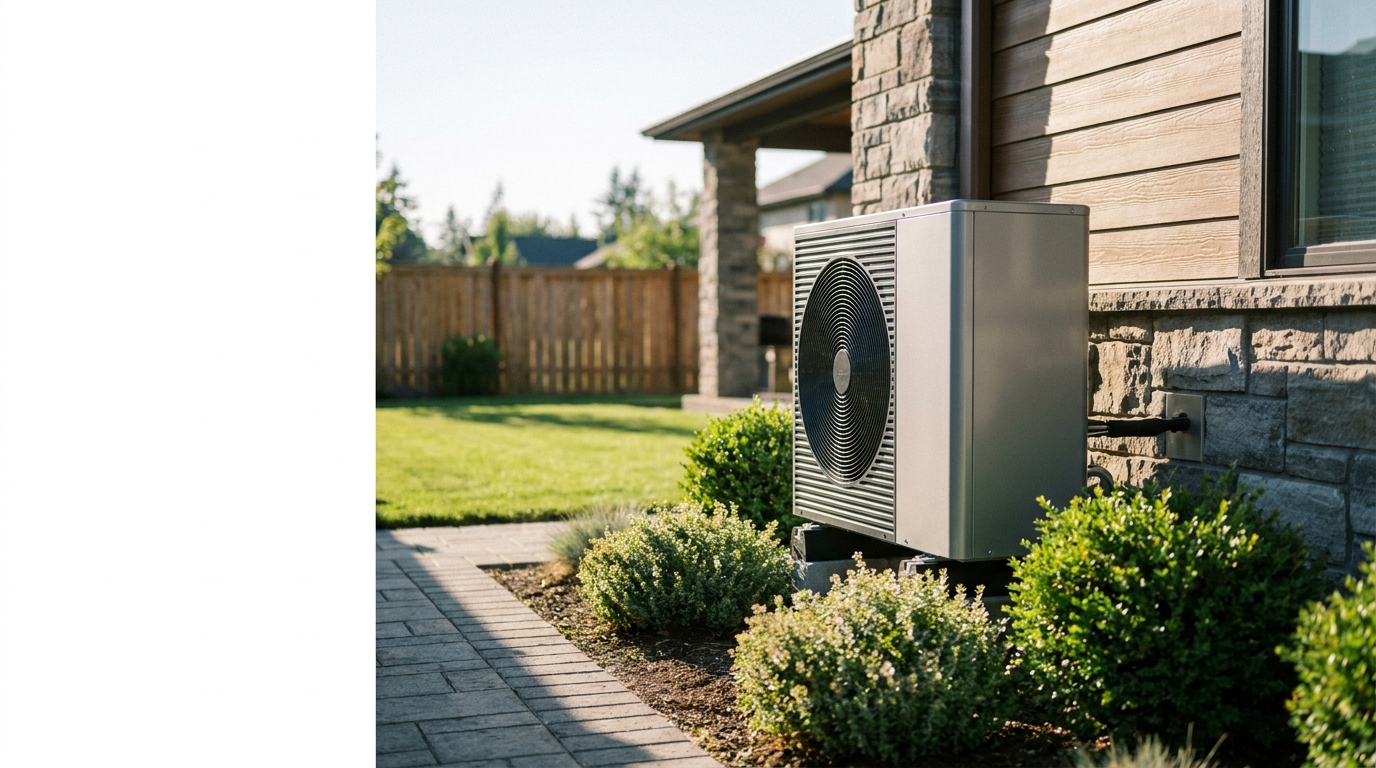
7. Heat Pump (Mini-Split or Whole-House)
What it is: An electric heating and cooling system that moves heat rather than generating it, making it 200–400% efficient. Mini-splits serve one or a few zones; central heat pumps replace or supplement existing ducted systems.
Typical cost: A single-zone mini-split runs $3,000–$5,000 installed. A whole-house ducted heat pump system runs $6,000–$15,000+, depending on home size, existing ductwork condition, and whether the unit is cold-climate rated (look for models rated to -13°F or lower for northern climates).
Annual savings: Replacing an electric resistance furnace with a heat pump can save $500–$1,000+ per year. Replacing a gas furnace depends heavily on local gas vs. electricity rates, but savings of $300–$900 are common as heat pumps become more efficient.
Payback period: 5–15 years without incentives; significantly better with them.
2026 tax credit: The 25C credit offers 30% of cost up to $2,000 for heat pumps. Additionally, if your household income qualifies (up to 150% of area median income), the Inflation Reduction Act’s High-Efficiency Electric Home Rebate Act (HEEHRA) program—now being administered through many state energy offices—can provide up to $8,000 in point-of-sale rebates. Check your state energy office or use the Rewiring America calculator to see what you qualify for.
This is the anchor upgrade of home electrification. Do it after the envelope work (sealing, insulation) so you can potentially right-size the equipment to a smaller load.
8. Window Film vs. Window Replacement
What it is: Window film is a thin polyester laminate applied to existing glass to reduce solar heat gain, UV transmission, and in some products, heat loss. Window replacement means installing new double- or triple-pane insulated units.
Typical cost:
– Window film: $8–$15 per sq ft professionally installed; $2–$4 per sq ft DIY. A whole-house treatment might run $500–$1,500.
– Window replacement: $400–$1,000 per window installed, or $8,000–$20,000 for a whole-house replacement on an average home.
Annual savings:
– Film: $50–$150 per year on cooling costs in sun-heavy climates; minimal benefit in heating-dominated climates.
– Replacement: $100–$400 per year depending on the number of windows, climate, and existing window quality.
Payback period:
– Film: 3–8 years—excellent ROI.
– Replacement: Often 20–30 years based on energy savings alone, making it hard to justify purely on economics. Windows make more sense when they’re failing structurally, allowing drafts, or when comfort (not just savings) is a priority.
2026 tax credit: Exterior windows and skylights qualify for the 25C credit at 30% of cost, up to $600. Window film does not qualify for a federal tax credit.
The honest answer: film first, replace only if windows are structurally compromised or single-pane in a harsh climate.
9. Solar PV with 2026 Incentives
What it is: Rooftop photovoltaic panels that generate electricity from sunlight, offset your utility bill, and in net-metering states, earn credits for excess power sent to the grid.
Typical cost: The average residential solar installation in 2025–2026 runs $2.50–$3.50 per watt before incentives. A 8 kW system (enough for many electrified homes) costs $20,000–$28,000 before credits.
Annual savings: $900–$1,800 per year depending on system size, local electricity rates, and net metering policies. Homes that have electrified heating, cooling, and water heating see the largest benefit.
Payback period: 6–12 years after the federal tax credit; often 5–9 years in high-electricity-rate states like California, Massachusetts, Hawaii, and Connecticut.
2026 tax credit: The Residential Clean Energy Credit (25D) provides 30% of total system cost with no dollar cap. On a $24,000 system, that’s a $7,200 federal tax credit. Many states add additional incentives—Massachusetts offers a 15% state tax credit (up to $1,000), New York has the NY-Sun incentive program, and California’s SGIP offers battery storage rebates. For a comprehensive look at state programs, visit dsireusa.org.
Important caveat: Go solar last. Installing panels on a home that still has significant efficiency gaps means you’re buying more capacity than you’d need after improvements—wasting money on panels that wouldn’t have been necessary.
Putting It All Together
A homeowner who follows this sequence from top to bottom—sealing first, then insulating, upgrading lighting and water heating, converting to efficient appliances and HVAC, and finally going solar—can realistically reduce total energy bills by 50–80% compared to an unimproved baseline. The 25C and 25D federal tax credits available in 2026 make this the best window in recent memory to make these investments. Combine them with state rebates, utility incentives, and the now-expanding HEEHRA point-of-sale rebate programs, and many of these upgrades become dramatically more affordable.
The key is discipline: resist the temptation to jump straight to solar or a shiny new heat pump before the fundamentals are addressed. Energy efficiency rewards patience and order. Start with the envelope, eliminate waste, then generate clean power for the lean, well-sealed home you’ve built.
Sources & Resources
- U.S. Department of Energy – Weatherization and Air Sealing: energy.gov/energysaver/air-sealing-your-home
- DSIRE – Database of State Incentives for Renewables & Efficiency: dsireusa.org
- Rewiring America – IRA Incentives Calculator: rewiringamerica.org/app/ira-calculator
- Ecobee Savings Data: ecobee.com/en-us/savings
- DOE Energy Saver – Heat Pump Water Heaters: energy.gov/energysaver/heat-pump-water-heaters
- EnergySage – Solar Cost Data 2025–2026: energysage.com/solar/cost
- IRS Guidance on 25C and 25D Credits: irs.gov/credits-deductions/energy-efficient-home-improvement-credit
- Lawrence Berkeley National Laboratory – Window Performance: windows.lbl.gov
