
Best Indoor Plants for Low-Light Rooms: Full Guide
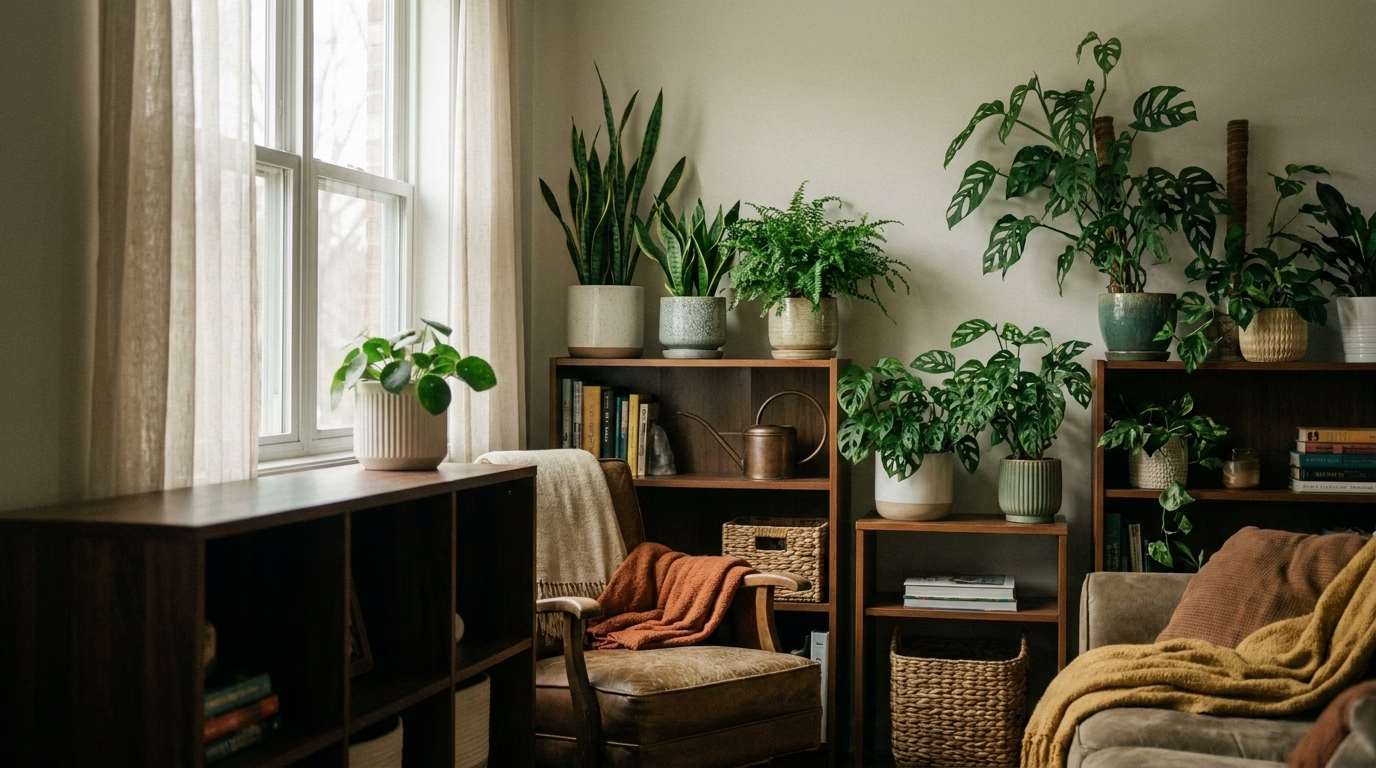
If you’ve ever watched a houseplant slowly decline in a north-facing living room or a shadowy bedroom corner, you know the quiet frustration of wanting greenery indoors but feeling like the light simply isn’t on your side. The good news is that low light doesn’t have to mean no plants. A thoughtful selection of species, combined with the right care habits, can fill even the dimmest apartment or shaded room with lush, living greenery. This guide walks you through everything you need to know — from measuring your light accurately to troubleshooting yellowing leaves — so you can grow with confidence regardless of which way your windows face.
What Counts as Low Light and How to Measure It
“Low light” is one of the most misused phrases in plant marketing. A label that reads “tolerates low light” doesn’t mean a plant will survive in a windowless closet. In practical terms, low light refers to spaces that receive indirect or filtered natural light, typically more than 6 to 8 feet from a window, or rooms where windows face north or are partially obstructed by trees, buildings, or frosted glass.
Light is measured in foot-candles (fc) or lux. As a general guide:
- Very low light: 25–100 fc (deep room corners, hallways)
- Low light: 100–500 fc (north-facing rooms, areas set back from windows)
- Medium light: 500–1,000 fc (near east- or west-facing windows)
- Bright indirect: 1,000–2,000 fc (close to south- or west-facing windows, no direct sun)
The easiest way to measure your room’s light is to download a free or low-cost light-meter app on your smartphone. Apps like Lux Light Meter Pro (iOS and Android) or Photone use your phone’s camera sensor to give a real-time lux or foot-candle reading. To use one effectively, hold your phone face-up at the height where your plant’s leaves would sit, point it toward the primary light source, and take a reading on a clear midday. Take readings in two or three spots around the room, since light levels can vary dramatically even within a single space. If you consistently read below 200 lux, stick strictly to the most shade-tolerant options on this list. Between 200 and 500 lux, you have good flexibility with most of the plants below.
Top 8 Plants That Genuinely Thrive in Low Light
Each plant below includes a care-difficulty rating on a scale of 1 to 5, where 1 is nearly effortless and 5 requires consistent attention.
1. Pothos (Epipremnum aureum) — Difficulty: 1/5
Pothos is arguably the gold standard for low-light indoor plants. Its trailing vines tolerate deep shade better than almost any other common houseplant. Golden pothos, marble queen, and neon varieties all perform well in north-facing rooms. It handles inconsistent watering with grace and communicates thirst by developing slightly limp leaves — a forgiving early warning system for beginners.
2. Snake Plant (Sansevieria trifasciata / Dracaena trifasciata) — Difficulty: 1/5
With its stiff, upright leaves and sculptural form, the snake plant thrives on neglect. It tolerates very low light and infrequent watering, making it ideal for busy apartment dwellers. It does grow slowly in dim conditions, but it rarely declines dramatically. Water no more than once every three to four weeks in winter.
3. ZZ Plant (Zamioculcas zamiifolia) — Difficulty: 1/5
The ZZ plant’s waxy, dark green leaves reflect light beautifully and store water in thick rhizomes beneath the soil, making it extremely drought tolerant. It is one of the few plants that genuinely flourishes in the 100–300 lux range. Overwatering is its primary enemy — err heavily on the side of underwatering.
4. Peace Lily (Spathiphyllum spp.) — Difficulty: 2/5
Peace lilies are among the rare flowering plants that perform well in low light. They will bloom less prolifically without bright indirect light, but their deep green foliage remains attractive year-round. They communicate thirst dramatically by drooping, then recover quickly after watering — a useful feedback loop for new plant owners. Keep away from pets, as they are mildly toxic to cats and dogs.
5. Cast Iron Plant (Aspidistra elatior) — Difficulty: 1/5
True to its name, the cast iron plant survives conditions that would kill most other houseplants, including very low light, temperature fluctuations, and irregular watering. Growth is slow, but the plant is exceptionally long-lived and nearly indestructible for a beginner.
6. Chinese Evergreen (Aglaonema spp.) — Difficulty: 2/5
Aglaonemas come in a remarkable range of colors and patterns, from deep green to pink and red. The darker green varieties are the most shade tolerant; brightly colored cultivars prefer a bit more light. They are adaptable, forgiving, and add significant visual interest to dim corners.
7. Dracaena (Dracaena marginata, D. fragrans) — Difficulty: 2/5
Dracaenas are tall, structural plants that work well in apartment spaces where floor-level greenery feels insufficient. They tolerate low light and are sensitive mainly to fluoride in tap water, which can cause leaf-tip browning. Use filtered or distilled water if your tap supply is heavily treated.
8. Heartleaf Philodendron (Philodendron hederaceum) — Difficulty: 2/5
Similar in habit to pothos but with softer, heart-shaped leaves, the heartleaf philodendron adapts well to low light. It grows quickly under the right conditions and thrives in hanging baskets or trained up a moss pole. It prefers slightly more consistent moisture than pothos.
Potting Mix and Container Choices for Dim Conditions
In low-light environments, soil dries out more slowly because there is less solar energy driving evaporation and plant transpiration. This makes drainage the single most important factor in your potting setup.
Avoid standard, dense potting soils that retain too much moisture. Instead, choose a well-aerated mix with added perlite — aim for roughly 70% quality potting mix and 30% perlite. Some growers add a small amount of orchid bark or coarse sand for additional airflow around roots. Brands like Fox Farm Happy Frog or Espoma Organic Potting Mix provide a good base to work from.
For containers, always choose pots with drainage holes. Terracotta pots are particularly well-suited to low-light environments because their porous walls allow excess moisture to evaporate from the sides, reducing the risk of root rot. Glazed ceramic or plastic pots retain moisture longer — useful only if you’re in a very dry climate or tend to forget to water. Avoid oversized pots, as excess soil volume around a small root system stays wet far longer than roots can safely tolerate.
Watering Frequency and Humidity Tips
The single most common mistake in low-light plant care is overwatering. Because dim rooms slow a plant’s metabolic processes, water uptake drops significantly compared to what the same plant would consume in bright conditions. A peace lily that drinks weekly in a bright conservatory may only need water every ten to fourteen days in a north-facing room.
A reliable method is the finger test: insert your finger one to two inches into the soil. If it feels moist, wait. If it feels dry and the pot feels light when lifted, it’s time to water. For ZZ plants and snake plants, wait until the top two to three inches are completely dry.
On the topic of humidity, most low-light tropical plants appreciate humidity levels between 40% and 60%. In winter, central heating can drop indoor humidity well below this range. Simple solutions include grouping plants together (they create a shared microclimate), placing pots on a tray filled with pebbles and a shallow layer of water (ensuring the pot sits above, not in, the water), or running a small ultrasonic humidifier nearby. Avoid misting directly onto leaves in low-light conditions, as slow evaporation can promote fungal issues.
Fertilizing Without Burning Roots
Low-light plants grow slowly, which means their nutritional needs are considerably lower than those of sun-loving species. Over-fertilizing is a common problem that leads to salt buildup in the soil, root burn, and brown leaf edges.
During the active growing season (spring through early fall), feed your plants once a month at most, using a balanced liquid fertilizer diluted to half the recommended strength. A 10-10-10 or 20-20-20 balanced formula works well for most foliage plants. In fall and winter, when growth slows or stops entirely, suspend fertilizing altogether or reduce to once every six to eight weeks.
Flush the soil with plain water every three to four months to clear accumulated mineral salts, especially if you use tap water. Simply water thoroughly until water runs freely from the drainage hole, then allow the pot to drain completely before returning it to its saucer.
Signs Your Plant Needs More Light
Even the most shade-tolerant plants have their limits. Learning to read distress signals early allows you to reposition or supplement light before damage becomes serious.
Troubleshooting checklist for yellowing or drooping leaves:
- Yellowing lower leaves with soft, mushy stems — Most likely overwatering or root rot. Check drainage and reduce watering frequency.
- Yellowing leaves with dry, crispy edges — Possibly underwatering, low humidity, or fluoride sensitivity (common in dracaenas).
- Pale, washed-out leaf color with elongated, leggy stems — Classic sign of insufficient light. The plant is stretching toward any available light source. Move it closer to a window or add a grow light.
- Drooping despite moist soil — Often root rot from excess moisture. Remove plant from pot, inspect roots, trim any black or mushy sections, and repot in fresh, well-draining mix.
- Slow or no new growth for months — In a low-light setting during growing season, this indicates the plant is light-starved. A simple full-spectrum LED grow light placed 12 to 18 inches above the plant for 10 to 12 hours per day can resolve this without moving your entire setup.
- Small, undersized new leaves — Insufficient light is limiting photosynthesis and energy production. Supplement with a grow light or relocate the plant.
If repositioning isn’t possible due to layout constraints, affordable clip-on or shelf-mounted grow lights have become widely available and effective. Models from brands like Soltech, Barrina, or GE’s balanced full-spectrum bulbs can make a meaningful difference for plants that are struggling just at the edge of viability.
Growing plants in low-light spaces is less about fighting your environment and more about working with it thoughtfully. Once you know what light you actually have — measured concretely rather than guessed at — and match it to plants that genuinely suit those conditions, the process becomes straightforward and deeply rewarding. The plants in this guide aren’t simply survivors; they’re genuinely attractive, varied species that can transform a dim apartment or shaded room into a calming, living space. Start with one or two, get a feel for how they respond to your specific conditions, and expand from there. Your north-facing windows are no obstacle at all.
Sources and Further Reading
- Photone light meter app: https://photone.app — available on iOS and Android, with a free tier and paid upgrade for advanced measurements.
- Lux Light Meter Pro: Available on the App Store and Google Play.
- Fox Farm Happy Frog Potting Soil (pricing and availability): https://www.amazon.com/dp/B00HZFK2JW — typically $20–$30 for a 12-quart bag; check current pricing as it varies by retailer.
- Espoma Organic Potting Mix (pricing and availability): https://www.amazon.com/s?k=espoma+organic+potting+mix — typically $15–$25 depending on bag size.
- Soltech grow lights: https://www.soltechsolutions.com — accent-style grow lights designed for home interiors, typically ranging from $50–$120.
- Barrina grow light strips: https://www.amazon.com/s?k=barrina+grow+lights — budget-friendly strip lights, typically $30–$50 for a multi-pack.
- GE Balanced Spectrum grow bulbs: Available at most hardware stores and online — typically $10–$20 per bulb, compatible with standard fixtures.
- ASPCA toxic plant database (for pet safety): https://www.aspca.org/pet-care/animal-poison-control/toxic-and-non-toxic-plants
- University of Missouri Extension – Interior Plants: https://extension.missouri.edu/publications/g6510 — research-backed guidance on light requirements and care for indoor plants.
Note: Prices listed are approximate and subject to change. Always verify current pricing directly with the retailer before purchasing.
