
Youth Sports: How Much Is Too Much?
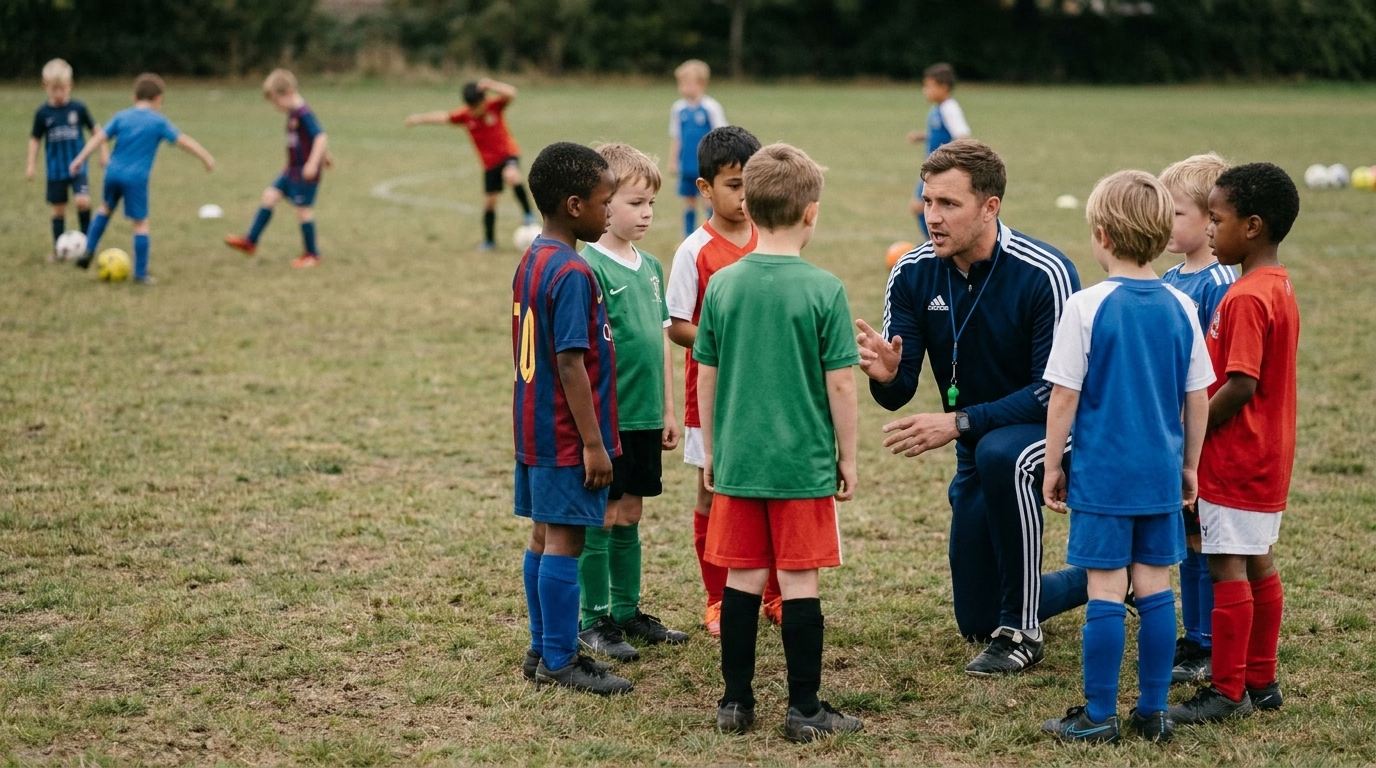
Youth sports have never been more organized, more competitive, or more expensive than they are today. Travel teams form before kids lose their baby teeth. Year-round training schedules fill family calendars. And the pressure to specialize early — to pick one sport and commit to it fully — starts younger with each passing season. For many parents, this feels like the logical path to college scholarships, elite competition, and athletic success. But a growing body of sports medicine research tells a very different story, and knowing what that research says might be the most important thing you can do for your young athlete’s long-term health, happiness, and performance.
—
## The Injury Problem: What Early Specialization Is Doing to Young Bodies
One of the most alarming trends in pediatric sports medicine is the dramatic rise in overuse injuries among young athletes. Overuse injuries — stress fractures, tendinitis, growth plate damage, and repetitive stress conditions like Little Leaguer’s elbow and pitcher’s shoulder — were once considered adult problems. They are now commonplace in athletes as young as eight and nine years old.
The numbers are stark. According to the American Academy of Pediatrics (AAP), overuse injuries account for nearly half of all sports injuries in middle and high school athletes. Research published in the *Journal of Athletic Training* found that youth athletes who specialize in a single sport are 70% to 93% more likely to be injured than those who play multiple sports. Studies from the Hospital for Special Surgery indicate that early single-sport specialization is one of the strongest independent predictors of overuse injury in adolescents.
Why is this happening? Growing bodies are not miniature adult bodies. Bones are still developing at growth plates — areas of cartilage near the ends of long bones that are significantly weaker and more vulnerable than surrounding bone and tissue. When young athletes repeatedly perform the same motions — the overhead throw, the gymnastic tumble, the soccer kick — those growth plates absorb enormous stress with insufficient recovery time. The result is injury that, in some cases, leads to permanent damage.
Early specialization also eliminates the natural cross-training benefit that comes from playing multiple sports. Different sports develop different muscle groups, movement patterns, and energy systems. Multi-sport participation builds balanced athletic foundations. Single-sport specialization creates muscular imbalances that increase injury risk and often limit athletic potential over time.
—
## The Burnout Crisis: Why 70% of Kids Quit by Age 13
Injury is not the only reason children leave sports. According to research from the National Alliance for Youth Sports, approximately 70% of children who play organized sports quit by the age of 13 — and they cite burnout as the primary reason. Not lack of talent. Not lack of interest. Burnout.
Burnout in youth sports looks different from burnout in adults, but it is no less real. It develops when the demands placed on a child — physical, emotional, and social — consistently exceed the resources they have to cope with those demands. Children who specialize early, train year-round, and feel external pressure to perform are at dramatically elevated risk.
The tragedy is that the children most likely to burn out are often the ones with the most talent and the most promise. They were identified early, placed on elite tracks, and subjected to high-volume, high-intensity training at an age when their nervous systems and emotional regulation capacities are still developing. By the time they reach the age when elite performance actually matters, many of them no longer want to play.
The sport experience should be building a lifelong relationship with physical activity. For most children, the opposite is happening.
—
## The Multi-Sport Advantage: What the Research Shows
If early specialization carries so many risks, what does the research say about the alternative? The evidence in favor of multi-sport participation during childhood and early adolescence is substantial and consistent.
A landmark study from the American Medical Society for Sports Medicine found that athletes who participated in multiple sports before specializing had better overall athleticism, lower injury rates, and longer careers than those who specialized early. Research on elite NFL, NHL, and NBA players has consistently shown that most professional athletes played multiple sports through high school. A study published in the *Journal of Sports Sciences* found that early diversification — playing a wide variety of sports — was actually predictive of reaching elite adult performance levels, not an obstacle to it.
Multi-sport participation develops what researchers call “transferable skills”: coordination, spatial awareness, reaction time, tactical thinking, and physical literacy. A soccer player who also plays basketball develops lateral quickness and court vision. A baseball player who also swims builds shoulder endurance and body awareness. These cross-disciplinary adaptations make athletes better, more complete, and more resilient.
—
## Sport Specialization Age Guidelines from Sports Medicine Organizations
Several major sports medicine organizations have issued guidelines on when single-sport specialization is appropriate. Their recommendations are more conservative than most travel sports culture would have you believe.
The **American Academy of Pediatrics** recommends that children avoid sport specialization before at least age 15 or 16, and emphasizes the importance of unstructured free play through adolescence. The **American Medical Society for Sports Medicine** classifies early specialization (before age 12) as high risk, and recommends that children under 12 participate in no more than one organized sport per season. The **American Orthopaedic Society for Sports Medicine** and the **National Athletic Trainers’ Association** have issued joint statements echoing these recommendations, specifically cautioning against year-round single-sport training before puberty.
The Lausanne Recommendation, an international consensus document on youth athlete development, similarly supports a “sampling period” of multi-sport participation through approximately age 12 to 15, followed by gradual specialization only if the athlete desires it and is physically and emotionally ready.
—
## Signs Your Child Is Doing Too Much
Knowing the warning signs of overtraining and burnout is essential. Children are not always able to articulate what they’re feeling, and the signs can be subtle.
**Sleep disruptions** are one of the earliest indicators. Overtrained young athletes often experience difficulty falling asleep despite physical exhaustion, frequent waking, or conversely, excessive sleeping that still doesn’t feel restorative.
**Mood and behavioral changes** are another significant signal. Watch for increased irritability, emotional withdrawal, loss of enthusiasm for activities the child previously enjoyed (including the sport itself), anxiety about performance, or frequent tearfulness around game and practice times.
**Academic decline** is a red flag that is often overlooked in sports-focused households. When training volume is too high, children lack the cognitive bandwidth and physical energy to engage fully with school. Declining grades, difficulty concentrating, and teacher reports of inattentiveness can all point to an athletic schedule that is unsustainable.
**Physical complaints** that seem vague or recurring — persistent fatigue, chronic soreness, frequent minor illnesses — often reflect an immune system under stress from overtraining. When a child seems to catch every cold or takes unusually long to recover from illness, the training load deserves a serious look.
—
## Recommended Weekly Training Hours by Age
One of the most practical and evidence-based guidelines in youth sports is the simple rule developed by sports medicine researchers: a child should not train more hours per week than their age in years.
This means an eight-year-old should not participate in more than eight hours of organized sport per week. A twelve-year-old should not exceed twelve hours. A fifteen-year-old, fifteen hours. This guideline accounts for the fact that training volume must scale with physical and psychological maturation.
An additional rule of thumb: young athletes should take at least one to two full days off from all organized sport per week, and at least two to three months off from any single sport per year. This recovery time is not optional. It is when physical adaptation, skill consolidation, and emotional recharging actually happen.
—
## Recovery and Rest: The Science of Doing Less
Recovery is not the opposite of training — it is part of training. Sleep is when the body releases growth hormone, repairs muscle tissue, and consolidates motor learning. Young athletes need nine to ten hours of sleep per night, significantly more than adults. When training schedules encroach on sleep time — late-night practices, early-morning games, long weekend tournament travel — performance and health both suffer.
Active recovery practices, including light movement, stretching, swimming, and unstructured play, support recovery without adding load. Nutritional recovery — adequate carbohydrate, protein, and hydration around training — is also important and frequently underestimated in youth sport contexts.
Building rest and recovery into the schedule is not a sign of insufficient commitment. It is the sign of a well-designed program.
—
## The Parent Sideline Factor
Research is unambiguous on this point: parental behavior on the sidelines is one of the most significant factors in whether a child has a positive or negative youth sports experience. A study published in the *Journal of Applied Sport Psychology* found that parental pressure, sideline criticism, and result-focused commentary significantly increase anxiety and reduce enjoyment in young athletes.
Children perform best when they feel emotionally safe. Criticism — even well-intentioned — during or immediately after competition activates stress responses that impair performance and damage the parent-child relationship around sport. The approach recommended by most sports psychologists is simple: during games, cheer positively for all players and limit coaching commentary. After games, lead with connection rather than evaluation. A question like “Did you have fun?” or “What was your favorite moment?” is more supportive than any technical debrief.
The goal is to be the person your child is excited to see on the sideline, not anxious about.
—
## How to Have the Conversation with Coaches
Not all coaches operate with youth development principles in mind, and advocating for your child within a team structure requires some finesse. Start by requesting a one-on-one conversation during a low-pressure time — not immediately before or after practice or competition. Come prepared with specific concerns rather than general criticisms, and frame the conversation around your child’s health and long-term development.
Questions worth raising include: How is training volume monitored across the season? What is the protocol when a child reports pain or fatigue? What is the philosophy on year-round participation? How does the program balance competition intensity with athlete wellbeing?
If a coach is dismissive of evidence-based concerns, or frames rest and recovery as signs of weakness, that is meaningful information about program culture. You are entitled to seek programs led by coaches who align with sports medicine best practices and who see young athletes as developing human beings rather than performance assets.
—
## The Bottom Line
Youth sports at their best build confidence, resilience, teamwork, physical literacy, and a lifelong love of movement. At their worst, they leave children injured, burned out, and resentful of the thing that was supposed to be fun. The research is clear: children benefit from early broad exposure to multiple sports, age-appropriate training volumes, meaningful rest, and adult relationships that prioritize their wellbeing over their performance. Getting those things right is not about lowering ambition. It is about playing the long game — and making sure your child is still in it.
—
## Sources and Further Reading
– American Academy of Pediatrics – Policy Statement on Sports Specialization: [https://publications.aap.org/pediatrics/article/138/3/e20162148/52278](https://publications.aap.org/pediatrics/article/138/3/e20162148/52278)
– American Medical Society for Sports Medicine – Position Statement on Early Sport Specialization: [https://bjsm.bmj.com/content/50/21/1307](https://bjsm.bmj.com/content/50/21/1307)
– National Alliance for Youth Sports – Research on Youth Dropout Rates: [https://www.nays.org](https://www.nays.org)
– Hospital for Special Surgery – Youth Overuse Injuries Research: [https://www.hss.edu/condition-list_youth-overuse-injuries.asp](https://www.hss.edu/condition-list_youth-overuse-injuries.asp)
– Journal of Athletic Training – Sport Specialization and Injury Risk Study: [https://meridian.allenpress.com/jat](https://meridian.allenpress.com/jat)
– Lausanne Consensus Statement on Youth Athlete Development: [https://bjsm.bmj.com/content/49/13/843](https://bjsm.bmj.com/content/49/13/843)
– Journal of Applied Sport Psychology – Parental Influence on Youth Sport Experience: [https://www.tandfonline.com/toc/uasp20/current](https://www.tandfonline.com/toc/uasp20/current)
