
When to Hire a Professional vs Do It Yourself
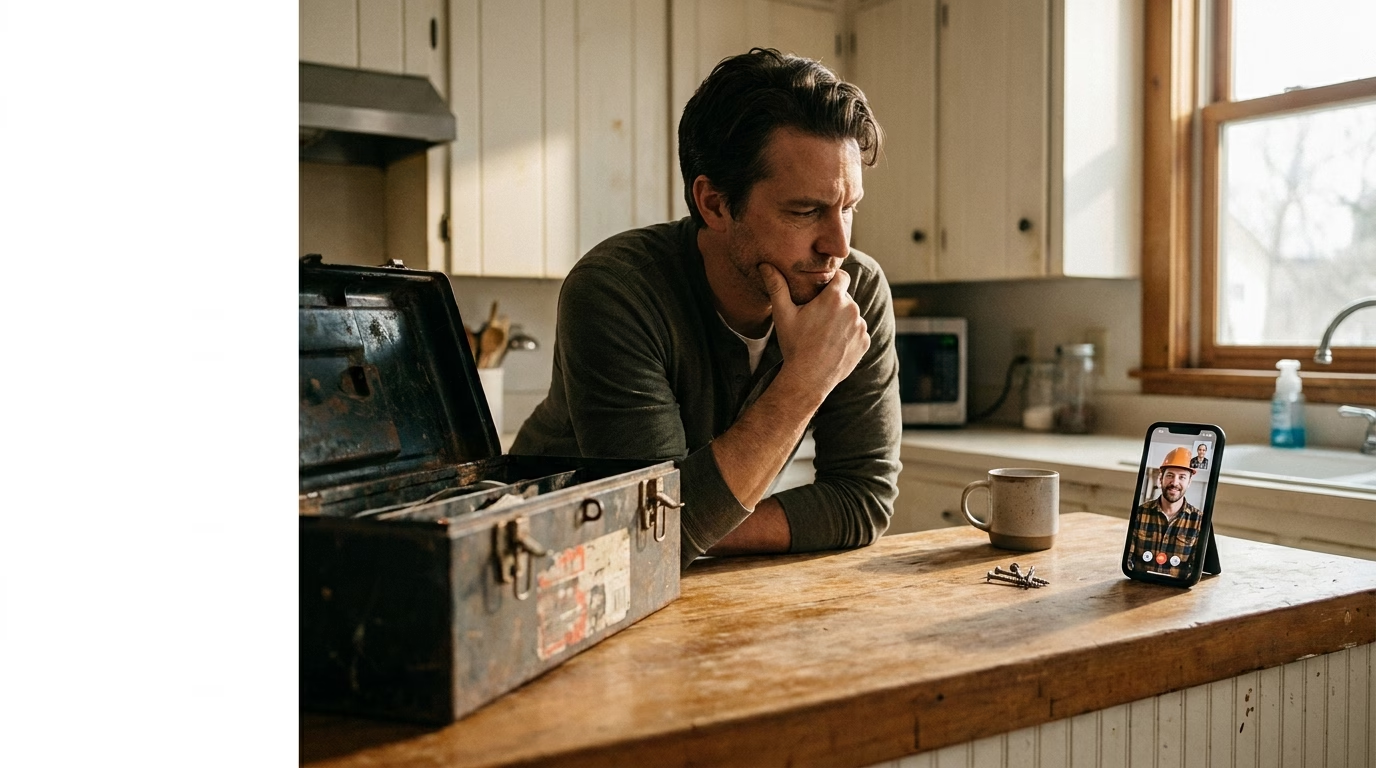
Every homeowner eventually faces the same crossroads: roll up your sleeves and tackle it yourself, or pick up the phone and call a professional? The answer is rarely obvious, and making the wrong call in either direction carries real consequences. Hire a pro for something simple and you overpay significantly. DIY something complex and you risk injury, code violations, or repair bills that dwarf what the professional would have charged in the first place. The framework below gives you a reliable decision-making system and then applies it to twelve of the most common household tasks so you know exactly where you stand before you ever lift a tool or dial a number.
The Six Factors That Drive the Decision
Before looking at any specific task, evaluate it through six lenses. Together, they build a complete picture of the true risk and reward of doing it yourself.
1. Skill Required
Some tasks demand years of practiced technique. Others require nothing more than a YouTube tutorial and an afternoon. Be brutally honest with yourself here. The question is not whether you could learn to do something, but whether you currently have the skill to do it safely and correctly the first time.
2. Safety Risk
Working at height, handling live electricity, operating heavy machinery, or working with pressurized systems all introduce serious injury potential. A mistake painting a bedroom wall costs you a few gallons of paint. A mistake on a live electrical panel can cost you your life. Safety risk is often the single factor that overrides everything else.
3. Code and Permit Needs
Many structural, electrical, and plumbing projects require permits pulled before work begins and inspections signed off when work is complete. In most jurisdictions, unpermitted work done by an unlicensed homeowner can void homeowner’s insurance, trigger fines, and create serious complications when you sell the property. If a task is permit-required in your area, the barrier to DIY rises considerably.
4. Cost of Mistakes
Ask yourself: what is the realistic worst-case scenario if this goes wrong? A botched drywall patch costs an afternoon and a bag of joint compound. A botched plumbing connection can cause water damage that runs into tens of thousands of dollars. Scale your caution to match the potential downside.
5. Time Value
Your time has monetary value. If hiring a professional costs $300 and the job would consume your entire weekend, and your time is worth $25 an hour, the math shifts. Add in learning curves, trips to the hardware store, and the mental load of managing a project you are unfamiliar with, and the professional often becomes the better financial decision even before accounting for quality.
6. Tool Investment
Some projects require specialized tools you will use once and never touch again. Renting is sometimes an option, but not always. Factor in the real cost of what you need to own or rent to complete the job properly. A faucet replacement needs basic wrenches you probably own. A tile job might require a wet saw rental. An HVAC inspection requires diagnostic equipment that costs thousands of dollars.
The 12-Task Breakdown
1. Interior Painting — DIY
Painting is the quintessential DIY project for good reason. The skill ceiling is low, the safety risk is minimal, permits are never required, and the cost of a mistake is simply repainting. Professional painters charge between $2 and $6 per square foot for interior work, meaning a standard room can cost $400–$900. The tools — brushes, rollers, drop cloths, painter’s tape — are inexpensive and reusable. Take your time with prep work, apply two coats, and the results are genuinely comparable to professional work.
2. Electrical Panel Work — Hire a Pro
The electrical service panel is the one area of your home where the risk profile makes DIY unacceptable for virtually everyone. Working inside a panel involves exposure to voltages that can kill instantly, and certain components — particularly the service entrance conductors — remain live even when the main breaker is off. Beyond the immediate safety risk, panel work almost always requires a permit and inspection. Licensed electricians carry both the certifications and the liability insurance to do this correctly. The average cost to hire an electrician for panel work runs $150–$250 per hour, and a full panel upgrade typically costs $1,500–$3,500 — money well spent given the stakes.
3. Plumbing Supply Lines — Hire a Pro
Supply lines carry water under continuous pressure, typically 40–80 PSI. A failed connection inside a wall can silently leak for weeks before visible damage appears, ultimately causing structural rot, mold, and thousands of dollars in remediation costs. Any work that involves cutting into existing supply lines, adding new ones, or modifying the main water system typically requires permits and a licensed plumber. For straightforward repairs clearly visible and accessible, a skilled DIYer might manage, but as a general rule, pressurized supply work belongs in professional hands.
4. Drain Unclogging — DIY
A slow or clogged drain is one of the most approachable plumbing tasks a homeowner can tackle. A good plunger handles the majority of toilet and drain clogs in minutes. For tougher blockages, a manual drain snake or a $25 drain auger from a hardware store handles most scenarios. Chemical drain cleaners work in some cases but carry their own risks to pipes and should be used sparingly. No permits are involved, safety risk is low, and a plumber’s service call for a simple clog runs $150–$300 — easily justified only if all DIY options have genuinely failed.
5. Tile Work — Skilled DIY
Tile falls into a nuanced middle category. It is absolutely possible to do it yourself, but the margin between a professional-looking result and an embarrassing one is largely determined by technique and patience. Setting tile properly requires understanding substrate preparation, correct trowel technique, consistent spacing, careful cuts, and proper grouting. A beginner tackling a small bathroom backsplash can do well. A first-timer doing a full bathroom floor or a shower surround — where waterproofing becomes critical — faces a steeper challenge. Assess your project’s complexity honestly. If you have done tile work before, proceed confidently. If not, start small or bring in a pro for anything involving a wet area.
6. Tax Filing — Depends
This one genuinely depends on your situation. A W-2 employee with no investments, no business income, and a straightforward return can use free filing software and finish in an hour. The IRS Free File program covers individuals earning under $79,000 annually. Once you add self-employment income, rental properties, business deductions, stock sales, or multi-state filing requirements, the complexity escalates quickly. Errors can trigger audits or costly penalties. A CPA or enrolled agent typically charges $150–$500 for individual returns, and that cost is often recovered through deductions a professional catches that you would have missed.
7. Large Tree Removal — Hire a Pro
Large tree removal is one of the most dangerous tasks a homeowner can attempt. Chainsaw injuries are among the most severe in emergency rooms, and calculating the fall path of a large tree requires experience that most homeowners simply do not have. Trees near structures, power lines, or fences add additional complexity. Professional arborists carry liability insurance specifically for this work. Costs range from $500 to $2,000 or more depending on tree size and location — a reasonable price given that a miscalculated fall can demolish a car, fence, or house.
8. Small Landscaping — DIY
Planting shrubs, building garden beds, laying sod, installing landscape edging, and mulching are all well within DIY territory. These tasks require physical effort more than specialized knowledge, tools are basic, safety risk is low, and permits are almost never required. The savings over hiring a landscaping crew are substantial — landscapers typically charge $50–$100 per hour for labor. For routine, ground-level landscaping work, DIY is almost always the right call.
9. HVAC Tune-Up — Hire a Pro
Homeowners can and should handle basic HVAC maintenance: changing filters regularly, keeping condenser coils clear of debris, and ensuring vents are unobstructed. But a true system tune-up — checking refrigerant levels, testing electrical components, calibrating controls, and inspecting the heat exchanger — requires EPA 608 certification to legally handle refrigerants and diagnostic equipment that costs far more than a tune-up itself. Annual professional HVAC maintenance typically runs $75–$200 and pays for itself in efficiency gains and early detection of problems that would otherwise become expensive failures.
10. Drywall Patching — DIY
Small to medium drywall repairs are among the most learnable DIY skills. Patching holes left by doorknobs, anchors, or minor damage requires joint compound, mesh tape or a patch kit, sandpaper, and paint — all available for under $30. The technique takes some practice to achieve a perfectly smooth finish, but even imperfect patches are nearly invisible under paint. A professional drywall repair service typically charges $75–$150 for a small patch. This is genuine DIY territory.
11. Roof Replacement — Hire a Pro
Roof replacement combines nearly every factor that points toward professional work: extreme fall risk, technical skill requirements, permit and code considerations, and catastrophic cost-of-mistakes potential. A poorly installed roof can fail prematurely, void the manufacturer’s warranty on materials, and allow water intrusion that damages insulation, framing, and ceilings. Roofing contractors carry workers’ compensation insurance for exactly the injuries that happen on roofs. The national average for a full roof replacement runs $8,000–$20,000 depending on size and materials — and that includes the peace of mind of a workmanship warranty.
12. Faucet Replacement — DIY
Replacing a kitchen or bathroom faucet is one of the cleanest DIY wins available. The process involves shutting off the supply valves under the sink, disconnecting supply lines, unbolting the old faucet, and reversing the process with the new one. Basic adjustable wrenches and possibly a basin wrench handle the job. No permits are required, the water stays off the entire time so there is no pressurized risk, and plumber rates for this service run $100–$300 for a task that takes most competent DIYers under an hour. With a clear instruction manual and a few tools, this one belongs firmly in the DIY column.
The Bottom Line
The DIY vs. pro decision is not really about pride or cost alone — it is about matching the right resource to the actual requirements of the job. Use the six-factor framework honestly, and the answer usually becomes clear. Save your energy and money for tasks where DIY adds genuine value, and spend confidently on professionals when safety, code compliance, or catastrophic risk potential are in play. Your home — and your bank account — will reflect the discipline of that approach over time.
Sources and Further Reading
- Interior painting cost estimates: HomeAdvisor National Cost Guide — homeadvisor.com
- Electrical panel upgrade costs: Angi Cost Guide — angi.com
- IRS Free File eligibility: IRS.gov — irs.gov/filing/free-file-do-your-federal-taxes-for-free
- EPA Section 608 refrigerant certification: EPA.gov — epa.gov/section608
- Roof replacement cost data: Forbes Home — forbes.com/home-improvement/roofing/roof-replacement-cost
- Tree removal cost ranges: Bob Vila Cost Guide — bobvila.com/articles/tree-removal-cost
- HVAC maintenance costs: This Old House — thisoldhouse.com/hvac/reviews/hvac-maintenance-cost
