
The Rise of Women’s Professional Sports
A Golden Era: How Women’s Professional Sports Are Rewriting the Rules in 2026
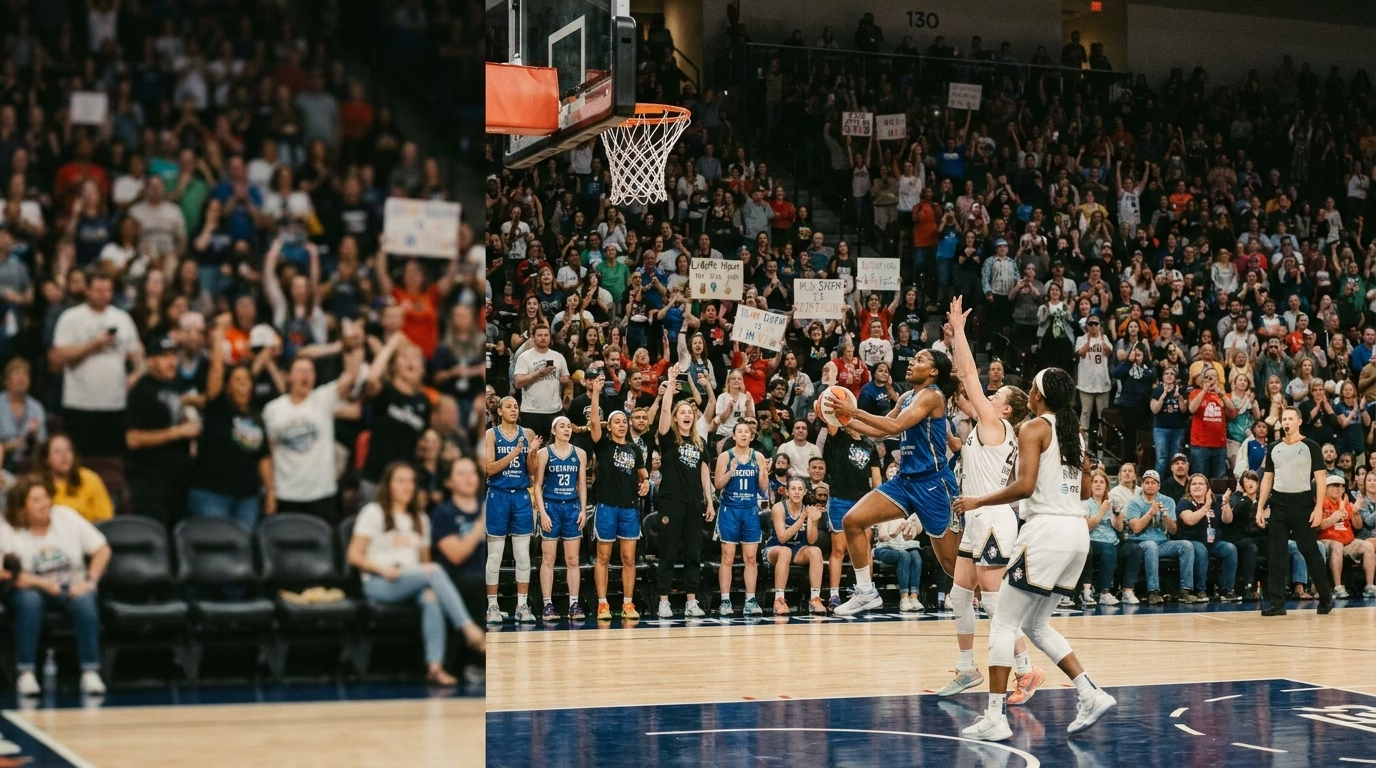
Something fundamental has shifted in the landscape of professional sports. What was once a polite conversation about “growing the game” has become a full-throated economic revolution, with women’s leagues posting record viewership numbers, franchise valuations climbing into nine figures, and sponsorship dollars flowing at a pace that would have seemed unimaginable just five years ago. In 2026, women’s professional sports are not merely surviving alongside their male counterparts — they are, in several measurable ways, outpacing them in growth rate, cultural cachet, and fan engagement. Here is a comprehensive look at where things stand and where they are headed.
WNBA: Prime Time, Finally
The WNBA entered 2026 riding the momentum of what league officials called its most transformative two-year stretch in history. Average viewership for the 2025 WNBA season surpassed 1.5 million viewers per game on national broadcasts — a figure that represented a 200% increase over the 2022 average — and early 2026 projections suggest that number will climb further as the league benefits from an expanded media rights deal with Amazon Prime Video, ESPN, and CBS Sports collectively valued at approximately $2.2 billion over eight years.
Expansion has been equally aggressive. The league welcomed its Portland franchise in 2026, bringing the total number of teams to 16, with ownership groups in Philadelphia and Denver already awarded conditional expansion franchises set to debut by 2028. Franchise valuations that hovered around $50–75 million just three years ago have rocketed upward, with some estimates placing the Portland franchise’s early market value above $150 million at launch.
Attendance records are falling across the league, and arenas that once felt cavernous are now routinely selling out. The shift is cultural as much as commercial: the WNBA has cultivated a younger, more digitally engaged fanbase, and its players have become genuine cultural figures with massive social media followings that drive merchandise sales and sponsorship conversations alike.
NWSL: From Niche to Nine Figures
The National Women’s Soccer League has undergone perhaps the most dramatic financial transformation of any women’s league in the world. In 2026, NWSL club valuations have crossed thresholds that would have seemed fantastical a decade ago. The Boston Legacy FC expansion franchise, awarded in late 2025, sold for a reported $120 million — a landmark number for women’s club soccer anywhere on the planet.
Existing clubs have seen valuations surge accordingly. Angel City FC, which entered the league in 2022 at a valuation around $180 million, has seen its estimated value climb well above $300 million by 2026, driven by a devoted fanbase, celebrity investment, and breakthrough merchandise revenue. The league itself now counts 16 teams, with San Diego Wave FC and Kansas City Current operating some of the most purpose-built, fan-forward facilities in American soccer.
Television and streaming numbers have followed. The league’s media deal with CBS Sports, Paramount+, and Prime Video, extended through 2027, has provided both financial stability and unprecedented exposure. Matchday atmospheres at stadiums like CPKC Stadium in Kansas City — the first stadium in North America built specifically for a professional women’s soccer team — have become models for how women’s sports infrastructure should be developed.
PWHL: Hockey’s Fast-Rising Contender
The Professional Women’s Hockey League is, by any reasonable metric, the sports success story of the past two years. Launched in January 2024 after the collapse of the Premier Hockey Federation, the PWHL reached its second full season in 2025–2026 with sold-out arenas, a national broadcast deal in both the United States and Canada, and a passionate fanbase that has stunned observers with its intensity and loyalty.
Toronto, Boston, Minnesota, Montreal, Ottawa, and New York anchor the league, and all six franchises reported attendance growth of more than 30% in the 2025–2026 season compared to their inaugural year. The PWHL has been particularly effective at converting casual hockey fans — especially in Canada, where women’s hockey carries deep cultural significance — into devoted league followers. The league’s championship, the Walter Cup, has become appointment viewing, drawing broadcast numbers that rival early-era WNBA playoff audiences.
Discussions around expansion to Seattle and potentially a European exhibition series have already begun, suggesting the PWHL’s leadership is thinking several moves ahead.
USWNT: Still Setting the Standard
The United States Women’s National Team enters 2026 having won back-to-back World Cup titles (2023 and a dominant 2027 cycle is already the subject of intense previewing) and operating as the global benchmark for women’s international soccer. The team’s influence extends well beyond the field: USWNT matches consistently rank among the most-watched soccer events in the United States regardless of gender, and the team’s jersey remains one of the top-selling sports apparel items in the country year after year.
The 2026 Copa Americana — a new South American and North American women’s invitational tournament launched as a bridge between World Cup cycles — features the USWNT as the marquee draw, and early ticket demand has been described by organizers as extraordinary. Commercially, the USWNT’s success has created a powerful pipeline: young players who grew up watching the 2015 and 2019 World Cup champions are now entering the NWSL as professionals, keeping the talent pipeline rich and the competitive level elevated.
LPGA and Tennis: Closing the Prize Money Gap
The conversation around pay equity in individual sports has reached a genuine inflection point. On the LPGA Tour, total prize money for the 2026 season surpassed $130 million — a record figure representing a near doubling of total purses from 2020 levels. Several flagship events, including the ANA Inspiration and the U.S. Women’s Open, now offer prize purses that approach or match their PGA Tour equivalents.
In tennis, the four Grand Slams have offered equal prize money to men and women since the mid-2000s, but the broader tour has lagged. WTA Tour prize money has increased significantly in the 2024–2026 period following renegotiated broadcast deals and a surge in global fan interest, with total tour prize money now exceeding $200 million across the calendar year. The argument that women’s sports cannot command equivalent commercial value is growing increasingly difficult to sustain in the face of these numbers.
Sponsorship: The Dollars Are Following the Eyeballs
Corporate America has taken note of what the data has been screaming for two years. Total sponsorship spending on women’s professional sports in the United States reached an estimated $1.3 billion in 2025, according to industry tracking firm SponsorUnited, and 2026 figures are projected to exceed $1.7 billion. Categories that were historically slow to invest — financial services, automotive, and technology — have become some of the most aggressive spenders, with brands like Deloitte, Ally Financial, and Google making multiyear, multimillion-dollar commitments to women’s leagues and individual athletes.
The return on investment narrative has become a selling point in boardrooms. Brands that sponsored WNBA teams during the league’s 2024 surge reported social media engagement rates that significantly outperformed comparable investments in men’s leagues, creating a compelling commercial case for continued and expanded commitment.
College NIL: The Fuel Behind the Fire
No single development has done more to raise the visibility of women’s college athletics — and by extension, women’s professional sports — than the introduction of Name, Image, and Likeness (NIL) compensation for college athletes. Female basketball players in particular have emerged as NIL powerhouses, with elite prospects signing deals worth hundreds of thousands of dollars before they play a single professional game.
This dynamic has two important downstream effects. First, it keeps elite women athletes in the public eye during their college years, building fanbases and social media followings that translate directly into professional league interest when they turn pro. Second, it signals to young girls that a career in women’s sports is not just an athletic ambition but a viable economic one — a cultural signal whose impact will compound over decades.
5 Events to Watch in 2026
- WNBA All-Star Weekend (July, Indianapolis): The league’s expanded format now includes a three-day fan festival, and the game itself is expected to draw record television numbers following a breakthrough 2025 regular season.
- PWHL Walter Cup Finals (May): With Toronto and Boston emerging as the league’s dominant forces, a Finals matchup between the two could become the most-watched women’s hockey event in North American history.
- NWSL Championship (November, Kansas City): Held for the first time at CPKC Stadium, the championship game will be a showcase moment for women’s soccer infrastructure in America.
-
Copa Americana Women’s Tournament (September, multiple U.S. cities): The USWNT’s first major competitive international action of the 2026 calendar, drawing intense preview interest ahead of the 2027 World Cup qualifying cycle.
-
U.S. Women’s Open Golf (June, Pinehurst): With a record purse and a stacked international field, this is shaping up to be the LPGA’s marquee moment of the year.
5 Athletes to Follow
-
Caitlin Clark (WNBA, Indiana Fever): The most transformative player in women’s basketball history continues to break records and redefine what a women’s sports star can mean commercially and culturally.
-
Trinity Rodman (NWSL/USWNT): Now fully entering her prime, Rodman is the face of the next generation of American soccer and a commercial force in her own right.
-
Sarah Nurse (PWHL, Toronto): Canada’s most marketable women’s hockey player brings elite skill, charisma, and a massive platform to the PWHL’s most important season yet.
-
Nelly Korda (LPGA): The world’s top-ranked women’s golfer is chasing history in 2026 after a dominant 2024–2025 stretch that drew comparisons to Tiger Woods’s peak years in terms of tour dominance.
-
Aryna Sabalenka (WTA): The world No. 1 tennis player combines aggressive, crowd-pleasing play with a global profile that makes her the WTA’s most compelling figure heading into the second half of the decade.
What’s Next
The trajectory of women’s professional sports in 2026 points in one clear direction: continued, accelerating growth. The structural foundations — better media deals, improved facilities, rising NIL visibility, and genuine corporate sponsorship commitment — are now in place in ways they were not even three years ago. The cultural momentum, driven by a generation of fans who grew up watching women’s sports as a matter of course rather than a novelty, is self-sustaining.
The questions being asked in boardrooms and league offices now are not whether women’s sports will grow, but how fast, and which organizations will be positioned to capture the most value from that growth. For fans, athletes, and investors alike, there has never been a better time to pay attention.
Sources & Further Reading
- WNBA Media Rights Deal Coverage: ESPN Press Room
- NWSL Franchise Valuations: Sportico Women’s Sports Valuations Report 2025
- Angel City FC Valuation History: Forbes Sports Money
- PWHL Attendance and Growth Data: PWHL Official
- SponsorUnited Women’s Sports Sponsorship Report: SponsorUnited
- LPGA Total Prize Money 2026: LPGA Official Tour Stats
- WTA Prize Money Overview: WTA Official
- NIL and Women’s Athletics: On3 NIL Database
- CPKC Stadium, Kansas City Current: Kansas City Current Official
