
How to Buy a Used Car Without Getting Burned
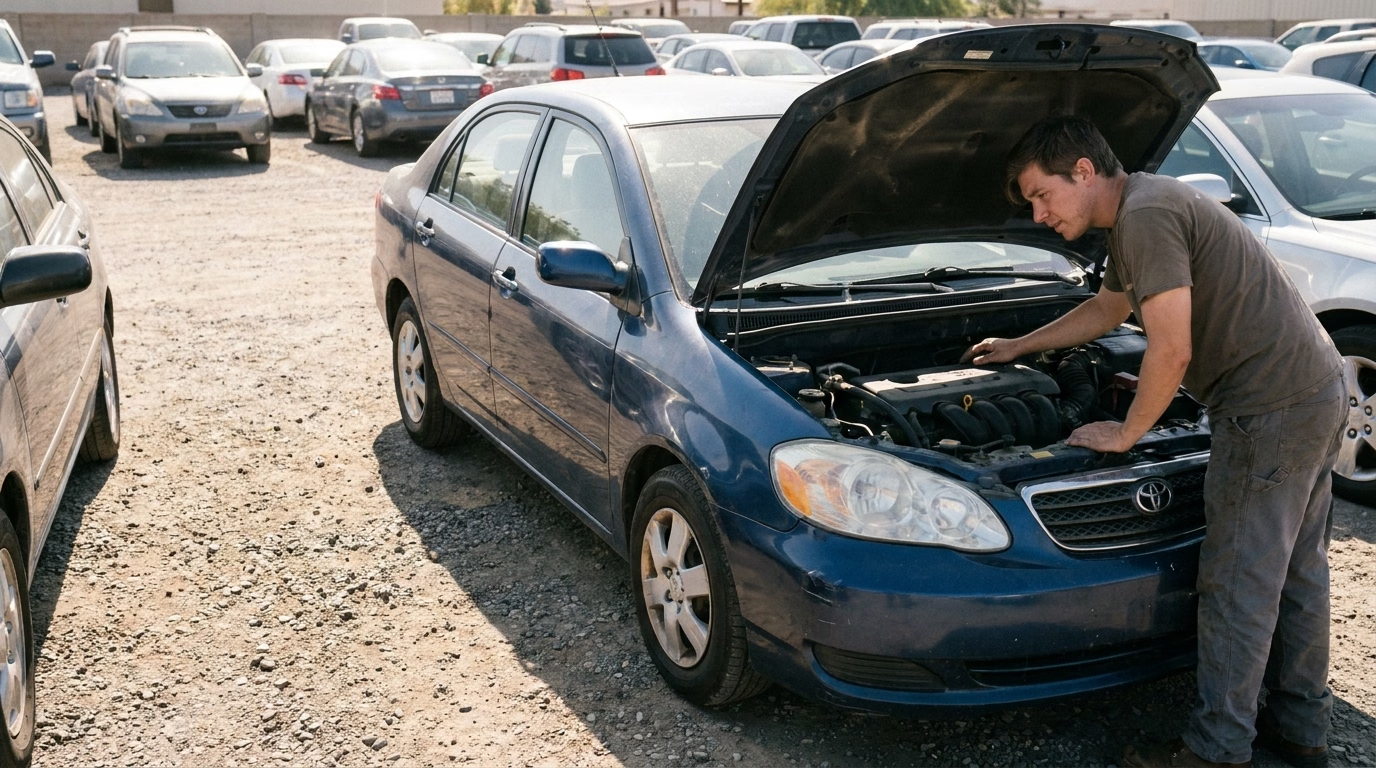
Buying a used car for the first time can feel overwhelming. There are dozens of decisions to make, dozens of ways to get burned, and no shortage of people who seem to know more than you do. But here’s the truth: with a solid process and a little preparation, you can walk onto a dealer lot or pull up to a private seller’s driveway with confidence, make a smart decision, and drive away knowing you got a fair deal. This guide walks you through every step—from figuring out what you can actually afford, to signing the paperwork without getting caught off guard.
—
## Setting Your Budget and Total Ownership Costs
The biggest mistake first-time used car buyers make is confusing the sticker price with the actual cost of owning the car. These are very different numbers.
**Start with what you can truly afford.** Financial experts generally recommend spending no more than 15% of your monthly take-home pay on a car payment, and keeping total transportation costs (payment + insurance + fuel + maintenance) under 20%. So if you bring home $3,500 a month, your car payment should ideally stay around $500 or less.
**Beyond the purchase price, budget for these ongoing costs:**
– **Insurance:** This varies dramatically by age, driving history, location, and the vehicle itself. A used SUV might cost $150/month to insure; a sports car could be $300+. Get insurance quotes before you fall in love with a car—call your insurer with the specific VIN or at minimum the year, make, model, and trim.
– **Fuel:** Use the EPA’s fuel economy site (fueleconomy.gov) to compare real-world MPG estimates. Calculate your monthly fuel cost based on how many miles you drive.
– **Maintenance:** Budget roughly $100–$150/month for a typical used car, more if it’s older or has higher mileage. Plan for oil changes every 5,000–7,500 miles, tire rotations, and eventual brake and battery replacements.
– **Registration and taxes:** These vary by state but can add hundreds to your upfront cost.
– **Emergency repairs:** Older vehicles can have unexpected breakdowns. Having $1,000–$2,000 in a car emergency fund before you buy is smart financial protection.
Once you factor all of this in, you may realize the car you thought you could afford is actually $100–$200/month more expensive than you planned. Doing this math upfront protects you from becoming “car poor”—spending so much on transportation that everything else suffers.
—
## Where to Buy Used Cars and Which Sources to Trust
Not all used car sellers are created equal. Here’s a breakdown of your main options and the honest pros and cons of each.
**Franchised dealerships** (like Toyota, Ford, or Honda dealers) often sell certified pre-owned (CPO) vehicles that come with manufacturer-backed warranties and have passed multi-point inspections. CPO cars cost more, but you get added peace of mind. These dealers are also regulated, which offers some consumer protections.
**Independent used car lots** can offer lower prices, but quality control varies widely. Some are reputable; others are not. Do your research on any independent dealer—check Google reviews, the Better Business Bureau, and your state’s attorney general consumer protection site.
**Private sellers** (found on Craigslist, Facebook Marketplace, or AutoTrader) often offer the best prices because they don’t have overhead to cover. However, there are no warranties, no recourse if something goes wrong, and a higher risk of scams. Always meet in a public place, bring someone with you, and never pay before a full inspection.
**Online retailers** like Carvana, Vroom, or CarMax offer no-haggle pricing, return windows (typically 7 days), and a streamlined experience. Prices may be slightly higher than private sellers, but the convenience and added protection can be worth it for first-time buyers.
**Rule of thumb:** The more you know about cars, the more comfortable you can be with a private seller. The less you know, the more sense it makes to pay a slight premium at a dealership or online retailer with a return policy.
—
## How to Research a Vehicle History Report
Before you inspect any car in person, run a vehicle history report. This is non-negotiable.
A vehicle history report uses a car’s VIN (Vehicle Identification Number)—a 17-character code typically found on the dashboard near the windshield or on the driver’s side door jamb—to pull records about that specific car.
**What a vehicle history report tells you:**
– Number of previous owners
– Accident and damage history
– Whether the title is clean, salvage, or rebuilt (avoid salvage titles unless you really know what you’re doing)
– Odometer readings over time (helps spot rollback fraud)
– Service records, if reported
– Whether the car was ever used as a rental, fleet, or taxi
**Where to get one:**
– **Carfax** (carfax.com): The most widely recognized. Single reports cost around $44.99, or you can get unlimited reports for about $99.99/month.
– **AutoCheck** (autocheck.com): Often cheaper, similar data. Single report around $24.99.
– **NMVTIS** (vehiclehistory.gov): Free government database with basic title information.
– **Free VIN checks:** The National Insurance Crime Bureau (nicb.org) offers a free VIN check for theft and total loss records.
**Important caveat:** History reports are only as complete as what gets reported. A car can have unreported accident damage or mechanical issues that don’t appear anywhere. A history report is a starting point, not a guarantee.
—
## What to Inspect Before You Test Drive
### Pre-Purchase Inspection Checklist (Print This Out)
Bring this checklist with you. You don’t need to be a mechanic—you just need to be systematic.
**Exterior:**
– [ ] Check for rust, especially on the wheel wells, underside, and along the door bottoms
– [ ] Look for uneven panel gaps (may indicate accident repairs)
– [ ] Check that all doors, the hood, and the trunk open and close smoothly
– [ ] Look for mismatched paint or overspray on rubber trim (another sign of bodywork)
– [ ] Inspect all tires for even tread wear and check for cracking on sidewalls
**Under the Hood:**
– [ ] Check the oil on the dipstick—should be amber or brown, not black or milky (milky oil can mean a head gasket problem)
– [ ] Check coolant level and color (should be green, orange, or pink, not rusty or brown)
– [ ] Look for cracks, fraying, or stiffness in belts and hoses
– [ ] Look for oil leaks or residue around the engine block
– [ ] Check the battery terminals for heavy corrosion buildup
**Interior:**
– [ ] Test every button, switch, and feature (AC, heat, windows, mirrors, seat adjustments, radio)
– [ ] Check for water stains or mold smell (sign of flooding)
– [ ] Inspect the floor mats and carpet for excessive wear or hidden moisture
– [ ] Make sure the seatbelts click, retract, and latch properly
**During the Test Drive:**
– [ ] Drive it at highway speed—listen for vibrations, pulls, or unusual sounds
– [ ] Test the brakes hard in a safe area—they should stop straight without grinding
– [ ] Check that the steering wheel centers itself after turns
– [ ] Turn off the radio and listen—any clunks, rattles, or squeaks deserve investigation
– [ ] Test reverse, all drive modes, and parking
**After the Test Drive:**
– [ ] Park on clean pavement and wait five minutes, then check for any fluid drips underneath
**Pro tip:** Always pay for a pre-purchase inspection (PPI) from an independent mechanic before finalizing a sale. This typically costs $100–$150 and can save you thousands. If a seller refuses to let a mechanic inspect the car, walk away.
—
## Negotiating the Price Like a Pro
Negotiation intimidates most first-time buyers, but it becomes much easier when you have data and a script.
**Do your homework first.** Check the car’s market value using:
– **Kelley Blue Book** (kbb.com)
– **Edmunds True Market Value** (edmunds.com)
– **NADA Guides** (nadaguides.com)
Search for identical vehicles (same year, make, model, trim, mileage) in your area on AutoTrader and Cars.com to see what others are actually listed for.
**Negotiation script:**
> *”I’ve done some research and comparable [year/make/model] with similar mileage are selling in this area for around $[X]. Given the [issue you found—wear, age, any items from the inspection], I’d like to offer $[X minus 5–10%]. Is that something you can work with?”*
Keep it calm and factual. You’re not attacking them—you’re making a business offer based on data.
**If they say no:**
> *”I understand. What’s the lowest you’re able to go? I’m ready to move forward today if the numbers make sense.”*
**For dealerships specifically, watch for “payment packing.”** This is when a salesperson focuses on monthly payments instead of the total price. Always negotiate the out-the-door price first, then figure out financing separately.
—
## Which Dealer Fees Are Negotiable?
When you buy from a dealership, you’ll see a list of fees added to the price. Here’s how to read them:
| Fee | Negotiable? | Notes |
|—|—|—|
| Documentation fee | Sometimes | Varies by state; often $100–$500. Ask for it to be waived or reduced. |
| Dealer prep fee | Yes | Often meaningless. Push back firmly. |
| Advertising fee | Yes | You shouldn’t pay for their marketing. |
| Extended warranty | Yes | Price and terms are negotiable. Shop the same coverage from third parties. |
| Paint/fabric protection | Yes | Rarely worth it. Decline or negotiate heavily. |
| Sales tax | No | Required by law. |
| Title and registration fees | No | Government fees; non-negotiable. |
| Destination fee (new cars) | No | Fixed; non-negotiable. |
Ask for an itemized breakdown of every fee before you sign anything. Dealers are legally required to show you these costs. Don’t let anyone rush you through the finance office.
—
## Finalizing the Deal Safely
Once you’ve agreed on a price, the paperwork begins. Here’s how to protect yourself at the finish line.
**Read everything before signing.** Don’t let anyone pressure you into signing quickly. Take your time with each document.
**Key documents you’ll receive:**
– **Bill of Sale:** Lists the agreed price, fees, and vehicle details. Verify every number matches what you discussed.
– **Title:** The legal proof of ownership. Make sure the seller’s name matches the title and there are no liens (money owed on the car) unless the dealer is handling the payoff.
– **Odometer disclosure statement:** Required by federal law. Verify the mileage matches what’s on the dashboard.
**If financing through the dealership:** Get the interest rate and loan term in writing before you sign. Compare it to your own bank or credit union—you often can get a better rate on your own. Credit unions, in particular, tend to offer competitive auto loan rates.
**For private sales:**
– Complete the transaction at your bank or credit union if possible
– Pay with a cashier’s check rather than cash or personal check
– Don’t hand over money until you have the signed title in hand
– Complete the title transfer with your DMV within the legally required window (usually 10–30 days, depending on your state)
**After the sale:**
– Add the car to your insurance policy before you drive it off (many policies provide a short grace period, but confirm with your insurer)
– Keep all paperwork in a secure location
– Schedule your first oil change or service appointment if the car is due
—
Buying a used car the right way takes time and energy, but every step you follow protects your money and your safety. The buyers who get taken advantage of are almost always the ones who skip research, skip inspection, or rush the paperwork. Go slow, stay systematic, and don’t let anyone pressure you into a decision you’re not ready to make. The right car at the right price is worth waiting for.
—
## Sources and Resources
– **Fuel economy estimates:** U.S. Department of Energy – [fueleconomy.gov](https://www.fueleconomy.gov)
– **Vehicle history reports:** Carfax – [carfax.com](https://www.carfax.com) | AutoCheck – [autocheck.com](https://www.autocheck.com)
– **Free government VIN database:** NMVTIS – [vehiclehistory.gov](https://www.vehiclehistory.gov)
– **Free theft/total loss VIN check:** NICB – [nicb.org/vincheck](https://www.nicb.org/vincheck)
– **Used car market values:** Kelley Blue Book – [kbb.com](https://www.kbb.com) | Edmunds – [edmunds.com](https://www.edmunds.com) | NADA – [nadaguides.com](https://www.nadaguides.com)
– **Car listings for price comparison:** AutoTrader – [autotrader.com](https://www.autotrader.com) | Cars.com – [cars.com](https://www.cars.com)
– **Carfax pricing (as of 2024):** Single report ~$44.99 / Unlimited ~$99.99 per month – verify current pricing at [carfax.com](https://www.carfax.com)
– **Consumer protection resources:** Better Business Bureau – [bbb.org](https://www.bbb.org) | FTC Used Car Rule – [ftc.gov](https://www.ftc.gov/consumers/used-car-rule)
– **Average car ownership costs:** AAA’s annual “Your Driving Costs” study – [newsroom.aaa.com](https://newsroom.aaa.com)
– **Auto loan rates:** Compare rates at your local credit union via the National Credit Union Administration – [mycreditunion.gov](https://www.mycreditunion.gov)
