
How to Buy a Used Car Without Getting Burned
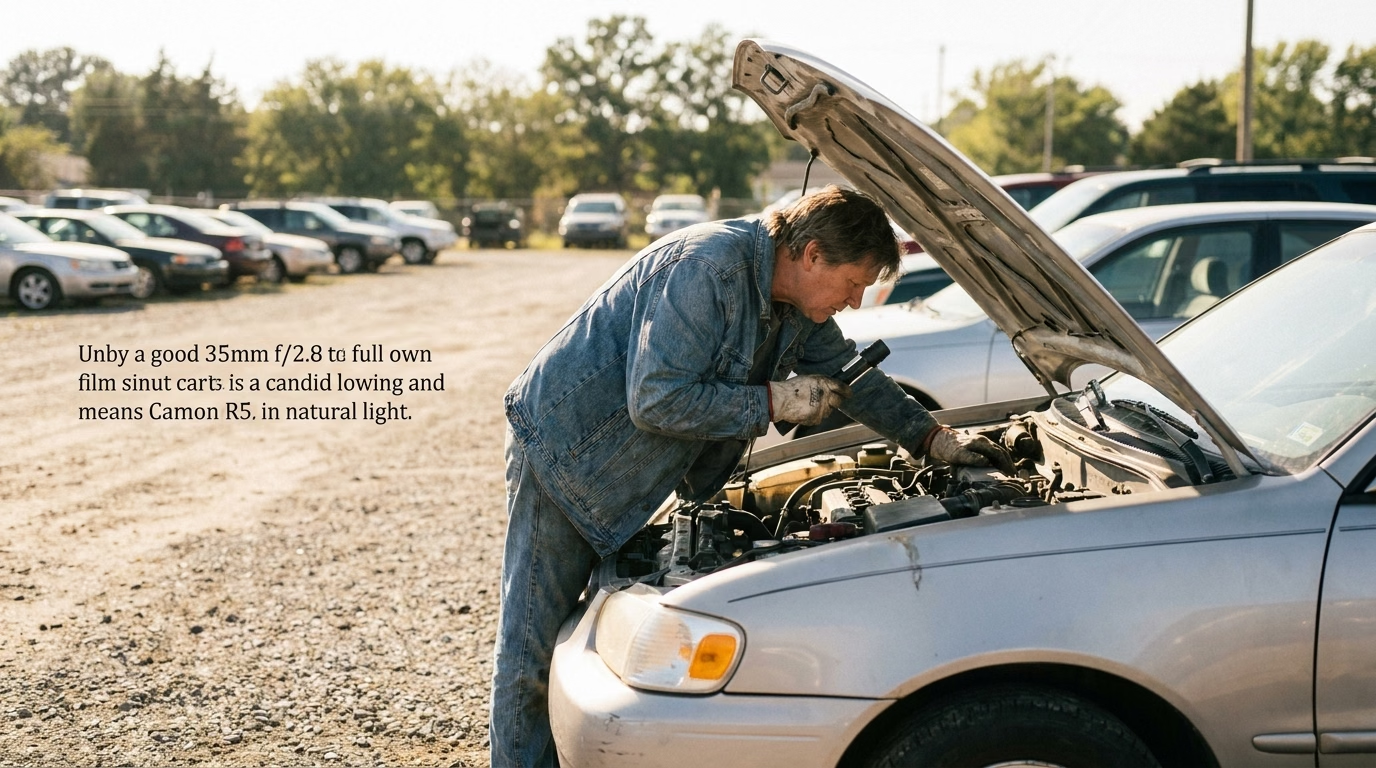
Buying a used car for the first time can feel overwhelming. There are thousands of vehicles on the market, dozens of sellers competing for your attention, and no shortage of people ready to take advantage of someone who doesn’t know what they’re doing. But here’s the truth: with a little preparation, buying a used car is completely manageable — even for someone who can’t tell a camshaft from a crankshaft. This guide will walk you through every step of the process, from figuring out what you can actually afford to driving off with a vehicle you feel confident about.
—
## Setting Your Budget and Total Ownership Costs
The biggest mistake first-time used car buyers make is focusing only on the purchase price. The sticker number is just the beginning. To buy smart, you need to calculate your **total cost of ownership** — everything it will cost you to buy, insure, fuel, maintain, and eventually repair the car over time.
**Start with the purchase price.** A general rule of thumb is to spend no more than 15–20% of your annual take-home pay on a vehicle purchase. If you take home $40,000 a year, that means keeping your car budget under $6,000–$8,000. If you’re financing, aim for a monthly payment no higher than 10–15% of your monthly take-home pay.
**Factor in these additional costs:**
– **Insurance:** Get insurance quotes before you buy. A sporty car or an older car with a poor safety record can carry premiums two to three times higher than a plain sedan. The national average for used car insurance runs approximately $1,200–$1,800 per year, but this varies widely by driver age, location, and vehicle. You can get free quotes at sites like [Progressive](https://www.progressive.com), [Geico](https://www.geico.com), or [The Zebra](https://www.thezebra.com).
– **Registration and taxes:** Most states charge sales tax on vehicle purchases and annual registration fees. These can add $500–$2,000+ to the upfront cost depending on where you live. Check your state DMV website for specifics.
– **Fuel:** A truck or SUV getting 18 MPG will cost you significantly more to fuel than a compact sedan getting 32 MPG. Use the [EPA’s fuel cost calculator](https://www.fueleconomy.gov/feg/Find.do?action=sbs) to compare real-world fuel expenses.
– **Maintenance:** Budget roughly $500–$900 per year for routine maintenance (oil changes, tires, brakes, filters). Older, higher-mileage vehicles may cost more. Research reliability ratings for any model you’re considering at [Consumer Reports](https://www.consumerreports.org) or [J.D. Power](https://www.jdpower.com).
– **Emergency repairs:** Set aside at least $1,000 as a repair fund. This isn’t optional — it’s how you avoid a breakdown turning into a financial crisis.
—
## Where to Buy Used Cars and Which Sources to Trust
Not all sellers are created equal. Here’s a breakdown of your main options:
**Franchised dealerships** (think Toyota, Honda, or Ford dealers selling used cars) tend to offer certified pre-owned (CPO) vehicles with manufacturer-backed warranties, multi-point inspections, and financing options. You’ll pay more, but you get more protection. CPO programs are worth the premium if you’re buying a vehicle under 5 years old with under 60,000 miles.
**Independent used car lots** vary enormously in quality. Some are reputable local businesses; others are “buy here, pay here” operations targeting buyers with poor credit at sky-high interest rates. Do your homework — check Google reviews, the Better Business Bureau ([bbb.org](https://www.bbb.org)), and ask if they allow outside inspections.
**Private sellers** (via platforms like [Facebook Marketplace](https://www.facebook.com/marketplace), [Craigslist](https://www.craigslist.org), or [CarGurus](https://www.cargurus.com)) often offer the lowest prices because there’s no dealer markup. The tradeoff is no warranty and more risk. Private sellers work best if you’re confident doing your own research or plan to pay for a professional inspection.
**Online car retailers** like [Carvana](https://www.carvana.com), [Vroom](https://www.vroom.com), and [CarMax](https://www.carmax.com) offer fixed, no-haggle pricing with return windows (typically 7 days). These are great for buyers who hate negotiation and want a more transparent process — just know you’ll likely pay above-market pricing for that convenience.
**The safest approach for a first-time buyer:** Start with CarMax or a franchised dealership for familiarity and protection, but use private listings and online marketplaces to benchmark fair market prices before you walk in.
—
## How to Research a Vehicle History Report
Before you get emotionally attached to any car, pull its history report. All you need is the **VIN (Vehicle Identification Number)**, which is a 17-character code found on the driver’s side dashboard (visible through the windshield) or on the driver’s side door jamb.
**Two main services to know:**
– **Carfax** ([carfax.com](https://www.carfax.com)): Reports cost around $40 for a single report or $100 for unlimited reports within a 60-day period. Many dealers provide these for free — always ask.
– **AutoCheck** ([autocheck.com](https://www.autocheck.com)): Often slightly cheaper, and some buyers run both to cross-reference.
**What to look for in the report:**
– **Accident history:** Minor fender-benders are less concerning than structural damage or airbag deployments.
– **Title issues:** Avoid any car with a salvage title (it was declared a total loss by an insurance company), rebuilt title, or flood damage. These vehicles are hard to insure and may have hidden safety issues.
– **Number of previous owners:** One or two owners is ideal. More owners in a short period can signal problems.
– **Odometer discrepancies:** If the mileage doesn’t match up across service records, walk away.
– **Service records:** Regular oil changes and maintenance are a green flag that the owner cared for the vehicle.
A clean history report doesn’t guarantee a perfect car — it just tells you what’s been officially reported. That’s why the next step matters just as much.
—
## What to Inspect Before You Test Drive
Print this checklist and bring it with you every time you look at a car.
**Exterior:**
– [ ] Walk around the entire car. Look for uneven panel gaps, which can indicate a prior collision repair.
– [ ] Check paint color consistency. Mismatched panels suggest bodywork was done.
– [ ] Inspect the tires — look for uneven wear (can indicate alignment or suspension issues) and check tread depth.
– [ ] Look under the car for rust, drips, or wet spots.
– [ ] Check that all lights (headlights, taillights, turn signals) work.
**Interior:**
– [ ] Sit in every seat. Check that seatbelts latch and retract properly.
– [ ] Test every button, knob, and switch: windows, locks, mirrors, A/C, heat, radio.
– [ ] Smell the interior. Musty or mildew smell can indicate water damage.
– [ ] Check the trunk for carpet dampness or rust spots.
**Under the Hood:**
– [ ] Look for oil leaks — dark, greasy buildup around the engine.
– [ ] Check fluid levels: oil (should be amber to dark brown, not black or milky), coolant, brake fluid.
– [ ] Inspect hoses and belts for cracking or fraying.
– [ ] A milky or foamy appearance in the oil cap could indicate a blown head gasket — this is a major red flag.
**Test Drive:**
– [ ] Accelerate gently, then firmly. The car should respond smoothly without hesitation or jolting.
– [ ] Brake from highway speed. No vibration, pulling, or grinding.
– [ ] Drive on the highway if possible. Listen for wind noise, rattles, or vibrations at speed.
– [ ] Turn the steering wheel both directions at low speed. No clunking or grinding.
**Always pay for a pre-purchase inspection (PPI).** A trusted mechanic can inspect any used car for $100–$200, and it’s the single best $150 you’ll spend. A legitimate seller — private or dealer — will allow this. Anyone who refuses should be treated as a hard pass.
—
## Negotiating the Price Like a Pro
Negotiation doesn’t have to be adversarial. Walk in with information, stay calm, and use this simple script:
**Do your homework first.** Look up the fair market value of the exact vehicle (same year, make, model, trim, mileage, and condition) on [Kelley Blue Book](https://www.kbb.com) and [Edmunds](https://www.edmunds.com). These are your anchors.
**The negotiation script:**
> “I’ve done my research, and based on Kelley Blue Book and current comparable listings in the area, this car is priced at [X]. I’m prepared to buy today at [Y — come in 5–10% below your target]. What can you do?”
**Key tactics:**
– Always negotiate the **out-the-door (OTD) price**, not the monthly payment. Dealers can manipulate monthly payments to hide a higher total price.
– Silence is your friend. After you make an offer, stop talking and wait.
– Be willing to walk away. Saying “I appreciate your time, but that’s outside my budget — here’s my card if anything changes” is one of the most powerful things you can say.
– If the price isn’t budging, ask for extras instead: free oil changes, new tires, an extended warranty at cost.
—
## Finalizing the Deal Safely
Once you’ve agreed on a price, the work isn’t quite over. The finance and insurance (F&I) office at a dealership is where many buyers get confused — and where dealers make a significant portion of their profits.
**Fees that are legitimate:**
– **Documentation (doc) fee:** Covers paperwork. This varies by state but typically runs $100–$500. In some states it’s capped by law.
– **Sales tax:** Non-negotiable.
– **Registration and title fees:** Set by your state.
**Fees that are negotiable or should be questioned:**
– **Dealer prep fee:** Often just added profit. Ask for it to be removed.
– **Advertising fee:** You shouldn’t pay for the dealer’s marketing costs. Push back.
– **Nitrogen-filled tires, paint protection, fabric protection, window tinting:** Almost always overpriced add-ons you don’t need. Decline these.
– **Extended warranties:** These can have value, but negotiate the price (they’re often marked up 100% or more) and understand exactly what is and isn’t covered before you agree.
**For private sales:**
– Meet at a bank or credit union to complete the transaction (never hand over cash in a parking lot at night).
– Use a bill of sale — your state’s DMV website likely has a free template.
– Don’t hand over payment until you have the signed title in hand.
– Report the sale to your state’s DMV within the required timeframe to protect yourself from liability.
Finally, make sure you have insurance coverage arranged **before** you drive the vehicle off the lot. In most states, it’s illegal to drive without insurance, and your new purchase isn’t automatically covered.
—
Buying a used car as a first-timer doesn’t have to be a gamble. It’s a process. Know your budget, vet your seller, run the history report, inspect the car thoroughly, negotiate on total price, and read what you’re signing. Follow these steps and you’ll drive away with a car you actually wanted — at a price you can actually afford.
—
**Sources and Resources:**
– Kelley Blue Book fair market values: [https://www.kbb.com](https://www.kbb.com)
– Edmunds vehicle pricing and reviews: [https://www.edmunds.com](https://www.edmunds.com)
– Carfax vehicle history reports: [https://www.carfax.com](https://www.carfax.com)
– AutoCheck vehicle history reports: [https://www.autocheck.com](https://www.autocheck.com)
– EPA Fuel Economy and cost calculator: [https://www.fueleconomy.gov](https://www.fueleconomy.gov)
– Consumer Reports vehicle reliability ratings: [https://www.consumerreports.org](https://www.consumerreports.org)
– J.D. Power dependability rankings: [https://www.jdpower.com](https://www.jdpower.com)
– Better Business Bureau dealer search: [https://www.bbb.org](https://www.bbb.org)
– CarGurus used car listings: [https://www.cargurus.com](https://www.cargurus.com)
– CarMax no-haggle used car sales: [https://www.carmax.com](https://www.carmax.com)
– Carvana online used car retailer: [https://www.carvana.com](https://www.carvana.com)
– The Zebra insurance comparison: [https://www.thezebra.com](https://www.thezebra.com)
– Average used car insurance costs (Bankrate, 2024): [https://www.bankrate.com/insurance/car/average-cost-of-car-insurance/](https://www.bankrate.com/insurance/car/average-cost-of-car-insurance/)
