
All-Season vs. Winter Tires: Which Do You Really Need
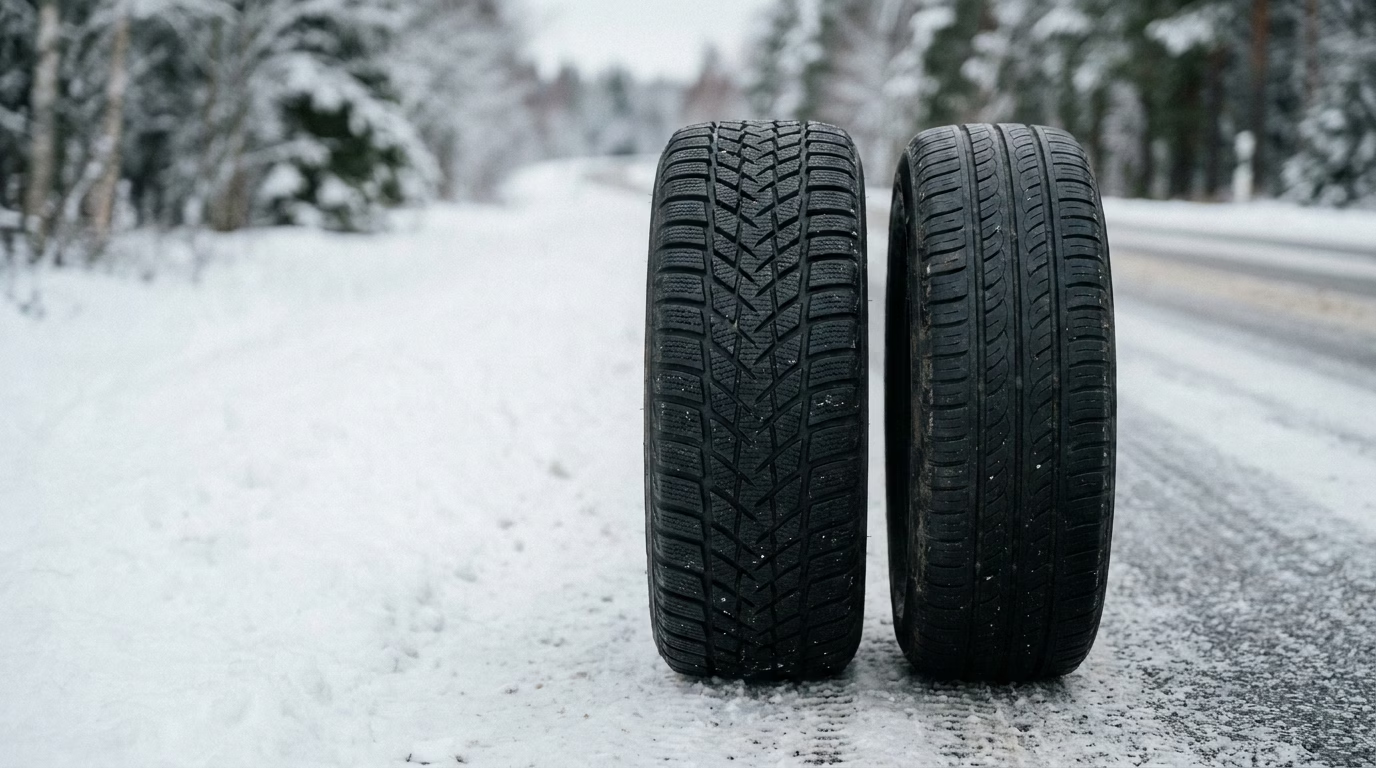
Winter driving in cold climates presents a genuine safety question that too many drivers leave unanswered until they find themselves sliding through an intersection. The decision to invest in dedicated winter tires versus relying on all-season rubber is one of the most consequential choices a safety-conscious driver can make, yet it is often reduced to a casual conversation rather than a data-informed analysis. This guide walks through the tire science, the stopping distance numbers, the real economics over five years, and the practical steps that make seasonal changeovers manageable — so you can make the right call for your city, your family, and your budget.
How Tire Compounds Differ Between All-Season and Winter Designs
The difference between an all-season and a winter tire is not primarily about the tread pattern, though tread plays a role. The more fundamental distinction lies in the rubber compound itself.
All-season tires are engineered using a compound that performs across a broad range of temperatures — typically from roughly 45°F (7°C) up to summer heat. This versatility requires a compromise. The silica and polymer blend in an all-season tire begins to harden as temperatures drop below that 45°F threshold. A harder tire means reduced surface contact, which translates directly into reduced grip. By the time you are driving at 20°F (-6°C), an all-season tire is significantly stiffer than the engineers intended it to be during normal operation.
Winter tires use a high-silica compound specifically formulated to remain pliable at temperatures well below freezing — some formulations stay flexible down to -40°F (-40°C). That pliability allows the tire to conform to microscopic surface irregularities in pavement and ice, creating more true contact area. Greater contact area means more friction, and more friction means shorter stopping distances and better steering response.
Beyond compound, winter tires feature sipes — the tiny slits cut across tread blocks — at a much higher density than all-season designs. Sipes create biting edges that grip snow and ice mechanically, while the tread channels are designed with wider gaps to evacuate snow rather than pack it in. Some performance winter tires also incorporate a hydrophilic tread compound that actively draws a thin film of water away from the contact patch, addressing the primary reason ice is slippery: the micro-layer of liquid water on its surface.
The Rubber Manufacturers Association and independent testing organizations such as the Tire Rack consistently confirm that the compound difference, not just tread pattern, is why a winter tire outperforms an all-season even on wet pavement above freezing.
Stopping Distance Tests and What the Data Shows
Numbers cut through marketing language quickly. In repeated controlled tests comparing winter tires to all-season tires on snow and ice, the stopping distance gaps are significant enough to be the difference between a near-miss and a collision.
The Tire Rack conducted a widely cited test comparing all-season and winter tires at 25 mph on packed snow. A vehicle equipped with all-season tires required approximately 110 feet to stop. The same vehicle on winter tires stopped in roughly 87 feet — a difference of about 23 feet, or more than one car length. At highway speeds, this gap grows considerably.
Consumer Reports testing on ice has shown stopping distance improvements ranging from 15 to 25 percent when switching from all-season to dedicated winter tires. The Quebec government, which mandates winter tires from December 1 through March 15, has reported a measurable reduction in winter accident rates since the law took effect in 2008 — some estimates suggest a 36 percent reduction in serious winter-related injuries.
Importantly, all-wheel drive and four-wheel drive systems have no meaningful impact on stopping distances. They improve forward traction but do not change the physics of braking, which depends entirely on the contact patch and tire compound. A parent driving an AWD SUV on all-season tires should not interpret their vehicle’s capability as equivalent to a two-wheel-drive car on dedicated winter tires — the stopping distances on ice are comparable, and both are substantially longer than any properly equipped winter tire setup.
The Real Cost of Owning Two Sets of Tires
The upfront cost of a second set of tires causes many drivers to stop the analysis prematurely. The complete picture is more nuanced.
Five-Year Total Cost-of-Ownership Breakdown:
A mid-range set of winter tires (e.g., Michelin X-Ice Snow, Bridgestone Blizzak WS90) for a standard sedan typically ranges from $600 to $900 for four tires. Mounting on a dedicated set of steel rims adds $200 to $400 for the rims and an initial mounting and balancing fee of $80 to $120. Total initial outlay: roughly $880 to $1,420.
However, when you run two sets of tires alternately, each set wears at half the rate it would if used year-round. A quality all-season tire that would last 50,000 miles on continuous use now lasts twice as long in calendar years — effectively extending the life of your primary tires significantly. Over a five-year period with approximately 15,000 miles driven annually, the math often shows the two-tire-set strategy costing only marginally more than, or comparable to, replacing a single set of all-seasons every three to four years.
Estimated five-year cost comparison (mid-size sedan, average-use driver):
- All-season only: One replacement set at years 3–4 plus seasonal rotations ≈ $700–$1,000 in tires plus roughly $200 in services = $900–$1,200 total
- Winter + all-season: Higher initial cost but extended tire life = $1,200–$1,800 total, accounting for two seasonal changeover services per year at $20–$60 each if you use a shop, or $0 if you do your own rim swaps.
The gap narrows further when you factor in the potential reduction in insurance deductibles from avoided accidents, reduced vehicle damage, and — in jurisdictions like Quebec — legal compliance. Some Canadian insurance providers offer modest premium discounts for documented use of winter tires.
(Sources for pricing: Tire Rack pricing database at tirerack.com; Consumer Reports tire price tracking; Discount Tire and Costco Tire Center retail pricing, current as of 2024.)
What Climate Threshold Makes Winter Tires Worth It
The rule of thumb supported by tire engineers and safety organizations is straightforward: if your area experiences more than a handful of days per year with temperatures consistently below 45°F (7°C), even without significant snowfall, winter tires provide a measurable safety benefit.
Climate-Zone Decision Framework:
- Zone A — Mild winters (average low above 40°F, rare snow): All-season tires are adequate. Cities like Atlanta, Georgia or Dallas, Texas rarely justify the investment unless a major snowstorm is forecast.
- Zone B — Moderate winters (temperatures frequently between 25°F and 45°F, occasional snow or ice): This is the gray zone. Cities like Nashville, Tennessee, Kansas City, Missouri, and Portland, Oregon fall here. Winter tires provide measurable benefit, particularly because drivers in these zones are less experienced with winter driving conditions and infrastructure response is slower. Highly recommended for families and daily commuters.
- Zone C — Cold winters (temperatures regularly below 25°F, reliable snowfall): Dedicated winter tires are strongly recommended. Cities like Minneapolis, Minnesota, Denver, Colorado, Buffalo, New York, and most of Canada fall into this category. The performance gap at these temperatures is not marginal — it is substantial.
- Zone D — Severe winters (sub-zero temperatures common, heavy snowfall, icy roads for extended periods): Winter tires are essentially mandatory for safe operation. Parts of the upper Midwest, mountain west, and northern Canada belong here. Studded winter tires may be worth investigating where legally permitted.
To apply this framework to your city, search for your area’s average monthly low temperatures and total annual snow days using the NOAA Climate Data Online tool at climate.gov. If you see more than 30 days per year below 45°F or any meaningful accumulation of ice events, you are in at least Zone B.
How to Store Off-Season Tires Properly
Improper storage degrades tire compounds and wastes the investment you have made. The principles are simple to follow.
Clean tires thoroughly before storage to remove brake dust, road chemicals, and debris. Allow them to dry completely. Do not apply tire dressings or conditioners before storage — many contain petrochemicals that accelerate compound degradation over time.
Store tires away from direct sunlight, ozone sources (electric motors, furnace equipment), and temperature extremes. A climate-controlled basement or interior garage space is ideal. Avoid storing tires near oil, solvents, or chemicals.
For tires mounted on rims, store them horizontally in a stack of no more than four tires, or hang them from a purpose-built wall rack. Tires not mounted on rims should be stored upright to avoid deformation. Rotating unmounted tires a quarter turn every few weeks during storage prevents flat-spotting.
Dedicated tire storage bags, available for approximately $20 to $40 per set, reduce ozone and UV exposure significantly and are a worthwhile addition.
Choosing the Right Winter Tire for Your Vehicle Type
Not all winter tires are the same, and matching the tire to your vehicle type and driving pattern improves both safety and value.
Passenger sedans and compact cars: Touring winter tires such as the Michelin X-Ice Snow or Bridgestone Blizzak WS90 offer an excellent balance of ice traction, snow performance, and on-road refinement. These are the workhorses of the winter tire category and suit most daily drivers well.
SUVs and crossovers: Look for tires rated for SUV applications with reinforced sidewalls to handle the additional vehicle weight. The Continental VikingContact 7 and Nokian Hakkapeliitta R5 SUV are strong performers in this segment. Avoid the temptation to stay with all-terrain tires year-round — they do not provide the compound benefits of a purpose-built winter tire.
Performance vehicles: Drivers of sports sedans or coupes who want to retain some handling responsiveness should look at performance winter tires such as the Michelin Pilot Alpin 5 or Pirelli Winter Sottozero 3. These sacrifice some outright snow traction for better handling dynamics.
Trucks and work vehicles in severe zones: Studded tires or aggressive winter-specific treads may be appropriate. Check local regulations, as studs are prohibited in some states and provinces. The Nokian Hakkapeliitta 10 and Goodyear WinterCommand Ultra are designed for heavy-duty winter use.
Rim Swap Tutorial for Easier Changeovers:
Purchasing a second set of steel rims for your winter tires is the single most practical decision you can make after buying the tires themselves. Here is the basic process:
- Have your winter tires mounted and balanced on the dedicated rims at a tire shop during your first installation.
- On subsequent seasonal changes, you can swap the rims yourself with a floor jack, jack stands, and a torque wrench — no tire dismounting required.
- Raise the vehicle safely using the manufacturer’s designated jack points (consult your owner’s manual).
- Remove the all-season wheel, install the winter wheel, torque the lug nuts to manufacturer specification (typically 80 to 100 ft-lbs for most passenger vehicles — verify your specific spec), and repeat for all four corners.
- Re-check torque after 50 miles of driving, as lug nuts can settle slightly after the first drive.
- Note that tire pressure adjustment may be needed — cold temperatures lower PSI, and your winter tires should be inflated to the vehicle manufacturer’s recommended pressure, not the maximum listed on the tire sidewall.
This process takes approximately 30 to 45 minutes for a practiced driver and eliminates the cost of two shop visits per year. At $40 to $80 per changeover visit, the labor savings over five years offset a meaningful portion of the rim purchase cost.
The case for winter tires in any climate that regularly experiences temperatures below 45°F is supported by physics, stopping distance data, and five-year economics that are closer than most drivers expect. The real question is not whether winter tires work — the evidence on that point is clear. The question is whether the conditions in your city and the needs of the people in your vehicle justify the investment. For drivers with children, long commutes, or homes in Zone B through Zone D climates, the data consistently points in one direction.
Sources and References:
- Tire Rack Winter Tire Testing and Reviews: tirerack.com/winter-tires
- Consumer Reports Tire Ratings and Winter Tire Testing: consumerreports.org/tires
- NOAA Climate Data Online (for local temperature and precipitation data): climate.gov
- Quebec Winter Tire Law and Accident Reduction Data: saaq.gouv.qc.ca
- Michelin X-Ice Snow Pricing Reference: tirerack.com
- Bridgestone Blizzak WS90 Pricing Reference: tirerack.com
- Discount Tire Retail Pricing: discounttire.com
- Costco Tire Center Pricing: costco.com/tires
- Rubber Manufacturers Association Tire Safety Information: ustires.org
