
Solo Travel Tips for First-Timers
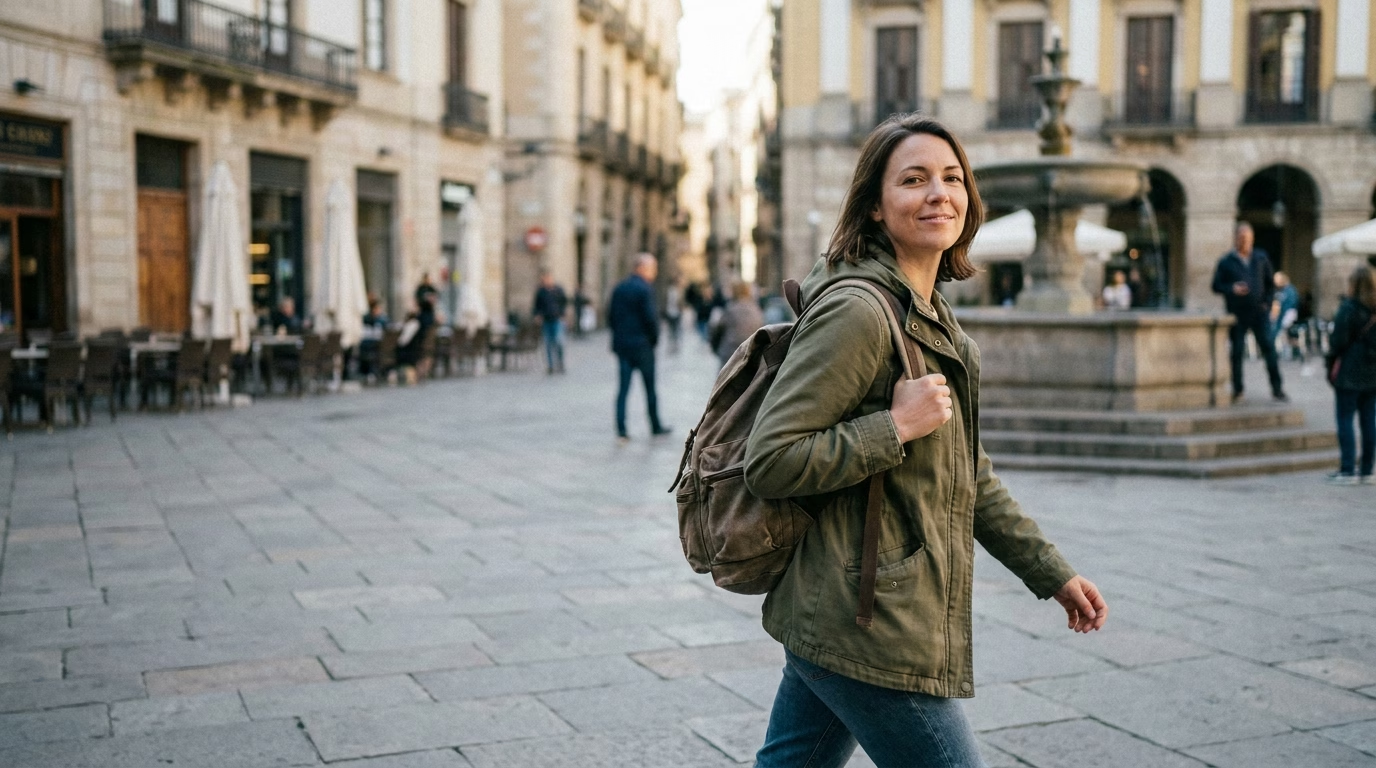
Solo travel is one of those experiences that sounds terrifying in theory and transformative in practice. The idea of navigating a foreign country alone, eating at restaurants without a companion, and figuring out transportation in a language you don’t speak can feel overwhelming before you go. But ask almost any seasoned solo traveler and they’ll tell you the same thing: the first trip is the hardest, and it’s still worth every anxious moment. This guide is designed to take the mystery out of traveling alone for the first time, from choosing the right destination to mastering the small logistical details that nobody warns you about.
Choosing Your First Solo Destination
Not all destinations are created equal when it comes to solo travel, and your first trip alone is not the time to test your limits with a chaotic megacity or a country with a significant language barrier. The best first-time solo destinations share a few key traits: they’re generally safe, easy to navigate, English-friendly, and have enough solo traveler infrastructure that you won’t feel like a novelty.
Portugal consistently tops solo travel lists for good reason. Lisbon and Porto are walkable, affordable by Western European standards, and have a thriving hostel culture that has evolved far beyond bunk beds and shared bathrooms. Portuguese people are warm and used to tourists, English is widely spoken in cities, and the food scene makes eating alone feel like a pleasure rather than a chore. A bowl of pastéis de nata and a glass of wine at a tiled counter is a perfectly complete experience on its own.
Japan might surprise you on this list given the language difference, but it is arguably one of the safest and most organized countries in the world for solo travelers. Train systems are immaculate and punctual, crime rates are extremely low, convenience stores (konbini) serve genuinely good food at all hours, and the culture of orderly public behavior makes navigation feel calm rather than chaotic. Japan also has a long tradition of solo dining — ichiran ramen restaurants, for example, are specifically designed with individual booths so you can eat alone without any social pressure whatsoever.
New Zealand is ideal if you want to combine solo travel with outdoor adventure. The country is English-speaking, politically stable, and has an extensive network of hostels and campgrounds built around the backpacker circuit. The people are famously friendly, and the natural scenery — from Fiordland to the Bay of Islands — provides built-in conversation starters with every person you meet on a trail.
Iceland works particularly well for solo travelers who want dramatic landscapes without the unpredictability of less developed tourist infrastructure. Reykjavik is small enough to feel manageable, the Ring Road is one of the world’s great self-drive routes, and the country has one of the lowest crime rates on the planet. It’s more expensive than the other destinations on this list, but the experience of standing alone in front of a waterfall with no one else around has a particular kind of magic.
Ireland rounds out the list as perhaps the most socially easy entry point for solo travel. The language is English, the pub culture practically mandates that strangers talk to each other, and the Irish reputation for friendliness is not a myth. From the streets of Dublin to the coastal roads of Connemara, Ireland offers beautiful scenery with a low-stress backdrop.
How Long Should Your First Solo Trip Be?
The 8-to-10 day range is the sweet spot for first-time solo travel. It’s long enough to get over the initial disorientation (which typically lasts one to two days), settle into a rhythm, and actually enjoy yourself — but short enough that you won’t exhaust yourself or run out of steam. Trips shorter than a week often mean you spend a disproportionate amount of time just getting oriented and dealing with jet lag. Trips longer than two weeks can feel isolating for first-timers who haven’t yet built up the emotional resilience that solo travel develops over time.
Eight to ten days also gives you the flexibility to spend two or three nights in one place, which is ideal. Moving every day is exhausting and prevents you from discovering the hidden café around the corner, the neighborhood that didn’t make it into the guidebook, or the conversation with a local that turns into a whole afternoon. Give yourself permission to slow down.
Where to Stay
Accommodation choices can make or break a solo trip, and the key is to balance privacy with social opportunity.
Boutique hostels with private rooms are one of the best-kept secrets of solo travel. Modern hostels — particularly in Lisbon, Tokyo, Reykjavik, and Auckland — are design-conscious, clean, and offer private en-suite rooms at prices significantly lower than traditional hotels. The advantage is that you get your own space to recharge, but you can also wander down to the common area, join a hostel-organized walking tour, or strike up a conversation at the communal breakfast table. Generator Hostels, which operates across Europe including Lisbon, offers private rooms starting from around €50–€80 per night depending on season, while still providing all the social infrastructure of a hostel environment.
Central, walkable hotels are the other strong option, particularly if you value privacy and aren’t interested in hostel socializing. The key word here is central. When you’re alone, walking back to your accommodation at night needs to feel safe and straightforward. A cheaper hotel in a poorly lit neighborhood far from public transport is not a bargain — it’s a source of unnecessary stress. Book somewhere within walking distance of the main areas you want to explore. Read recent solo traveler reviews specifically, because they’ll flag things like poorly lit entrances or neighborhoods that feel unsafe after dark in ways that general reviews might miss.
Safety Practices for Solo Travelers
Safety looks slightly different depending on who you are, but the fundamentals apply broadly.
Share your itinerary with someone at home — not an exhaustive minute-by-minute schedule, but enough that someone knows which city you’re in and where you’re staying. Check in regularly, even just a quick message. Keep digital and physical copies of your passport, travel insurance, and emergency contacts stored separately from the originals.
For women traveling solo, the research and planning phase matters more than it might for male travelers. Apps like Sitly and solo female travel blogs such as The Blonde Abroad and Adventurous Kate provide destination-specific safety advice from women who’ve been there. In practical terms: trust your instincts completely, be vague about your solo status with strangers (a simple “my friends are meeting me later” works well), and be particularly thoughtful about nighttime transportation — use licensed taxis or rideshare apps rather than accepting rides from strangers, even if they seem well-meaning.
For male travelers, safety is generally less discussed but still relevant. Petty theft, scams targeting tourists, and overpriced unofficial services are the most common issues. Keep your phone out of view in crowded areas, don’t leave your bag unattended anywhere — not at a café table, not on a beach while you swim — and be cautious about overly friendly strangers in tourist areas who seem to be steering you toward a specific bar or venue.
How to Meet People on the Road
One of the biggest fears first-time solo travelers have is loneliness, and it’s a legitimate concern — but it’s more manageable than you think.
Group tours are one of the most reliable ways to meet other travelers. A half-day walking tour or a day trip to a nearby natural landmark puts you in a group of people who are, by definition, in the same place you are and open to conversation. Companies like Viator and GetYourGuide aggregate group experiences in almost every destination, with prices typically ranging from €20–€80 depending on the activity.
Food tours are particularly effective because they involve multiple stops over several hours, which gives conversations time to develop naturally. A three-hour food tour through Lisbon’s Alfama district or a Tokyo street food walk creates the kind of shared experience that accelerates connection with strangers.
Dance classes — flamenco in Spain, tango in Argentina, traditional Irish set dancing in Galway — are an underrated solo travel strategy. You’re physically paired with changing partners throughout the class, which means you interact with almost everyone in the room without the social pressure of introducing yourself cold.
Hostel events remain one of the easiest entry points. Even if you’re staying in a private room, attend the hostel’s organized dinners, pub crawls, or movie nights. The social architecture is already built for you — nobody is going to think it’s strange that you showed up alone.
The Art of Eating Alone
Eating alone is one of the skills solo travel teaches you quickly. The secret is to reframe it entirely: you’re not eating alone, you’re eating freely. You can order whatever you want, sit as long as you like, read a book without being rude, and genuinely pay attention to the food.
Counter seating, when available, is your best friend — it puts you in natural proximity to other diners and to the kitchen or bar staff, who are often the best conversationalists in any restaurant. Bring a book or download something to read, not as a social shield but because it genuinely makes the experience more relaxed. Avoid making apologies for your solo status when you’re seated — simply ask for a table for one without preamble and the discomfort you imagine disappears within seconds.
The Practicalities Nobody Tells You About
Two logistical realities of solo travel that guidebooks tend to skip over deserve specific attention.
Bag-watching becomes your responsibility alone. At a café, put one strap of your bag around your chair leg or keep your foot through your backpack straps while you work or eat. Never leave bags on the back of chairs in tourist areas. In airports, don’t walk away from your luggage even briefly — ask a nearby traveler to watch it if you need to step away, or take everything with you.
Getting photos of yourself feels awkward the first time and becomes second nature quickly. The most reliable method is asking another traveler — not a local standing nearby, but someone who is clearly also a tourist and therefore understands the request — to take your photo. A tripod with a phone mount and a Bluetooth shutter remote (the combination costs under €30 on Amazon) gives you complete control if you’d rather be self-sufficient. Many newer smartphones also have hand-gesture or timer modes that work well for solo shots. The photos you take of yourself on your first solo trip will matter more to you than almost any other travel photographs you ever take. Make the effort to get them.
Solo travel rewards preparation but it also rewards flexibility. Book your accommodation in advance, have a rough plan for each day, and then give yourself permission to abandon that plan entirely when something better comes up. The conversation that goes longer than expected, the afternoon you spend in a bookshop because it started raining, the dinner that becomes a three-hour affair because the table next to you turned out to be fascinating — these are the experiences that solo travel makes possible in a way that group travel often doesn’t. Go. The first trip is the hardest. It’s still worth it.
Sources & Further Reading
- Generator Hostels pricing and locations: staygenerator.com
- Viator group tours and experiences: viator.com
- GetYourGuide tours and activities: getyourguide.com
- Adventurous Kate (solo female travel blog): adventurouskate.com
- The Blonde Abroad (solo female travel): theblondeabroad.com
- Iceland crime and safety statistics: numbeo.com/crime/country_result.jsp?country=Iceland
- Ichiran Ramen solo dining experience: en.ichiran.com
- Bluetooth shutter remotes for solo photography: amazon.com
