
How to Buy a Used Car Without Getting Burned
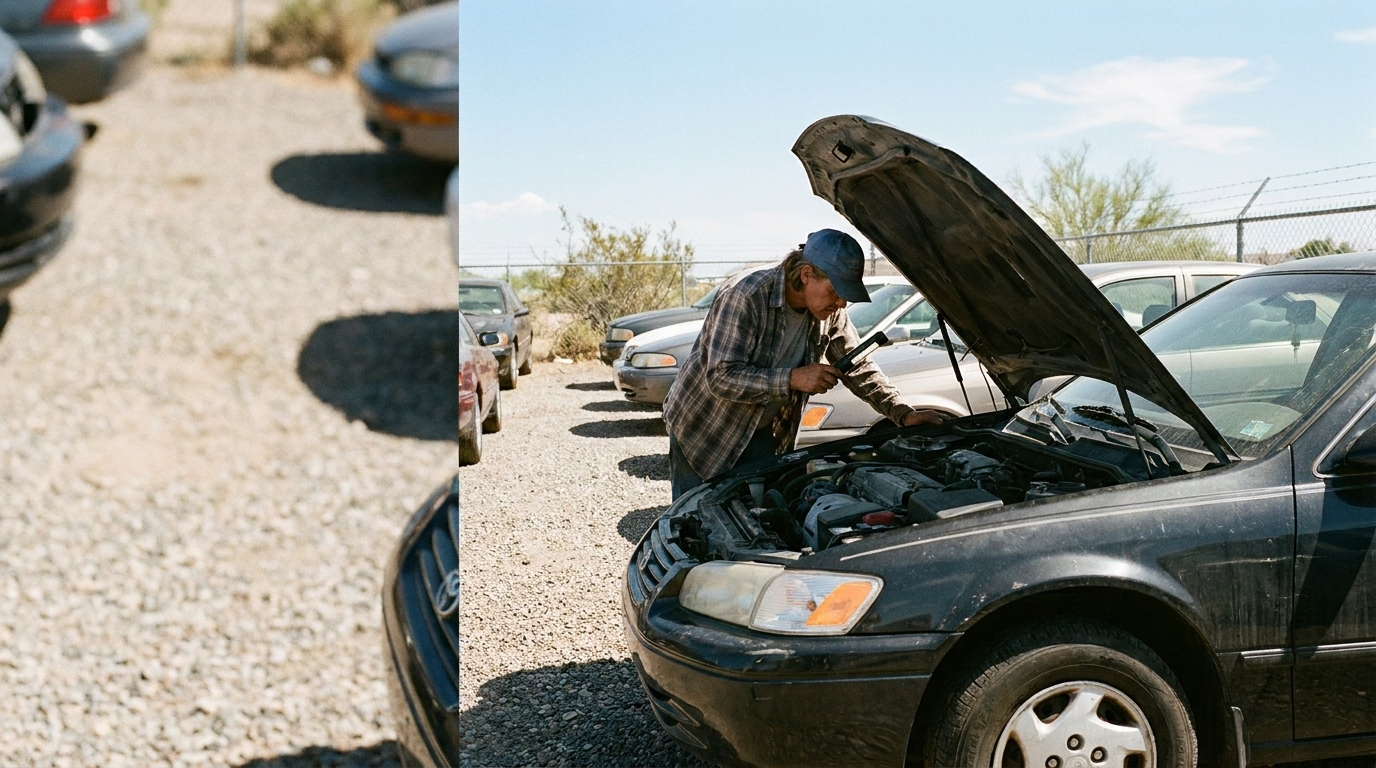
Buying a used car for the first time can feel overwhelming. You’re making one of the largest purchases of your life, often without knowing exactly what you’re looking at under the hood or whether the dealer across the desk is giving you a fair deal. The good news is that with the right preparation, you don’t need to be a mechanic or a negotiation expert to come out ahead. This guide walks you through every step of the used car buying process — from figuring out what you can actually afford, to driving off the lot with confidence.
—
## Setting Your Budget and Total Ownership Costs
The first mistake most first-time buyers make is thinking only about the purchase price. The sticker price is just the beginning. Before you fall in love with any car, you need to know what it will truly cost you each month and each year.
**Start with your all-in monthly number.** Financial advisors generally recommend spending no more than 15–20% of your monthly take-home pay on total vehicle costs — not just the car payment. If you bring home $3,000 a month, that means $450–$600 for everything car-related.
**Calculate your true ownership costs, which include:**
– **Car payment** (if financing): Use an online auto loan calculator. As a rough guide, a $10,000 loan at 7% interest over 48 months costs about $239/month.
– **Insurance**: Rates vary widely by age, location, driving record, and vehicle type. Get quotes before you buy. Young drivers or those with limited history can pay $150–$300/month or more.
– **Fuel**: Calculate based on the car’s MPG and how many miles you drive monthly. At $3.50/gallon and 1,000 miles/month, a car that gets 25 MPG costs about $140/month in gas.
– **Maintenance**: Budget roughly $100–$150/month for routine upkeep — oil changes, tires, brakes, and unexpected repairs. Older or higher-mileage cars need a larger buffer.
– **Registration and taxes**: These vary by state but typically run $100–$500 annually.
**Set a firm maximum purchase price** before you start shopping. A common rule of thumb is to look at vehicles priced at no more than 20–25% of your annual gross income. If you earn $40,000 a year, stay under $10,000 as a purchase price.
**On financing:** If you need a loan, get pre-approved by your bank or credit union before visiting a dealership. This gives you leverage and protects you from dealerships marking up interest rates as an additional profit source. Credit unions frequently offer better rates than dealer financing.
—
## Where to Buy Used Cars and Which Sources to Trust
Not all used car sources are equal. Each comes with trade-offs between price, risk, and convenience.
**Private sellers** (Craigslist, Facebook Marketplace, local classifieds) typically offer the lowest prices because there’s no middleman. The risk is higher — no warranty, no return policy, and you’re entirely responsible for identifying problems before buying. These are best for buyers who can bring along a knowledgeable friend or pay for a pre-purchase inspection.
**Franchise dealerships** (those that also sell new cars, like Toyota or Ford dealers) often sell certified pre-owned (CPO) vehicles that come with a manufacturer-backed inspection and limited warranty. Prices are higher, but so is peace of mind. CPO programs are worth considering if you’re buying a car with less than 100,000 miles and a relatively recent model year.
**Independent used car dealerships** fall in the middle. Quality varies enormously. Some are reputable; others specialize in moving problem vehicles quickly. Look for dealers with strong Google and Yelp reviews, a physical address, and no pressure to skip inspections.
**Online platforms** like Carvana, CarMax, and Vroom offer fixed “no-haggle” prices, vehicle history reports, and return windows (usually 7 days). Prices are often slightly above market, but the transparency and convenience appeal to many first-time buyers.
**Who to trust most:** Look for sellers who willingly share a vehicle history report, welcome an independent inspection, and don’t rush you. Pressure, vagueness about history, or refusal to let you have the car inspected are red flags.
—
## How to Research a Vehicle History Report
A vehicle history report is a document that shows you what has happened to a specific car over its lifetime. It’s one of the most important tools you have as a buyer.
**How to get one:** Every car has a unique 17-character identifier called a VIN (Vehicle Identification Number), typically visible through the windshield on the driver’s side dashboard. You can get a vehicle history report using this number through:
– **Carfax** (carfax.com) — single reports cost around $44.99, or you can get unlimited reports for a monthly fee
– **AutoCheck** (autocheck.com) — often cheaper; single reports around $24.99
– **NMVTIS** (vehiclehistory.gov) — a government database with low-cost basic reports
Many dealers and sellers will provide a Carfax as part of the listing — always request one if it’s not included.
**What to look for in the report:**
– **Accident history**: Minor fender benders are common and not always disqualifying. Major structural damage is a serious concern.
– **Number of previous owners**: One or two is preferable. Five previous owners on a 6-year-old car raises questions.
– **Title issues**: Look for “salvage title” (car was declared a total loss by insurance) or “flood damage” in the title history. Walk away from both unless you deeply understand what you’re getting into.
– **Odometer readings over time**: Make sure the mileage always goes up. A drop in reported mileage suggests tampering.
– **Service records**: Regular maintenance records are a good sign. Gaps can suggest neglect.
A clean vehicle history report is encouraging but not a guarantee. It only reflects what was officially reported — unreported accidents happen.
—
## What to Inspect Before You Test Drive
You don’t need mechanical expertise to catch obvious warning signs. Here is a printable pre-purchase inspection checklist you can bring to the lot.
**EXTERIOR**
– [ ] Walk around the car in daylight. Look for uneven panel gaps (doors, hood, trunk) — these suggest collision repair
– [ ] Check all paint panels for color mismatches or overspray (paint on rubber trim)
– [ ] Look for rust on the lower body panels, wheel wells, and underneath
– [ ] Check all glass for cracks or chips
– [ ] Inspect all four tires: even tread wear across the width indicates proper alignment; uneven wear suggests problems
**UNDER THE HOOD**
– [ ] Check the oil dipstick: oil should be amber to dark brown. Black, gritty oil means it hasn’t been changed. Milky or foamy oil suggests a blown head gasket (expensive)
– [ ] Check the coolant reservoir: should be green or orange, not rusty or empty
– [ ] Look for corrosion on battery terminals (white or bluish buildup)
– [ ] Look for obvious fluid leaks or burnt smells on engine components
– [ ] Check belts for cracking or fraying
**INTERIOR**
– [ ] Test every button, knob, and switch — windows, AC, heat, radio, lights
– [ ] Check under floor mats for water damage or mold smell
– [ ] Test all seat adjustments
– [ ] Look for warning lights on the dashboard when you turn the key to “on” (before starting)
– [ ] Check that all warning lights turn off after the engine starts (a persistent check engine light is a red flag)
**DURING THE TEST DRIVE**
– [ ] Drive on the highway and in a parking lot
– [ ] Listen for clicking when turning (CV joint issues), grinding when braking, or rattles at idle
– [ ] Test braking in a safe area — car should stop straight without pulling
– [ ] Check that the car tracks straight with hands lightly on the wheel
**After this self-inspection, strongly consider paying a licensed mechanic $100–$150 for an independent pre-purchase inspection (PPI).** This is the single best money you can spend before buying any used car.
—
## Negotiating the Price Like a Pro
Negotiation feels uncomfortable for most people, but dealerships expect it. Here’s a simple script and framework you can use.
**Before negotiating, know your numbers:**
– Research the car’s market value using **Kelley Blue Book** (kbb.com) and **Edmunds** (edmunds.com)
– Check what similar cars are selling for locally on Marketplace and AutoTrader
– Know your maximum price and don’t reveal it
**Opening script:**
> “I’ve done some research and I see similar [make/model/year/mileage] vehicles are selling for around $[X] in this area. Based on the condition and history of this one, I’d feel comfortable at $[offer 10–15% below your target]. What can we do?”
**Tactics that work:**
– Silence is powerful — after making an offer, stay quiet
– If they counter high, say: *”I appreciate that. I want to make this work, but my budget is firm at $[your number]. Is there anything you can do?”*
– Don’t let them shift the conversation to monthly payments — keep it on total purchase price
– If they won’t budge on price, ask them to throw in free oil changes, floor mats, or a full tank of gas
**At a dealership, these fees are often negotiable or avoidable:**
– **Documentation fee (doc fee)**: This is a dealership profit fee dressed up as paperwork. It ranges from $50 to over $900 depending on state. Some states cap it; others don’t. Always ask for it to be reduced or removed.
– **Dealer prep fee**: Usually pure profit. Push back on this.
– **Advertising fee**: This is the dealer’s cost of doing business, not yours. Refuse it or ask for it to be waived.
– **Extended warranty**: This is optional and often overpriced at a dealership. Research third-party warranties separately if you want one.
**Fees you typically cannot avoid:** State sales tax, title fees, and registration fees are set by your state government and not negotiable.
—
## Finalizing the Deal Safely
Once you’ve agreed on a price, the work isn’t quite done. The finance and insurance (F&I) office is where many buyers get tripped up.
**Read everything before signing.** The contract should reflect exactly the price you agreed on. Check:
– Purchase price matches what was discussed
– Interest rate matches your pre-approval (if financing through the dealer)
– Loan term (don’t let them extend the term to lower monthly payments without you understanding the total interest cost)
– No surprise add-ons you didn’t agree to
**Things commonly slipped into contracts:**
– GAP insurance (useful if you financed more than 80% of the car’s value, but often overpriced at dealerships — you can buy it cheaper through your auto insurer)
– Paint/fabric protection packages (rarely worth it)
– Tire and wheel protection plans
– VIN etching fees
For any add-on, ask: *”Can you show me that in writing, and can I opt out of it?”* The answer to the second question should always be yes.
**For private sales:**
– Never pay with cash or wire transfer — use a cashier’s check
– Meet at your bank or a public location, not the seller’s home, to complete the transaction
– Verify the seller’s name matches the title
– Do the title transfer at your local DMV as soon as possible after purchase
**After purchase:**
– Get insurance before you drive it off the lot or take ownership
– Keep all paperwork in a safe place
– Schedule an oil change and basic service within the first few weeks if records are unclear
—
Buying a used car on a budget doesn’t mean settling for a lemon. It means being prepared. The buyers who get the best deals are the ones who show up informed, stay calm, and know when to walk away. Take your time, do your homework, and trust the process outlined here.
—
## Sources and Further Reading
– Kelley Blue Book — Vehicle Valuation Tool: [kbb.com](https://www.kbb.com)
– Edmunds — Used Car Market Value and Reviews: [edmunds.com](https://www.edmunds.com)
– Carfax — Vehicle History Reports (~$44.99/report): [carfax.com](https://www.carfax.com)
– AutoCheck — Vehicle History Reports (~$24.99/report): [autocheck.com](https://www.autocheck.com)
– NMVTIS — National Motor Vehicle Title Information System (government database): [vehiclehistory.gov](https://www.vehiclehistory.gov)
– Consumer Financial Protection Bureau — Auto Loan Guide: [consumerfinance.gov/consumer-tools/auto-loans](https://www.consumerfinance.gov/consumer-tools/auto-loans/)
– National Credit Union Administration — Find a Credit Union: [mycreditunion.gov](https://www.mycreditunion.gov)
– AutoTrader — Used Car Listings and Price Research: [autotrader.com](https://www.autotrader.com)
– CarMax — No-Haggle Used Car Buying: [carmax.com](https://www.carmax.com)
– Carvana — Online Used Car Retailer: [carvana.com](https://www.carvana.com)
*Note: Prices for vehicle history reports, loan rates, and insurance estimates are approximate as of 2024–2025 and may vary. Always verify current rates with the respective service or lender.*
