
Kitchen Remodel on a Budget: Where to Save and Splurge
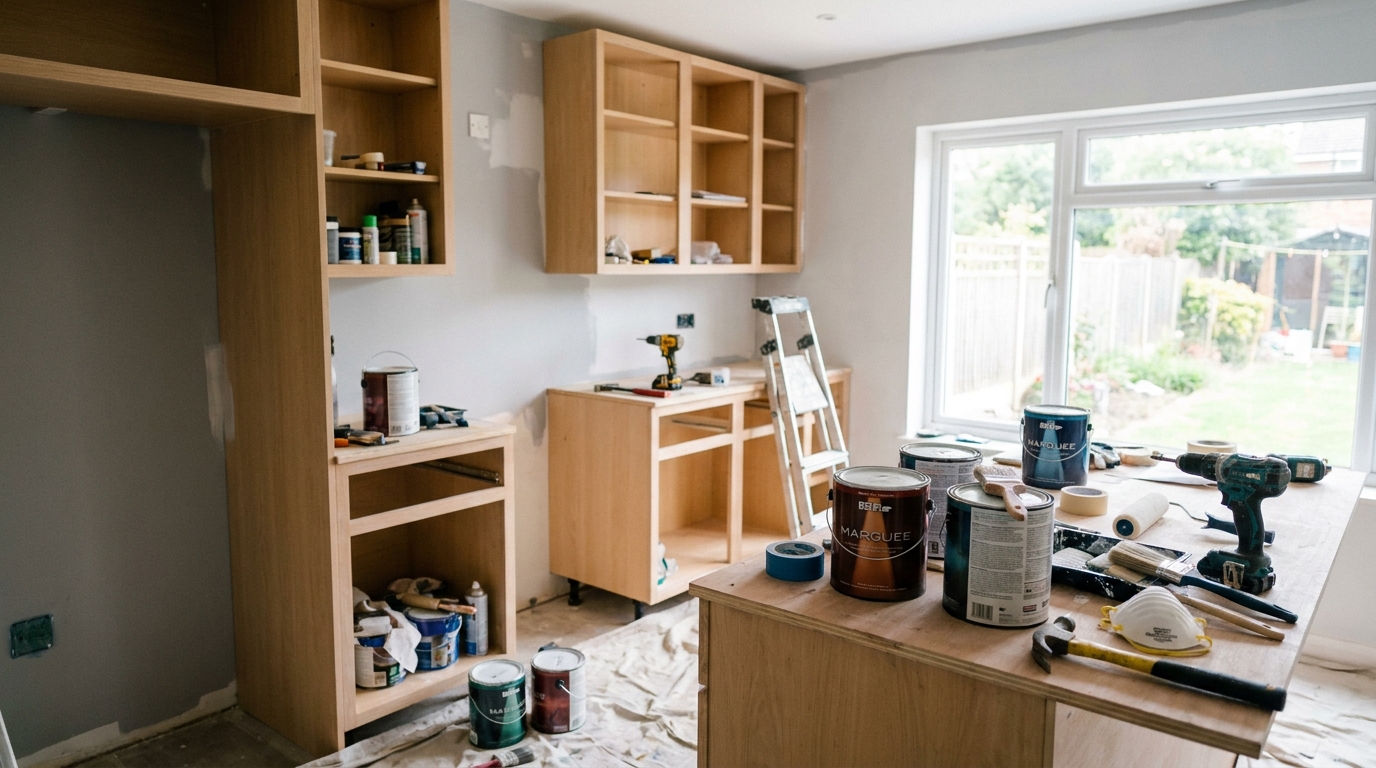
Budget Kitchen Remodels: How to Get the Most Out of Every Dollar
Few home improvement projects promise the return on investment—or the daily quality-of-life upgrade—that a kitchen remodel does. The catch is that kitchens are also one of the most expensive rooms to renovate. According to the 2024 Cost vs. Value Report from Remodeling Magazine, a major upscale kitchen remodel averages just over $154,000 nationally, while a mid-range major remodel comes in around $77,000. Those numbers send most homeowners running in the other direction. The good news is that a thoughtful, budget-conscious approach can transform a dated kitchen for a fraction of those figures—if you know where to spend and where to hold back.
This guide walks through every major decision point, from cabinet strategy to countertop materials to permit requirements, so you can plan a remodel that fits your budget without sacrificing the result.
Full Remodel vs. Cosmetic Refresh: Know What You Actually Need
Before spending a single dollar, decide which type of project you actually need. A full remodel involves moving or replacing plumbing, electrical, and structural elements—new cabinets, new appliances, new flooring, possibly moving walls. Costs typically start around $25,000–$30,000 for a modest kitchen and climb steeply from there. A cosmetic refresh, by contrast, works with the existing bones: painting cabinets, swapping hardware, installing a new backsplash, replacing light fixtures, or adding a new countertop while keeping the existing cabinet boxes. Cosmetic refreshes can run anywhere from $1,500 to $10,000 and still produce dramatic visual results.
The honest question to ask yourself: Is the kitchen functionally broken, or does it just look dated? If the layout works, the plumbing is sound, and the cabinet boxes are structurally solid, a refresh is almost always the smarter financial move.
Where to Splurge
Cabinets (When You’re Replacing Them)
Cabinets consume 30–40% of a typical kitchen remodel budget for good reason—they are the dominant visual element and they work hard every day. If you’re replacing rather than painting, don’t buy the absolute cheapest option. Particleboard boxes with stapled joints fail within a decade under normal use. At minimum, look for plywood box construction with dovetail or dowel joints, soft-close hinges, and full-extension drawer slides. These features add cost upfront but dramatically extend the life of the kitchen.
Countertops on Heavy-Use Surfaces
Your primary prep surface—typically the main run of countertop adjacent to the sink and stove—deserves a durable material. This is not the place to install a surface that scratches, stains, or requires constant sealing. Spend more here; you can economize on a secondary surface like a breakfast bar or island top.
Plumbing Rough-In Work
If you do need to move a sink or add a dishwasher line, pay a licensed plumber to do it properly. Botched plumbing leads to water damage that costs far more to repair than the original job. This is one area where cutting corners produces catastrophic downside risk.
Where to Save
Hardware
Cabinet pulls and knobs are one of the most cost-effective upgrades in a cosmetic refresh, but you do not need to spend $15–$30 per pull. Brands like Cosmas, Silverline, and Amazon Basics offer clean, well-made hardware for $2–$6 per piece. On a 30-door/drawer kitchen, that difference adds up to hundreds of dollars.
Lighting
A well-placed flush-mount LED fixture or a set of under-cabinet puck lights from a big-box store can dramatically improve a kitchen’s feel for under $300 total. Unless you have strong design reasons for a statement pendant, skip the $400 fixtures.
Paint
Paint is the highest return-on-investment product in any remodel. A gallon of quality interior paint runs $40–$70 and can make a kitchen feel brand new. Walls, ceilings, and trim all benefit from a fresh coat, and the labor is something most homeowners can handle themselves on a weekend.
Retaining the Existing Layout
Moving walls, relocating the sink, or shifting the stove to the other side of the kitchen can add $5,000–$15,000 or more to a project between structural work, plumbing rerouting, and electrical updates. If the current layout is livable, keep it. The “work triangle” doesn’t need to be perfect—it just needs to be functional.
Paint vs. Replace Cabinets
This is the single most impactful budget decision in most kitchen projects. If the cabinet boxes are solid (no soft spots, no water damage, doors still align), painting is almost always the right financial move.
Painting pros: Cost is typically $1,500–$4,500 if hiring a professional cabinet painter, or as low as $200–$500 in materials for a careful DIY job. The result, done properly, is nearly indistinguishable from new cabinetry in photos and from a normal conversational distance.
Painting cons: It requires meticulous prep—degreasing, sanding, priming, and multiple topcoats. Shortcuts produce a finish that peels within two years. Also, if the door style is deeply dated (heavy routed oak profiles from the 1990s, for example), painting them a fresh color helps but doesn’t change the silhouette.
Replacing pros: New cabinets let you reconfigure layout, add features like pull-out shelves or deep drawers, and get a completely fresh start. They also come with warranties.
Replacing cons: Cost is substantially higher—$5,000–$15,000 for semi-custom cabinets on a typical 10×10 kitchen layout, and $20,000+ for custom work.
The pragmatic rule: If the boxes are solid and the door style is relatively simple (shaker, flat-panel, or basic raised panel), paint them. If the boxes are damaged, the layout is changing, or the door style is beyond saving, replace.
Big-Box vs. RTA Cabinet Brands
If you are replacing cabinets, you have more options than the local cabinet shop.
Big-box stores (IKEA, Home Depot, Lowe’s): IKEA’s SEKTION system is a legitimate option for budget remodels. The box construction is solid (though different from standard North American sizing, which affects resale in some markets). Home Depot’s Hampton Bay and Lowe’s Style Selections lines offer semi-custom features at stock pricing and can be ordered online with relatively quick turnaround.
Ready-to-Assemble (RTA) online brands: Companies like Lily Ann Cabinets, Cabinet Joint, Forevermark, and Cabinetcorp ship flat-packed, all-plywood cabinets directly to homeowners at costs 30–50% below local cabinet shops. Quality varies, so look specifically for all-plywood construction, dovetail drawer boxes, and soft-close hardware included in the price. Lead times can run 2–6 weeks, so plan accordingly.
Local cabinet shops: More expensive, but you get hands-on service, precise customization, and someone local to call if there’s a problem. Worth the premium if budget allows.
Countertop Material Trade-Offs
Quartz (Engineered Stone)
Quartz is currently the most popular countertop material in North American kitchens. It’s non-porous (no sealing required), highly durable, and available in a vast range of colors and patterns. The downside is cost: expect $70–$120 per square foot installed. It’s also not heat-proof—always use trivets.
Granite
Natural granite requires annual sealing but offers genuine uniqueness (every slab is different) and good heat resistance. Installed cost runs $60–$100 per square foot, making it slightly more affordable than quartz in many markets. Remnant granite slabs from stone yards can dramatically reduce cost for smaller kitchens.
Butcher Block
Wood countertops—typically maple, walnut, or acacia—run $30–$80 per square foot installed and bring warmth that stone cannot match. The trade-offs are real: they require regular oiling, they scratch and stain, and they should not sit in standing water. That said, many homeowners accept those trade-offs gladly, and butcher block pairs well with a stone or quartz primary surface.
Laminate
Modern laminate has come a long way. Brands like Wilsonart and Formica now offer convincing stone and wood patterns, and the material costs $20–$50 per square foot installed. It scratches and cannot be repaired if damaged, but for rental properties or very tight budgets, it is a practical choice.
DIY vs. Hire
The honest answer depends on your skill set, your tools, and your tolerance for things going sideways.
Good DIY candidates: Painting walls and cabinets, installing hardware, swapping light fixtures (with basic electrical knowledge), tiling a backsplash, installing floating LVP flooring, assembling and installing RTA cabinet boxes.
Hire a professional: Anything involving moving gas lines, rerouting plumbing, modifying load-bearing walls, or panel upgrades. Also consider hiring for countertop templating and installation—an improperly templated stone slab is expensive to fix.
A hybrid approach—doing demo, painting, and finish work yourself while hiring for plumbing, electrical, and countertop installation—is where most budget remodels hit their best value point.
Phased Project Plans
You don’t have to do everything at once. A phased approach spreads cost over time and lets you prioritize impact.
Phase 1 (Cosmetic): Paint walls and cabinets, replace hardware, install a new backsplash. Total: $2,000–$5,000.
Phase 2 (Surfaces): Replace countertops, install a new sink and faucet. Total: $3,000–$8,000.
Phase 3 (Functional): Replace appliances, update lighting, add under-cabinet lights. Total: $2,000–$10,000 depending on appliance choices.
Phase 4 (Full refresh): If needed, replace cabinets and flooring. Total: $8,000–$20,000.
Each phase delivers a visible result, which makes it easier psychologically and financially to continue.
Permits That Matter
Skipping permits is a common budget temptation and a frequent source of regret—especially at resale.
You generally need a permit for: Moving or adding plumbing, relocating or adding electrical circuits, moving walls (especially load-bearing), changing window or door locations, and in many jurisdictions, any HVAC work.
You generally do not need a permit for: Cosmetic work—painting, new countertops, cabinet painting, hardware, backsplash tile (in most jurisdictions), light fixture swaps on existing circuits.
Check with your local building department before starting. Unpermitted work can surface during a home sale inspection and either kill a deal or require expensive remediation.
Budget Breakdowns: Three Real Scenarios
$5,000 Budget: The Cosmetic Transformation
- Cabinet painting (DIY): $300 in materials
- New hardware (30 pieces at $4 each): $120
- Backsplash tile + grout (DIY): $400
- New faucet (mid-range): $200
- Under-cabinet LED lighting: $150
- Wall paint: $100
- New laminate countertop (DIY-friendly post-form): $800
- Miscellaneous supplies and tools: $300
- Professional touches (countertop install if needed, lighting swap): $500–$1,000
- Total: ~$2,800–$3,400 DIY / Up to $5,000 with some professional help
$15,000 Budget: The Meaningful Refresh
- RTA cabinet replacement (10×10 kitchen): $4,000–$5,500 (cabinets + hardware)
- Cabinet installation (professional): $1,500–$2,000
- Quartz countertops (30 sq ft installed): $2,500–$3,500
- New undermount sink + mid-range faucet: $600–$900
- Backsplash tile (professional install): $800–$1,200
- LVP flooring (if replacing): $1,500–$2,500
- Lighting updates: $400–$600
- Paint: $200
- Total: ~$12,000–$16,500
$30,000 Budget: The Near-Complete Remodel
- Semi-custom cabinets (10×10 kitchen, local supplier): $10,000–$13,000
- Cabinet installation: $2,000–$3,000
- Quartz or granite countertops (full kitchen): $4,000–$6,000
- New appliance package (mid-range): $4,000–$6,000
- Plumbing updates (sink relocation or new dishwasher line): $1,500–$2,500
- Electrical updates (new circuits, lighting): $1,000–$2,000
- Backsplash, flooring, paint: $2,000–$3,500
- Permit fees: $300–$800
- Total: ~$25,000–$36,000
Final Thought
A great kitchen remodel isn’t about spending the most money—it’s about spending the right money in the right places. Protect your budget by keeping the layout, investing in durable surfaces where it counts, and doing the cosmetic work yourself wherever your skills allow. Plan in phases if the full scope feels overwhelming, pull the permits that protect your investment, and resist the design trends that will feel dated in five years.
Sources and Further Reading
- Remodeling Magazine 2024 Cost vs. Value Report: www.remodeling.hw.net/cost-vs-value
- HomeAdvisor / Angi Kitchen Remodel Cost Guide: www.angi.com/articles/how-much-does-it-cost-remodel-kitchen.htm
- NKBA (National Kitchen & Bath Association) Budget Guidelines: www.nkba.org
- Countertop pricing data: Fixr Kitchen Countertop Cost Guide – www.fixr.com/costs/kitchen-countertop-installation
- RTA Cabinet comparison and reviews: www.cabinetsnow.com and www.rtacabinetstore.com
- IKEA SEKTION kitchen planner: www.ikea.com/us/en/rooms/kitchen
- Laminate countertop options, Wilsonart: www.wilsonart.com
- Permit requirements by jurisdiction: Contact your local building department or search through your city/county’s official website
