
Healthy Meal Prep: A Complete Weekly Planning Guide
Introduction
Life moves fast. Between work deadlines, school pickups, evening activities, and the general chaos of adult life, the idea of cooking a nutritious dinner from scratch every night can feel laughable. So what happens instead? You grab fast food on the way home, order delivery for the third time this week, or stand in front of the open fridge at 7 PM eating crackers and calling it dinner. Sound familiar? You’re not alone, and there’s no judgment here.
Meal prepping — the practice of preparing some or all of your meals in advance — has helped millions of people bridge the gap between wanting to eat well and actually doing it. But the Instagram version of meal prep (forty matching containers lined up in military formation) isn’t realistic for most people. This guide is about finding a version that works for your actual life, your actual kitchen, and your actual schedule.
Why Meal Prep Reduces Poor Eating Decisions
The science behind meal prep is rooted in a concept called decision fatigue. Every decision you make throughout the day slightly depletes your mental energy, and by evening, your willpower is at its lowest point. This is precisely when you’re expected to figure out dinner. Research published in the Proceedings of the National Academy of Sciences found that decision quality declines predictably over the course of a day — and food choices are no exception.
When healthy food is already prepared and waiting in your refrigerator, you eliminate the decision entirely. You’re not choosing between a nutritious meal and takeout; you’re just reheating dinner. That shift alone dramatically changes eating behavior.
Meal prep also reduces what nutritionists call food environment friction — the barriers that make healthy eating harder than unhealthy eating. A bag of chips requires zero effort. A balanced meal, without prep, requires time, energy, and ingredients. By doing the work ahead of time, you level the playing field. Studies in behavioral nutrition consistently show that when healthy options are as convenient as unhealthy ones, people choose the healthier option far more often.
There’s a financial benefit too. The average American family spends roughly $166 per week on groceries, but food waste and frequent restaurant meals significantly inflate the real cost of eating. When you plan your meals, you buy what you need, use what you buy, and skip the $15 lunch runs.
How to Choose a Meal Prep Style That Fits Your Life
One of the biggest reasons people fail at meal prep is that they choose the wrong style for their lifestyle. There are three main approaches, and the best one is whichever you’ll actually stick with.
Full Batch Cooking means preparing entire meals in advance — cooking full dishes like soups, casseroles, or grain bowls that are portioned and ready to eat. This is ideal for single adults or couples who don’t mind eating the same meal a few days in a row.
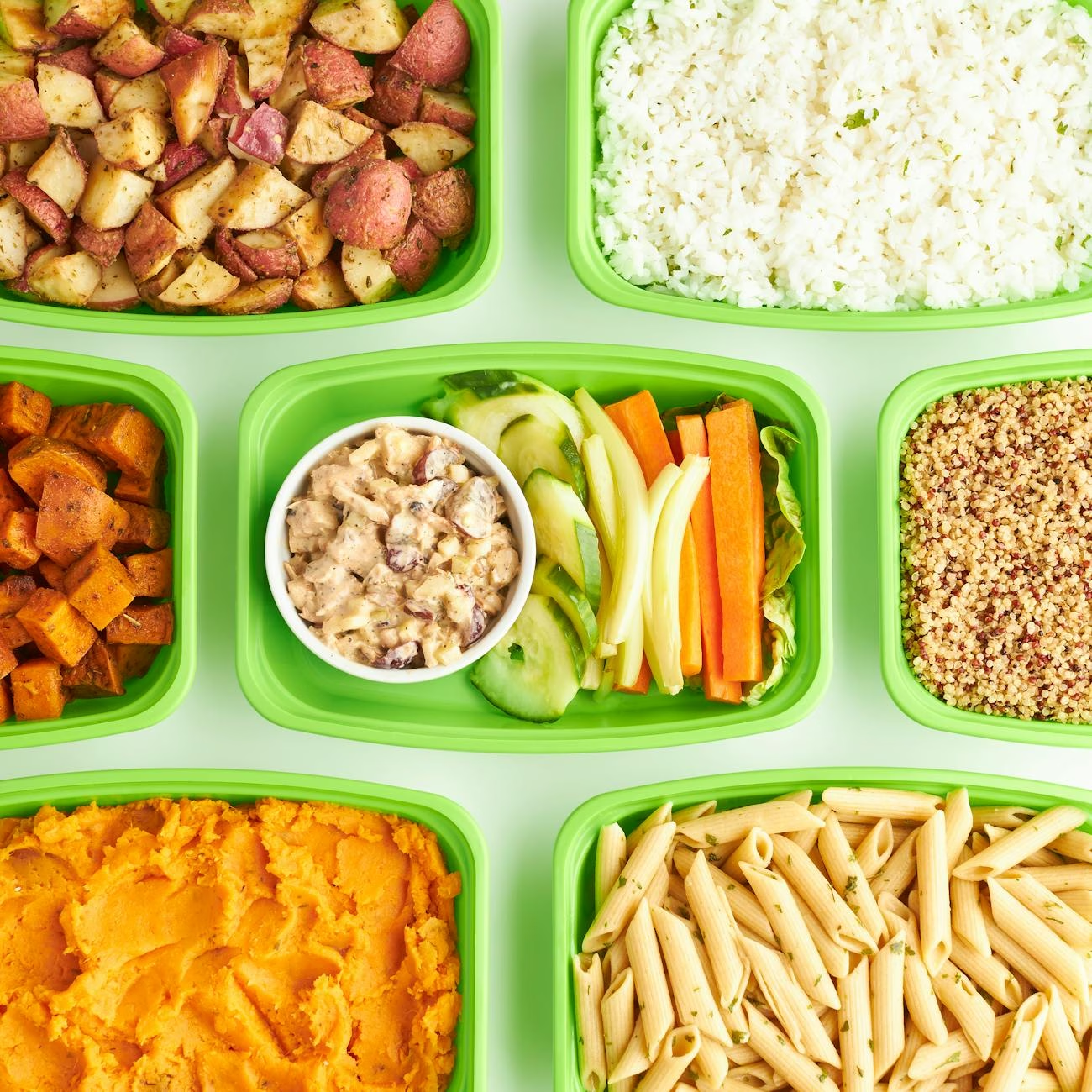
Component Prepping involves preparing individual ingredients rather than complete meals. You cook a batch of rice, roast a sheet pan of vegetables, hard-boil some eggs, and cook ground turkey. Then throughout the week, you mix and match these components into different meals. This approach offers more variety and works well for families with picky eaters.
Partial Prep is the lightest approach: washing and chopping produce, marinating proteins, and measuring out dry ingredients so that weeknight cooking is faster but still feels fresh. This works well for people who enjoy cooking but don’t have time to do it from scratch on busy nights.
Ask yourself these questions: Do I want to cook at all during the week? Do I need variety, or am I fine with repetition? How many people am I feeding, and do they all eat the same things? Your honest answers will point you toward your prep style.
Building a Balanced Meal Prep Menu for the Week
A balanced meal doesn’t need to be complicated. In plain language, you’re aiming for each meal to include a protein (keeps you full and maintains muscle), a carbohydrate (gives you energy), healthy fat (supports brain function and satiety), and vegetables (fiber, vitamins, and micronutrients).
Here’s a sample balanced weekly meal plan using component prepping:
Proteins prepped: Baked chicken thighs, hard-boiled eggs, canned chickpeas (no cooking required)
Carbs prepped: Brown rice, roasted sweet potatoes, whole grain wraps
Vegetables prepped: Roasted broccoli and bell peppers, washed salad greens, sliced cucumbers
Healthy fats on hand: Avocados, olive oil, mixed nuts, hummus
Sample Week:
- Monday Dinner: Chicken thigh over brown rice with roasted broccoli (approx. 480 calories, 38g protein, 45g carbs, 14g fat)
- Tuesday Lunch: Wrap with chickpeas, salad greens, cucumber, and hummus (approx. 420 calories, 18g protein, 52g carbs, 12g fat)
- Wednesday Dinner: Chicken thigh with sweet potato and roasted peppers (approx. 460 calories, 36g protein, 42g carbs, 12g fat)
- Thursday Lunch: Brown rice bowl with egg, cucumber, avocado, and soy sauce (approx. 440 calories, 16g protein, 48g carbs, 18g fat)
- Friday Dinner: Chickpea stir-fry with rice and remaining vegetables (approx. 400 calories, 15g protein, 60g carbs, 10g fat)
These numbers are approximate and will vary based on portion sizes, but they give you a framework for balanced eating without calorie obsession.
Prioritized Shopping List Strategy
To cut your grocery store time in half, organize your list by store section rather than by recipe. Most stores follow a similar layout: produce, proteins, dairy, canned/dry goods, frozen. When your list mirrors that layout, you move through the store in one direction without backtracking.
Also, shop with a “tier system.” Tier 1 items are your non-negotiables — the proteins, staple carbs, and fresh vegetables that anchor your week. Tier 2 items are flexible — items you’ll use if they’re on sale or in season. Tier 3 items are pantry restocks that only go in the cart if needed. This keeps you focused and prevents impulse buying that blows your budget without supporting your meal plan.
Step-by-Step Sunday Prep Session Walkthrough
A focused prep session doesn’t need to take more than 90 minutes. Here’s how to structure it:
Minutes 0–10: Review your plan and pull out all ingredients. Preheat your oven to 400°F. Put water on to boil for grains.
Minutes 10–25: Season and arrange proteins on a baking sheet. Baked chicken thighs at 400°F take about 25–30 minutes. Get them in the oven immediately — they do the work while you handle everything else.
Minutes 25–40: Add grain to boiling water (brown rice takes about 35–40 minutes; if time is tight, use quick-cook farro or white rice). While grains cook, chop all your vegetables. Do a second baking sheet of vegetables if your oven is large enough.
Minutes 40–60: Hard-boil eggs (9 minutes in simmering water), wash and dry salad greens, portion out snacks into grab-and-go containers, and assemble any overnight oats or breakfast jars for the week.
Minutes 60–80: Pull proteins and vegetables from the oven, fluff grains, allow everything to cool on the counter. Never put hot food directly into containers and into the refrigerator — it raises the internal temperature and creates food safety risks.
Minutes 80–90: Pack and label containers, clean up while food cools completely, refrigerate or freeze.
Batch-Cooking Protein Efficiently
Protein is typically the most time-consuming and expensive component of a meal, so cooking it efficiently matters. The best strategy is to cook multiple proteins at once using different methods. While chicken roasts in the oven, ground turkey or beef can cook on the stovetop in a skillet. Eggs boil on a back burner. In the same 30-minute window, you’ve produced three different protein sources.
For budget-friendly batch proteins, consider: chicken thighs (cheaper than breasts, more forgiving to cook), eggs, canned tuna, canned beans and chickpeas, and ground turkey. These can be purchased in bulk at warehouse stores like Costco, where prices per pound are substantially lower than standard grocery retailers.
Safe Food Storage Times and Container Choices
Food safety is non-negotiable, and understanding it protects both your health and your prep investment.
Refrigerator storage times (at 40°F or below):
– Cooked chicken and meat: 3–4 days
– Cooked grains and pasta: 4–5 days
– Hard-boiled eggs (in shell): 1 week
– Cooked vegetables: 3–4 days
– Leafy greens (washed and dried): 3–5 days
Freezer storage for best quality:
– Cooked chicken and meat: up to 3 months
– Cooked grains: up to 2 months
– Soups and stews: up to 3 months
For containers, glass is the gold standard — it doesn’t absorb odors, is microwave-safe, and lasts indefinitely. Brands like Pyrex and OXO Glass offer good options. BPA-free plastic containers are lighter and more practical for lunches you’re carrying to work. Mason jars work exceptionally well for salads (layer dressing at the bottom, greens at the top), overnight oats, and snacks.
Avoid storing hot food in sealed containers — allow it to cool to room temperature first. Always label containers with the prep date so you know what to use first.
How to Avoid Meal Prep Burnout
Burnout is the most common reason people quit meal prepping, and it’s almost always caused by overcomplicating the process early on.
Start smaller than you think you need to. Prepping just lunches for the week is a genuine win. You don’t have to prep every meal immediately.
Rotate your recipes on a two-week cycle. Having a set of 10–14 reliable recipes that you cycle through removes the mental load of planning while preventing boredom. You don’t need new recipes every week.
Give yourself one flexible night per week. Designate Friday or Saturday as your “wild card” night where you order out, eat leftovers, or cook spontaneously. Having a built-in break makes the structure feel less rigid.
Involve your household. When meal prep is one person’s job, it becomes one person’s burden. Even young children can wash vegetables or pack snack containers. Older kids and partners can take ownership of specific meals.
Celebrate small wins. If your prep used to happen zero times a week and you now do it once a month, that’s progress. If you’re doing it weekly but burning out on certain dishes, swap one recipe, not your entire system.
Meal prep isn’t a lifestyle overhaul — it’s a practical tool you use when it serves you and adjust when it doesn’t. The goal is simply to make eating well easier than eating poorly, and even an imperfect prep session moves you meaningfully in that direction.
Sources and Further Reading
- Danziger, S., Levav, J., & Avnaim-Pesso, L. (2011). Extraneous factors in judicial decisions. Proceedings of the National Academy of Sciences. https://www.pnas.org/doi/10.1073/pnas.1018033108
- USDA FoodData Central (for nutritional reference data): https://fdc.nal.usda.gov
- USDA Food Safety and Inspection Service — Safe Food Storage Times: https://www.fsis.usda.gov/food-safety/safe-food-handling-and-preparation/food-safety-basics/refrigeration
- Bureau of Labor Statistics — Average U.S. household food expenditure data: https://www.bls.gov/cex/
- Costco membership and bulk food pricing information: https://www.costco.com
- Pyrex glass food storage containers: https://www.pyrexhome.com
- OXO Good Grips glass containers: https://www.oxo.com
