
DIY Projects That Add Real Value to Your Home
Why Smart Sweat Equity Still Beats Passive Appreciation
In 2026, the housing market continues to reward prepared sellers and savvy homeowners alike. With mortgage rates stabilizing and buyer competition remaining selective, the difference between a home that lingers on the market and one that commands top dollar often comes down to presentation, condition, and the subtle signals that tell buyers a property has been loved and maintained. The good news? Many of the highest-return improvements you can make don’t require a contractor, a permit, or a five-figure budget. They require a weekend, some elbow grease, and a clear plan.
This guide walks you through the DIY projects most likely to deliver a strong return on investment in today’s market, along with an honest list of the work you should absolutely leave to licensed professionals.
1. Interior Paint in Neutral Tones
Estimated cost: $200–$600 for a standard home (paint + supplies)
Estimated added value: $1,500–$5,000+, depending on market
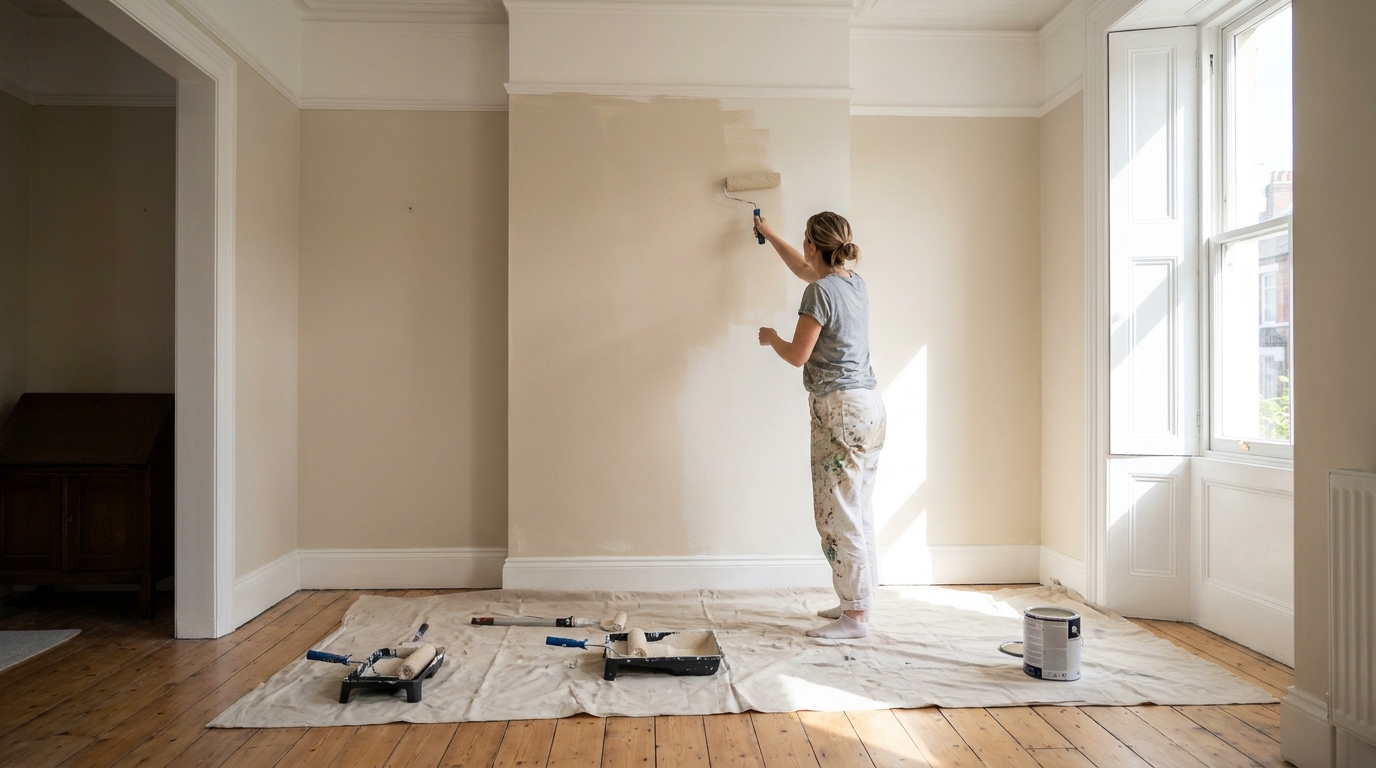
Few projects deliver a cleaner transformation per dollar spent than a fresh coat of paint in a modern neutral palette. In 2026, buyers continue to respond to warm whites, greige tones (gray-beige hybrids), soft sage greens, and earthy taupes — colors that feel calm, current, and adaptable to any furniture style.
Painting is one of the most accessible DIY skills, but execution matters. Start by cleaning walls thoroughly, filling nail holes with spackle, sanding smooth, and applying painter’s tape with care. Use a high-quality roller with the right nap thickness for your wall texture and invest in a premium paint-and-primer-in-one product to reduce the number of coats needed. Don’t neglect trim and doors — crisp white or soft off-white trim against a warm wall color signals craftsmanship and elevates the entire room.
Avoid accent walls in bold colors unless you’re staging a specific lifestyle moment (a moody library, for instance). The goal is broad buyer appeal, not personal expression.
2. Deep Cleaning and Decluttering
Estimated cost: $50–$200 (cleaning supplies, storage bins, donation hauls)
Estimated added value: Difficult to isolate, but staging studies consistently show decluttered homes sell faster and for 1–5% more
This is the highest-ROI project on this list because the cost is essentially your time. Buyers form emotional impressions within seconds of walking through a door, and nothing undercuts perceived value faster than grime, clutter, or odor.
Go room by room and adopt a brutal editing mindset: remove at least 30–50% of visible items from counters, shelves, and closets. Overstuffed closets signal insufficient storage. Clean baseboards, ceiling fans, window tracks, grout lines, and appliance interiors. Steam clean carpets or rent a machine to do it yourself. Replace any air filters and consider an odor-neutralizing treatment if pets live in the home. Empty and wipe down kitchen cabinets, and make sure every light fixture has a working, matching bulb.
If you’re preparing to sell, rent a small storage unit for personal items and seasonal gear. The investment of $80–$150 per month pays dividends in the impression a cleaned-out, spacious home creates.
3. Hardware and Lighting Fixture Swaps
Estimated cost: $150–$800
Estimated added value: $500–$2,000+
Dated cabinet pulls, tarnished door knobs, and builder-grade lighting fixtures are the visual equivalent of wearing a suit with worn-out shoes — they undermine everything else. In 2026, brushed nickel, matte black, and warm brass continue to dominate in contemporary and transitional design, while chrome feels dated in most contexts.
Swapping cabinet hardware is straightforward: remove old screws, fill holes if needed (or find hardware with the same spacing), and install new pulls. Door knobs and deadbolts can be replaced with a screwdriver in minutes. Upgrading a flush-mount ceiling light or a vanity bar fixture is slightly more involved but well within DIY territory — always shut off the breaker at the panel before touching any wiring, and use a non-contact voltage tester to confirm the circuit is dead before proceeding.
Focus your hardware budget on the kitchen and primary bathroom first, as these rooms carry the most weight in buyer perception. A $20 set of drawer pulls across 20 cabinets transforms a kitchen that might have cost $50,000 to remodel — for under $400.
4. Landscaping Basics: Mulch, Edging, and Simple Plantings
Estimated cost: $200–$700
Estimated added value: Up to 7–14% in curb appeal-related value, per some real estate studies
Curb appeal is the preview that sets expectations before a buyer ever opens the front door. A well-maintained front landscape communicates care, pride, and move-in readiness. You don’t need a landscape architect — you need clean lines, fresh mulch, and strategic simplicity.
Start by edging all beds cleanly with a half-moon edger or a string trimmer with an edging attachment. The visual contrast between a crisp bed edge and a clean lawn is disproportionately impactful. Next, apply 2–3 inches of fresh hardwood or dyed mulch to all planting beds. Mulch suppresses weeds, retains moisture, and gives your landscaping a finished, professional appearance.
Add simple plantings in threes or fives (odd numbers look more natural) — ornamental grasses, low-maintenance shrubs like knockout roses or boxwood, and seasonal color from pansies or marigolds depending on the time of year. Avoid over-planting; negative space in landscaping reads as intentional rather than bare when beds are properly mulched.
5. Pressure Washing Siding and Walkways
Estimated cost: $75–$200 (rental) or $300–$500 (purchase)
Estimated added value: $500–$2,000 in perceived condition and first impression
A home covered in mildew, algae stains, or ground-in grime on walkways looks neglected, even if the interior is immaculate. Renting a pressure washer for a weekend costs roughly $75–$100, and the visual transformation — particularly on light-colored siding, concrete driveways, and brick walkways — is dramatic.
Use lower pressure settings (1,200–1,500 PSI) for vinyl siding to avoid forcing water under panels or damaging paint. Concrete and brick can handle higher pressure (2,500–3,000 PSI). Always work from top to bottom and keep the nozzle moving to avoid streaking. Add a siding-safe detergent for mildew-heavy surfaces and let it dwell before rinsing.
Don’t overlook the backyard deck or patio. Buyers who walk through the back door will appreciate a clean outdoor surface just as much as the front.
6. Garage Door Tune-Up
Estimated cost: $30–$80
Estimated added value: Garage door replacement ranks among the top ROI projects nationally; a tune-up maintains that value at minimal cost
A squealing, jerking, or sluggishly operating garage door is a minor annoyance that becomes a major red flag during a home inspection. A basic tune-up involves lubricating the springs, rollers, and hinges with a silicone-based spray (not WD-40, which attracts dust), tightening loose hardware with a socket wrench, testing the auto-reverse safety feature, and cleaning the tracks of debris.
Check weatherstripping at the bottom for cracks or gaps and replace if needed — a new bottom seal costs $20–$40 and improves both aesthetics and energy efficiency. If the door is visibly dented or the paint is peeling, a can of matching exterior paint ($15–$25) and a few hours of prep work can restore its appearance significantly.
Important note: Do not attempt to replace or adjust the main torsion spring yourself. Torsion springs are under extreme tension and can cause serious injury if handled improperly. This specific repair belongs on the “don’t DIY” list below.
7. Smart Thermostat Installation
Estimated cost: $130–$250 (device + any minor supplies)
Estimated added value: Signals energy efficiency and modern convenience; can add $500–$1,500 in perceived value and help homes sell faster
Smart thermostats — from brands like Google Nest, Ecobee, and Honeywell Home — are one of the most accessible tech upgrades a homeowner can make. Most require only a screwdriver, a smartphone, and about 30–45 minutes. The devices typically include step-by-step wiring guides, and each manufacturer offers detailed compatibility tools on their websites to confirm your HVAC system is supported before purchase.
The appeal to buyers extends beyond the device itself. A smart thermostat communicates that a home has been thoughtfully maintained and updated, and the ongoing energy savings (averaging $50–$180 per year according to EnergyStar) are a tangible talking point.
Turn off your HVAC system at the breaker before removing the old thermostat, photograph the existing wiring before disconnecting anything, and follow the included instructions for wiring the new unit. Most installations are genuinely beginner-friendly.
8. Minor Bathroom Updates
Estimated cost: $100–$600
Estimated added value: $1,000–$3,000, depending on scope and market
Full bathroom remodels are expensive and slow. But minor updates — done well — move the needle almost as effectively for buyers. Focus on the elements that age most visibly: faucets, light fixtures, mirrors, and toilet seats.
A dated single-handle faucet can be swapped in under an hour with basic plumbing knowledge and a wrench. Shut off the supply valves under the sink, disconnect the supply lines and drain linkage, and remove the old unit. Installation is the reverse process. New faucets in a consistent finish with your updated hardware ($60–$150) deliver an immediate visual upgrade.
Replace the toilet seat if it shows any discoloration or wear ($25–$60). Add a new mirror or frame an existing one with a simple peel-and-stick mirror frame kit. Recaulk the tub surround and sink perimeter — a clean bead of fresh caulk signals cleanliness and careful maintenance. Finally, replace the shower curtain and liner if present, and add matching towel hooks or rings in your chosen metal finish.
The “Don’t DIY” List: 5 Projects to Always Hire Out
No guide to smart homeownership is complete without honest guardrails. The following projects carry risks that range from code violations and failed inspections to serious injury and death. The savings from DIYing them are never worth the consequences.
1. Electrical Panel Work and Rewiring
Working beyond basic fixture swaps — touching your panel, running new circuits, or replacing outlets without a permit — is dangerous and illegal in most jurisdictions without a license. Faulty electrical work is a leading cause of house fires and will surface as a liability during any home inspection.
2. Structural Modifications
Removing walls (especially load-bearing ones), altering floor joists, or modifying the home’s framing requires engineering assessment and permitted work by a licensed contractor. Structural failures are catastrophic and irreversible.
3. Gas Line Work
Any work involving natural gas lines — including appliance connections, line extensions, or leak repairs — must be performed by a licensed plumber or gas fitter. Gas leaks cause explosions and carbon monoxide poisoning. This is non-negotiable.
4. Roofing
Beyond replacing a handful of obviously loose shingles, roof repairs require professional assessment, fall protection equipment, and material expertise that DIYers rarely have. Improper repairs void manufacturer warranties and create water intrusion pathways that cause far more expensive damage over time.
5. Asbestos and Lead Paint Abatement
Homes built before 1980 may contain asbestos in insulation, floor tiles, or joint compound, and lead in paint. Disturbing these materials without proper testing, containment, and licensed abatement procedures is a serious health and legal liability. Always test before you demo.
The Bottom Line
The projects in this guide share a common quality: they amplify perceived value at a fraction of the cost of full renovations. In 2026’s discerning market, buyers are sophisticated enough to recognize genuine care and maintenance — and willing to pay for it. You don’t need to spend $50,000 on a kitchen to win their confidence. You need clean, fresh, functional, and modern — all of which are achievable with focused effort and a reasonable weekend budget.
Start with cleaning and decluttering (zero cost, maximum impact), move to paint and hardware, then work outward to landscaping and pressure washing. Each project builds on the last, and together they create a home that feels cared for from the curb to the closets.
Sources and Further Reading
- Remodeling Magazine Cost vs. Value Report (2025): www.costvsvalue.com — Annual data on project ROI by region
- National Association of Realtors Profile of Home Staging (2023): www.nar.realtor — Staging impact on sale price and time on market
- EnergyStar Smart Thermostat Savings Estimates: www.energystar.gov/products/heating_cooling/programmable_thermostats
- Google Nest Thermostat Compatibility Checker: store.google.com/us/category/thermostats
- Ecobee Compatibility Tool: www.ecobee.com/en-us/compatibility
- Home Depot Tool and Equipment Rental (pressure washers, edgers): www.homedepot.com/c/tool_and_vehicle_rental
- EPA Lead Paint and Asbestos Information: www.epa.gov/lead and www.epa.gov/asbestos
- This Old House Garage Door Maintenance Guide: www.thisoldhouse.com
