
How to Build an Emergency Fund From Scratch
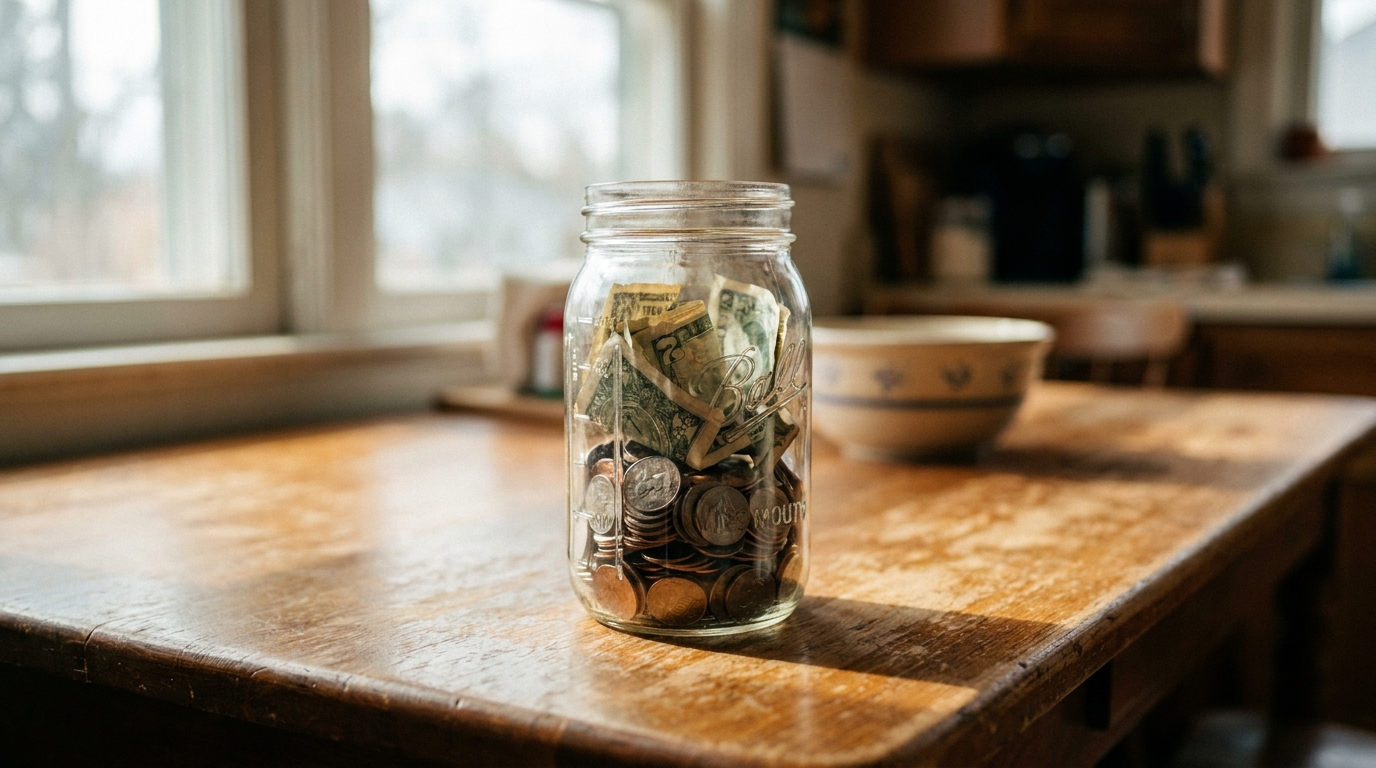
If you’ve ever had your car break down, received an unexpected medical bill, or lost a job without any savings to fall back on, you already understand why financial instability feels so suffocating. That sinking feeling — where one small crisis threatens to unravel everything — is something millions of adults live with every day. The good news is that there is a practical way out, and it starts with one foundational step: building an emergency fund. This guide is written specifically for people who feel behind, who may have very little to nothing saved right now, and who are tired of advice that assumes they already have extra money lying around. You don’t need to be wealthy to start. You just need a clear plan and the willingness to take one small step at a time.
Why an Emergency Fund Is Non-Negotiable
An emergency fund is not a luxury. It is a financial buffer that stands between you and debt every time life throws something unexpected your way. Without it, a single car repair or a two-week gap between jobs can force you to reach for a credit card, take out a payday loan, or borrow from someone you know — all of which create new financial problems on top of the original one.
Think of an emergency fund as the financial equivalent of a seatbelt. You hope you’ll never need it, but the moment you do, it becomes the most important thing in the world. People without emergency funds are statistically more likely to carry high-interest debt, experience housing instability, and report chronic stress related to money. According to a 2023 Federal Reserve report on the economic well-being of U.S. households, roughly 37% of American adults would struggle to cover an unexpected $400 expense using cash or its equivalent.
That number is striking, but it also means you are not alone — and that the gap between where you are now and where you need to be is often smaller than you think. Starting an emergency fund, even with just $10 or $25 at a time, changes your relationship with money fundamentally. It moves you from reactive to proactive, and that shift in mindset matters as much as the dollars themselves.
How Much You Actually Need to Save
The standard advice you’ll hear is to save three to six months’ worth of living expenses. That’s solid guidance, but for someone just getting started with little to no savings, that number can feel paralyzing. So let’s break it down into something you can actually work with.
Step 1: Calculate your monthly essential expenses.
Write down what you spend each month on the basics: rent or mortgage, utilities, groceries, transportation, insurance, and any minimum debt payments. Do not include subscriptions, dining out, or other discretionary spending. Add those numbers up. That total is your monthly baseline survival number.
Step 2: Set a starter goal.
Before you aim for three months of expenses, aim for $500 to $1,000. Research from the Urban Institute suggests that having even $250 to $750 in liquid savings significantly reduces the likelihood of falling behind on bills or missing rent after a financial shock. A small cushion is still a cushion.
Step 3: Build toward your full target.
Once you hit that first milestone, work toward one month of expenses, then two, then three. For most renters and single-income households, three months is a reasonable and achievable full goal. If you are self-employed, have variable income, or have dependents, leaning toward six months provides stronger protection.
Example: If your essential monthly expenses total $2,200, your full three-month emergency fund target would be $6,600. Your starter goal would be $1,000. That is the number you focus on first.
The Best Account Types to Hold Your Fund
Where you keep your emergency fund matters almost as much as how much you save. You need the money to be accessible in a genuine emergency, but not so easy to access that you dip into it for non-emergencies. You also want your savings to grow while they sit idle.
High-Yield Savings Account (HYSA)
This is the gold standard for emergency funds. A high-yield savings account works just like a regular savings account, except it pays significantly more interest. Traditional big-bank savings accounts often offer interest rates as low as 0.01%, while high-yield savings accounts at online banks have offered rates between 4% and 5% annually as of 2024. That difference adds up meaningfully over time.
Online banks like Ally, Marcus by Goldman Sachs, and SoFi frequently offer competitive rates with no minimum balance requirements and no monthly fees. Look for accounts that are FDIC-insured, meaning your money is protected up to $250,000 in the event the bank fails.
Money Market Account
Similar to a high-yield savings account, money market accounts often offer competitive interest rates and may come with check-writing privileges or a debit card, which can be convenient in an emergency. They are also FDIC-insured. The downside is that some require a higher minimum balance.
What to Avoid
Keep your emergency fund out of investment accounts, stocks, or cryptocurrency. These fluctuate in value, and the last thing you want is to discover your emergency fund has dropped 30% in value right when you need it most. Liquidity and stability are the priorities here, not growth.
Step-by-Step Strategies to Start Saving on a Tight Budget
This is the section where most financial guides fall short by suggesting vague advice like “spend less and save more.” Here is something more concrete.
Start with an amount that feels almost too small.
Seriously. If saving $25 per paycheck feels manageable, start there. Consistency matters far more than the dollar amount in the early stages. Small consistent deposits build the habit, and habits become the foundation of long-term financial health.
Set up automatic transfers on payday.
This is the single most effective action you can take today. Log in to your bank account and set up an automatic transfer from your checking account to your new high-yield savings account on the day you get paid. Even if it’s $20 or $50, automate it so the decision is made for you before you have a chance to spend the money. This is called “paying yourself first,” and it removes willpower from the equation entirely.
Use the round-up method.
Some banking apps, including those offered by Chime and Acorns, automatically round up each purchase to the nearest dollar and transfer the difference into savings. It is a passive and nearly painless way to accumulate small amounts consistently.
Find one expense to temporarily redirect.
Look at your monthly spending and find one recurring expense — a streaming service, a gym membership you rarely use, or a coffee habit — that you can reduce or pause for 60 to 90 days. Direct that money straight into your emergency fund. You are not cutting this forever. You are temporarily borrowing from your present comfort to secure your future stability.
Use windfalls strategically.
Tax refunds, work bonuses, birthday money, and overtime pay are all opportunities to give your emergency fund a significant boost. Commit to depositing at least 50% of any unexpected or irregular income directly into savings before spending any of it.
Common Mistakes That Stall Progress
Even well-intentioned savers can get tripped up. Recognizing these pitfalls ahead of time will save you frustration.
Keeping your emergency fund in your regular checking account. When savings and spending money share the same account, the savings tend to get spent. Open a separate account, ideally at a different bank so transferring money requires at least a little friction.
Setting a goal so large it feels hopeless. If you fixate on needing $10,000 before you feel safe, you may never start. Break the goal into stages and celebrate each milestone.
Raiding the fund for non-emergencies. A sale on flights is not an emergency. A holiday gift list is not an emergency. Define ahead of time what qualifies — job loss, medical expenses, essential car or home repairs — and stick to it.
Stopping contributions once you reach the starter goal. The starter goal is a checkpoint, not the finish line. Keep the automatic transfer running until you reach your full target.
Giving up after a setback. Life happens. You might have to use part of your fund before it is fully built, or miss a few contributions during a hard month. That does not mean you have failed. It means the system worked. Start again.
How to Replenish the Fund After Using It
Using your emergency fund is not a failure — it is a success. The account did exactly what it was supposed to do. Your only job now is to rebuild it.
Start by going back to the beginning. Restart your automatic transfer on the next payday, even if the amount feels small relative to what you spent. Treat the replenishment process with the same urgency you would if you were paying off a debt.
If you had to use a significant portion of the fund, consider temporarily increasing the transfer amount if your budget allows. Look again for any one-time windfalls or spending you can redirect. If the emergency involved an ongoing cost, like a new recurring medical payment, revisit your monthly baseline budget and adjust your savings target accordingly.
Most importantly, don’t wait until you feel “ready” to restart. Start immediately, on the next payday, with whatever amount you can manage. The fund will rebuild faster than you expect once momentum returns.
Your First Concrete Step
By the time you finish reading this, one thing is already possible: you can open a high-yield savings account today. Most take less than ten minutes to set up online with no minimum deposit. Once it is open, schedule your first automatic transfer, even if it is just $20. Then write down your essential monthly expenses and calculate your personal savings target.
You do not need to have everything figured out. You do not need a perfect budget or a high income. You just need to start, because even a $20 cushion is more than you had before. Financial stability is built one small, consistent action at a time, and you are more capable of building it than you might currently believe.
Sources and Further Reading
-
Federal Reserve Board. Report on the Economic Well-Being of U.S. Households (SHED) 2023. https://www.federalreserve.gov/publications/shed.htm
-
Urban Institute. Liquid Asset Poverty and Financial Fragility. https://www.urban.org/research/publication/financial-health-low-income-households
-
FDIC. Understanding Deposit Insurance. https://www.fdic.gov/resources/deposit-insurance/
-
NerdWallet. Best High-Yield Savings Accounts (updated regularly). https://www.nerdwallet.com/best/banking/high-yield-online-savings-accounts
-
Consumer Financial Protection Bureau. Getting started with an emergency fund. https://www.consumerfinance.gov/consumer-tools/save-for-emergencies/
-
Ally Bank. https://www.ally.com/bank/online-savings-account/
-
Marcus by Goldman Sachs. https://www.marcus.com/us/en/savings/high-yield-savings
-
SoFi. https://www.sofi.com/banking/savings-account/
