
Compact SUVs vs Sedans: Which Fits Your Lifestyle?
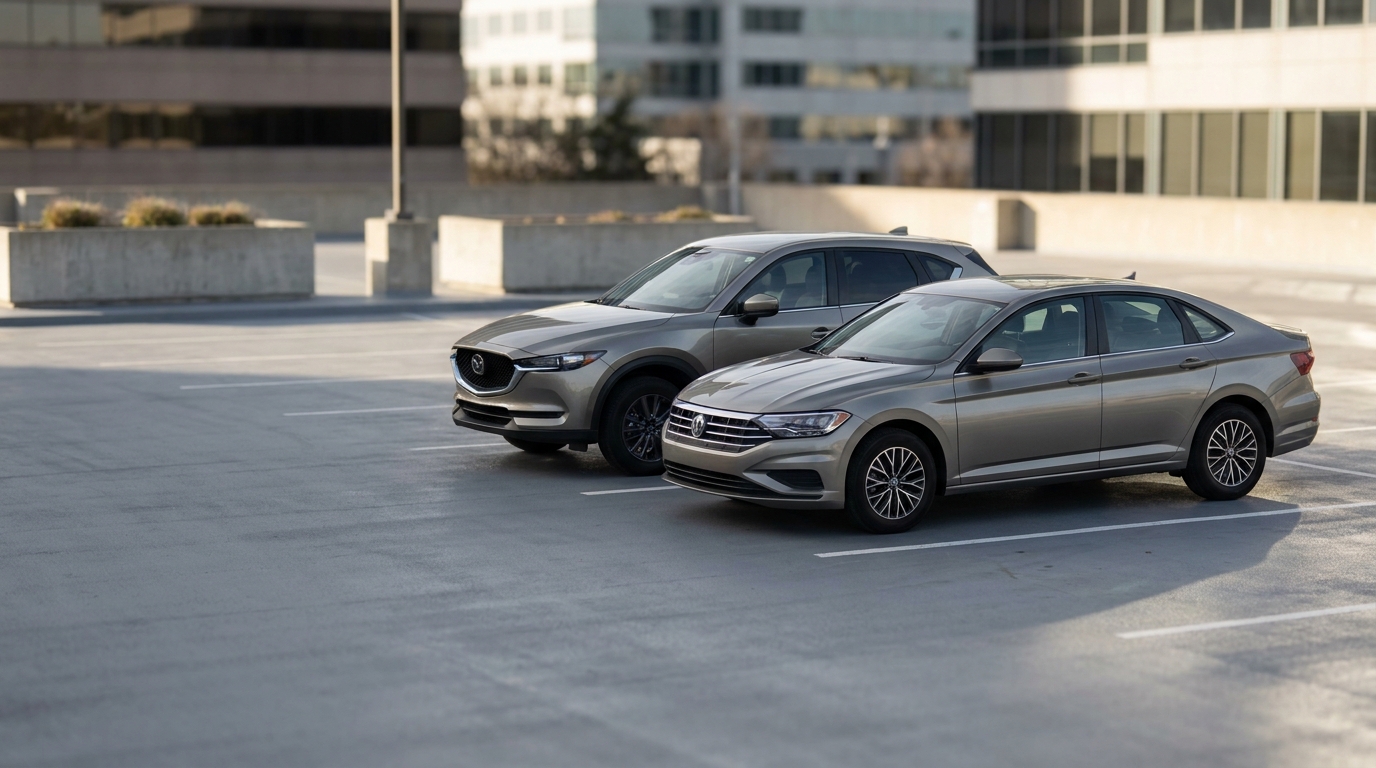
When it comes to choosing a new vehicle, few decisions spark as much debate as the choice between a compact SUV and a sedan. Both body styles have loyal followings, and for good reason — each excels in different areas depending on how you live, where you drive, and what you haul. To make this comparison as grounded as possible, we’ll use two of the most popular pairings on the market today: the Honda Civic versus the Honda CR-V, and the Toyota Camry versus the Toyota RAV4. These real-world rivals share platforms, powertrains, and brand DNA, which makes them ideal for an apples-to-apples look at what you actually gain — and give up — when you go taller.
The Price Gap: Paying the SUV Premium
Let’s start where most car-buying decisions ultimately land: the sticker price. Across nearly every brand, compact SUVs command a notable premium over their sedan counterparts, typically falling in the $2,000 to $4,000 range for comparable trim levels.
For the 2024 model year, the Honda Civic LX starts at approximately $24,950, while the Honda CR-V LX begins at around $31,650 — a gap of roughly $6,700 at the base level, though this partially reflects the CR-V’s standard turbocharged engine and additional standard features. When comparing similarly equipped mid-range trims, the delta narrows to the more typical $3,000–$4,500 range.
The Toyota comparison tells a similar story. A 2024 Toyota Camry LE starts near $27,215, while the RAV4 LE opens at approximately $30,270, putting the premium at about $3,000 at base trim. Again, as you climb through the trim ladder, the gap fluctuates but rarely disappears.
That initial price difference has downstream effects — it means a higher loan balance, slightly elevated monthly payments, and more sales tax paid at the dealership. Over a five-year ownership window, the SUV premium compounds in ways buyers sometimes underestimate before signing paperwork.
Fuel Economy: Sedans Still Win at the Pump
If fuel savings are a priority, sedans retain a clear and consistent advantage. The 2024 Honda Civic gets an EPA-estimated 32 mpg city / 42 mpg highway in its standard configuration. The CR-V, despite sharing Honda’s turbocharged 1.5L engine, earns a more modest 28 mpg city / 34 mpg highway — a meaningful gap, especially for high-mileage drivers.
The Camry vs. RAV4 comparison is equally telling. The 2024 Toyota Camry LE earns approximately 28 mpg city / 39 mpg highway, while the RAV4 LE checks in at 27 mpg city / 35 mpg highway. The hybrid versions of both vehicles help close the gap considerably, but the physics of moving a larger, taller, heavier body through the air still work against SUVs in every segment.
Over 15,000 miles annually, a driver in a CR-V might spend $200–$400 more per year on fuel than a comparable Civic driver, depending on local gas prices. That figure adds up meaningfully across a typical ownership cycle, partially offsetting any advantages the SUV provides.
Cargo Space and Seat Folding: The SUV’s Big Win
This is where the compact SUV earns its premium most convincingly. The Honda CR-V offers 39.3 cubic feet of cargo space behind the rear seats and expands to 76.5 cubic feet with the rear seats folded flat — a genuinely useful, floor-level loading surface perfect for furniture runs, camping gear, or a large dog crate.
The Honda Civic, by comparison, offers 14.8 cubic feet of trunk space — adequate for everyday grocery runs and airport luggage, but nowhere near competitive for anyone hauling larger loads. Its fixed trunk design also means there’s no pass-through option for longer items like skis or lumber.
The RAV4 delivers 37.6 cubic feet behind the rear seats and 69.8 cubic feet fully folded. The Camry sedan offers a respectable 15.1 cubic feet of trunk space — slightly more than the Civic — but again, no folding rear access for oversized cargo.
For families, outdoor enthusiasts, or anyone who regularly moves gear, this difference is not marginal. The SUV’s rear-hatch design, combined with a lower load floor than traditional trucks but higher than sedans, hits a practical sweet spot that cargo numbers alone don’t fully capture.
Ride Height and Visibility: Seeing the Road Differently
One of the most subjective but frequently cited reasons people choose SUVs is the elevated seating position. The Honda CR-V sits passengers at a hip point that’s several inches higher than the Civic, providing a clearer forward sightline over traffic and reducing the strain of getting in and out — particularly relevant for older drivers or those with joint issues.
That said, sedans like the Camry and Civic are not low-slung sports cars. They sit at a comfortable height for most adults and, in many cases, offer better handling stability due to a lower center of gravity. Sedan drivers experience less body roll in corners and generally more responsive steering feel.
The visibility advantage of SUVs is real but nuanced. While forward sightlines improve, the taller body and shorter rear window can create blind spots during reversing that sedan trunklids don’t produce in the same way. Most modern SUVs compensate with standard or optional rear cameras and blind-spot monitoring, but it’s worth considering.
AWD Availability: A Genuine Differentiator
This is perhaps the most functionally significant difference between the two segments. The Honda CR-V and Toyota RAV4 both offer all-wheel drive as a straightforward option, with the RAV4 even providing a dedicated off-road trim (TRD Off-Road) for buyers who want genuine trail capability.
The Honda Civic is front-wheel drive only — no AWD option exists. The Toyota Camry does offer an AWD variant, making it one of the few sedans in the segment to do so, though it adds cost and slightly reduces fuel economy.
For buyers in snowy regions — the Upper Midwest, New England, mountain states — the AWD availability of compact SUVs is a genuine, safety-relevant advantage that’s hard to replicate with a front-wheel-drive sedan, even with quality winter tires.
Insurance Costs: Sedans Typically Come Out Ahead
Insurance premiums follow a complex formula, but body style and vehicle value both play meaningful roles. Because sedans typically carry lower sticker prices and lower repair costs for common collision damage, they tend to attract lower annual premiums.
According to data aggregated from multiple insurance comparison platforms, compact sedans average approximately $1,300–$1,600 per year to insure, while compact SUVs average closer to $1,500–$1,900 per year, depending on driver profile, location, and coverage level. That’s a rough annual difference of $200–$400, which may seem modest but accumulates alongside the original purchase premium.
The Civic, in particular, tends to earn some of the most competitive insurance rates in its segment due to strong safety scores, affordable parts, and wide repair network availability.
Depreciation Rates: SUVs Hold Value Better
Here’s where the SUV buyers get some financial vindication. Compact SUVs, driven by strong consumer demand, tend to depreciate more slowly than sedans in most market conditions. According to iSeeCars and similar automotive valuation trackers, the RAV4 consistently ranks among the lowest-depreciation vehicles in any segment, retaining roughly 60–65% of its value after three years under normal conditions.
The Toyota Camry, despite being a benchmark for reliability and resale value among sedans, typically retains closer to 50–55% of its value at the three-year mark. The Honda CR-V similarly outpaces the Civic in retained value percentages, though the Civic performs admirably for its class.
This means that while SUV buyers pay more upfront and more at the pump, they tend to recoup a higher proportion of their original investment at resale. For buyers who trade in or sell vehicles every three to five years, this depreciation advantage can partially or fully offset the purchase premium.
Ideal Buyer Profiles
The compact sedan is the better fit if you:
– Commute daily in an urban or suburban environment
– Prioritize fuel economy and lower operating costs
– Park in tight urban garages or street spaces regularly
– Drive primarily in mild-weather climates
– Value a more engaging, responsive driving experience
– Have a tighter budget and want to maximize trim level per dollar
The compact SUV makes more sense if you:
– Regularly carry families, gear, pets, or large cargo
– Live in or frequently travel through snowy or mountainous regions
– Prefer the elevated seating position for comfort or accessibility
– Plan to hold your vehicle for five or more years (depreciation advantage)
– Need AWD capability without moving into truck-based platforms
– Value flexibility and interior versatility above fuel efficiency
Which One Is Right for You? Take the Quiz
Answer these six questions honestly to get a clearer picture of which body style aligns with your actual lifestyle:
1. How many miles do you drive annually?
– A) Fewer than 10,000 miles
– B) 10,000–15,000 miles
– C) More than 15,000 miles
2. Do you regularly carry more than two passengers or transport large items (bikes, strollers, sporting equipment)?
– A) Rarely or never
– B) Occasionally, a few times a month
– C) Frequently, it’s a weekly or daily need
3. What is your primary driving environment?
– A) City streets and tight parking
– B) Mixed suburban and highway
– C) Rural roads, mountains, or areas with heavy winter weather
4. How long do you typically keep a vehicle before selling or trading in?
– A) Two to three years
– B) Four to five years
– C) Six or more years
5. Is AWD or off-road capability important to your driving needs?
– A) No, I’ve never needed it
– B) It would be nice but isn’t essential
– C) Yes, it’s a meaningful priority for safety or lifestyle
6. What matters most to your buying decision?
– A) Lowest total cost of ownership
– B) Balance of practicality and value
– C) Maximum versatility and capability regardless of cost
Scoring: Mostly A’s point toward a sedan. Mostly C’s point toward a compact SUV. A mix of answers suggests either would serve you well — and it may come down to a test drive.
Sources and Further Reading
- Honda Civic 2024 pricing and specs: https://www.honda.com/civic
- Honda CR-V 2024 pricing and specs: https://www.honda.com/cr-v
- Toyota Camry 2024 pricing: https://www.toyota.com/camry
- Toyota RAV4 2024 pricing: https://www.toyota.com/rav4
- EPA Fuel Economy Guide 2024: https://www.fueleconomy.gov
- iSeeCars Depreciation Study: https://www.iseecars.com/car-depreciation-study
- Insurance cost estimates via The Zebra: https://www.thezebra.com/auto-insurance/vehicle/suv-vs-sedan-insurance
