
How to Buy a Used Car Without Getting Burned
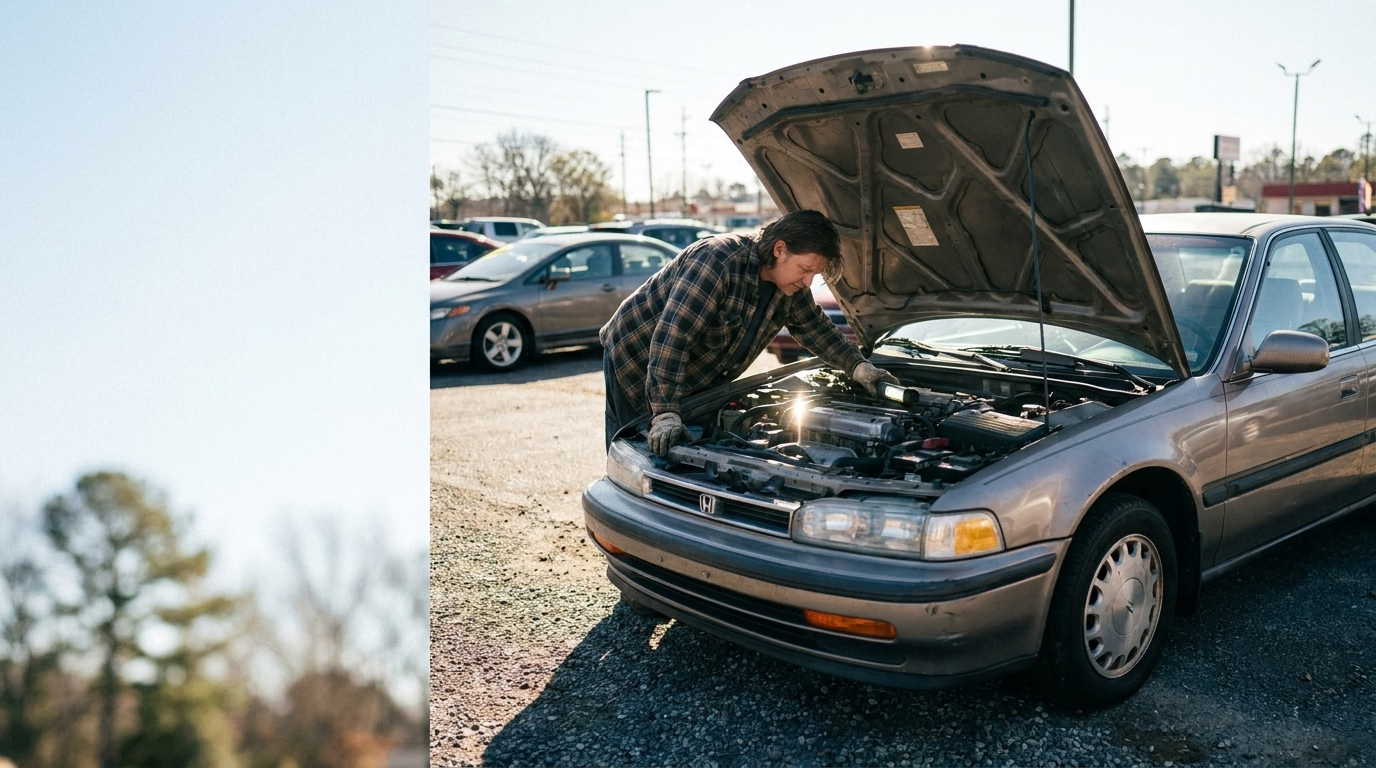
## Your No-Nonsense Guide to Buying a Used Car Without Getting Burned
Buying a used car for the first time—or trying to stretch a tight budget into reliable transportation—is one of the most stressful financial decisions most people make. The process involves strangers, paperwork, mechanical systems you may not fully understand, and thousands of dollars on the line. The good news is that with the right preparation, you don’t need to be a car expert to come out of the deal feeling confident and protected. This guide walks you through every step of the process, from figuring out what you can actually afford to driving off with a vehicle you trust.
—
## Setting Your Budget and Total Ownership Costs
Before you look at a single listing, you need to know your real number—not just the sticker price, but everything it costs to own a car.
**Start with the purchase price.** A common rule of thumb is that your car payment (if you’re financing) should not exceed 15% of your monthly take-home pay. If you’re paying cash, aim to spend no more than you can comfortably replace within six to twelve months of saving. According to iSeeCars, the average price of a used car in the United States hovers around $25,000–$27,000, but budget-friendly options from reliable brands can often be found in the $8,000–$15,000 range for vehicles that are five to ten years old.
**Factor in total ownership costs, which include:**
– **Insurance:** Get a quote before you buy. Insurance costs vary by vehicle model, your driving history, and your ZIP code. Young drivers or those with less-than-perfect credit may pay significantly more. Use free tools like The Zebra or NerdWallet’s insurance comparison page to estimate costs.
– **Registration and taxes:** These are state-dependent but often run between $100 and $500 annually, with higher fees in states like California.
– **Fuel:** A car that gets 20 miles per gallon versus 30 mpg makes a meaningful difference over 12,000 miles a year. Use the U.S. Department of Energy’s fueleconomy.gov to compare real-world fuel costs for any vehicle you’re considering.
– **Maintenance:** Budget roughly $500–$1,200 per year for routine maintenance (oil changes, tires, brakes) on most used vehicles. Older vehicles and luxury brands often cost more.
– **Emergency repairs:** Set aside at least $1,000–$2,000 as a cushion. Used cars do break down. If you can’t afford the unexpected repair, you may not be able to afford the car.
A vehicle priced at $10,000 that costs $3,000 a year to insure and repair can quickly become a financial burden. Build your full ownership picture before you fall in love with any particular car.
—
## Where to Buy Used Cars and Which Sources to Trust
You have more options than ever, and each comes with different tradeoffs.
**Franchised dealerships** (authorized Honda, Toyota, Ford dealers, for example) often sell Certified Pre-Owned (CPO) vehicles that have been inspected and come with manufacturer-backed warranties. They tend to cost more, but the added protection can be worth it for buyers who aren’t mechanically savvy.
**Independent used car dealerships** vary widely in quality. Some are excellent; others are high-pressure operations that move cars quickly without full disclosure of problems. Read Google and Yelp reviews carefully, and look for dealers with years of history and transparent pricing.
**Private sellers** (Craigslist, Facebook Marketplace, AutoTrader private listings) often offer lower prices because there’s no middleman. However, there are no consumer protections if something goes wrong after the sale. Always meet in a public place during daylight, and never hand over money without completing all the steps in this guide first.
**Online car retailers** like Carvana and CarMax have grown in popularity. CarMax offers a 30-day return window (up to 1,500 miles), which is a meaningful safety net. Carvana offers a 7-day return policy. Prices tend to be fair but non-negotiable at these platforms.
**Auctions** (both in-person and online) are generally not recommended for first-time buyers. The vehicles sell as-is, inspection time is minimal, and the environment can feel pressured.
**Best advice:** Start with CPO vehicles at franchised dealerships or CarMax if your budget allows the premium. If budget is tight, private sellers and independent dealers can work—just bring a mechanic.
—
## How to Research a Vehicle History Report
A vehicle history report is one of the most important tools you have. It tells you what has happened to the car before it reached you.
**The two most-used services are:**
– **Carfax** (carfax.com): Reports typically cost $40–$45 for a single report or $60 for unlimited reports within a 60-day window.
– **AutoCheck** (autocheck.com): Similar data, sometimes included free through dealers.
**What to look for in the report:**
– **Accident history:** Minor fender-benders are common and not always disqualifying. Major structural damage is a red flag.
– **Number of previous owners:** More owners can mean the car changed hands quickly due to problems. One or two previous owners is generally favorable.
– **Title issues:** Look for “salvage title” (car was declared a total loss by an insurer) or “flood damage” entries. Both are serious warning signs.
– **Odometer rollback flags:** The report notes if recorded mileage ever went backward, which could indicate tampering.
– **Service records:** Consistent maintenance records are a green flag.
One important caveat: a clean history report does not guarantee a problem-free car. Not all accidents are reported to insurance. Always pair a history report with a physical inspection.
Some dealerships will provide Carfax reports for free. You can also run a free VIN check through the National Insurance Crime Bureau (NICB) at nicb.org to check for theft records.
—
## What to Inspect Before You Test Drive
Use this checklist before you hand over your keys or sign anything. Print it out and bring it with you.
**Exterior:**
– Walk around the car in good lighting. Look for uneven panel gaps, mismatched paint, or wavy body lines (signs of accident repair).
– Check all four tires for even tread wear. Uneven wear can signal alignment or suspension problems.
– Look under the car for rust, fluid drips, or damaged components.
– Check that all lights (headlights, taillights, turn signals) work.
**Interior:**
– Test every button, switch, and screen. AC, heat, windows, mirrors, and audio system.
– Smell the interior. Musty or mildew odors can indicate flood damage.
– Check seat condition, seatbelt function, and all door locks.
**Under the Hood:**
– Check the oil dipstick. Oil that looks milky or has a foul smell is a red flag (could mean a blown head gasket).
– Look for obvious leaks, cracked hoses, or corroded battery terminals.
– Check the coolant reservoir—it should be clear or slightly yellow/green, never rusty brown.
**During the Test Drive:**
– Drive it on a highway and in stop-and-go conditions.
– Listen for unusual noises: clunking, grinding, or whining.
– Test the brakes firmly. They should feel solid, not spongy.
– Let go of the steering wheel briefly on a straight road to see if the car pulls to one side.
**After the test drive, get a pre-purchase inspection (PPI)** from an independent mechanic of your choosing—not one recommended by the seller. This typically costs $100–$200 and is worth every penny. A mechanic can put the car on a lift and identify problems invisible to the naked eye. If a seller won’t allow this, walk away.
—
## Negotiating the Price Like a Pro
Negotiation doesn’t require aggression. It requires preparation and the willingness to walk away.
**Do your research first.** Use Kelley Blue Book (kbb.com) and Edmunds (edmunds.com) to look up the fair market value of the exact vehicle—same year, mileage, and condition—in your area. Print these numbers or have them on your phone.
**Use this simple script:**
> *”I’ve done some research on this car. Based on Kelley Blue Book and comparable listings in the area, fair market value is around [X]. Given [any issues found during inspection], I’d like to start at [your offer, which should be 5–10% below what you’re actually willing to pay]. Is that something we can work with?”*
**At a dealership, these fees are often negotiable or removable:**
– **Documentation fee (doc fee):** Covers paperwork. In states without caps, some dealers charge $500–$800. Try to negotiate this down.
– **Dealer add-ons:** Things like paint protection, fabric guard, nitrogen tire fill, or VIN etching are almost always overpriced and unnecessary. Decline them.
– **Extended warranties from the dealer:** These can be purchased later, often cheaper through third-party providers. Don’t feel pressured to decide in the moment.
**Fees that are NOT negotiable:**
– Sales tax
– State registration and title fees
– Government-mandated fees
If a dealer refuses to work on price at all, ask them to throw in free oil changes, new floor mats, or a full tank of gas. Small concessions keep the conversation productive.
—
## Finalizing the Deal Safely
Once you’ve agreed on a price, the paperwork process begins. This is where deals can quietly become more expensive than expected.
**Read every document before signing.** Ask the finance manager to walk through each fee line by line. Don’t let anyone rush you.
**If you’re financing through the dealer:**
– Get pre-approved from your bank or credit union before you visit. This gives you a baseline interest rate to compare against the dealer’s offer.
– Dealers sometimes mark up loan interest rates as a way to earn extra profit. If your bank offers 6% and the dealer offers 9%, you now have leverage to negotiate.
**Confirm the out-the-door price** (the total amount including all taxes and fees) in writing before you sign. This is the only number that matters.
**Get everything in writing.** Any promises made verbally—free repairs, included accessories, a warranty—must appear in the contract. If it’s not in writing, it doesn’t exist legally.
**For private-party sales:**
– Meet at your local DMV or a bank to handle the title transfer and payment simultaneously.
– Pay with a cashier’s check or through a secure electronic transfer—never cash.
– Make sure the seller’s name on the title matches their government-issued ID.
– Get a signed bill of sale that includes the vehicle’s VIN, sale price, date, and both parties’ signatures.
Once you’ve driven home safely, update your insurance policy immediately if you haven’t already, and keep copies of all paperwork in a safe place.
—
Buying a used car doesn’t have to be intimidating. Sellers and dealers count on buyers being unprepared. By setting a real budget, verifying the car’s history, inspecting it thoroughly, and negotiating from a position of knowledge, you shift the balance of power back to yourself. Take your time, trust the process, and remember: there is always another car.
—
## Sources and Further Reading
– **Kelley Blue Book (vehicle valuation):** [kbb.com](https://www.kbb.com)
– **Edmunds (fair market price research):** [edmunds.com](https://www.edmunds.com)
– **Fueleconomy.gov (fuel cost comparisons):** [fueleconomy.gov](https://www.fueleconomy.gov)
– **Carfax (vehicle history reports):** [carfax.com](https://www.carfax.com)
– **AutoCheck (vehicle history reports):** [autocheck.com](https://www.autocheck.com)
– **NICB Free VIN Check (theft and total loss records):** [nicb.org/vincheck](https://www.nicb.org/vincheck)
– **The Zebra (auto insurance comparison):** [thezebra.com](https://www.thezebra.com)
– **NerdWallet Auto Insurance:** [nerdwallet.com/insurance/auto](https://www.nerdwallet.com/insurance/auto)
– **iSeeCars (used car pricing data and analysis):** [iseecars.com](https://www.iseecars.com)
– **CarMax (30-day return policy details):** [carmax.com](https://www.carmax.com)
