
How to Buy a Used Car Without Getting Burned
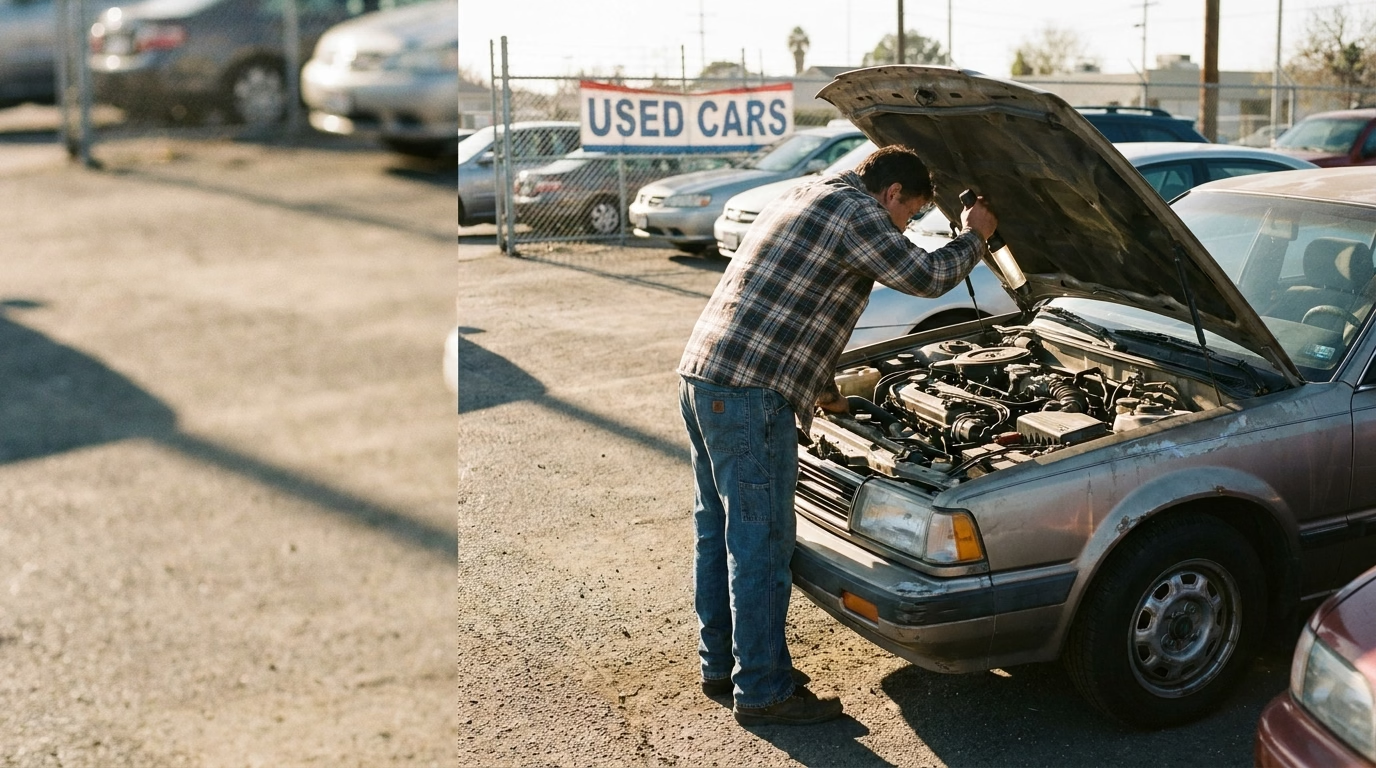
Buying a used car for the first time can feel overwhelming. You’re dealing with unfamiliar terminology, salespeople who do this every day, and the very real fear of making an expensive mistake. The good news is that with a little preparation, you can walk into any dealership or private sale with confidence, avoid the most common traps, and drive away with a vehicle that fits your life and your budget. This guide walks you through every step of the process—from figuring out what you can actually afford to signing the paperwork safely.
—
## Setting Your Budget and Total Ownership Costs
The biggest mistake first-time used car buyers make is focusing only on the sticker price. The purchase price is just the beginning. Before you fall in love with any specific vehicle, you need to understand the full cost of ownership.
**Start with your purchase budget.** A general rule of thumb is to spend no more than 15–20% of your annual take-home income on a vehicle. If you take home $40,000 a year, your car budget should be roughly $6,000–$8,000. If you’re financing, aim to keep your monthly payment at or below 10–15% of your monthly take-home pay.
**Factor in financing costs.** If you need a loan, get pre-approved by your bank or credit union before you shop. Credit unions in particular often offer lower interest rates than dealership financing. As of 2024, used car loan rates from credit unions average around 6–7% APR for buyers with good credit, compared to 8–12% or higher through dealer financing for the same buyer. Even a 2% difference in APR can add hundreds of dollars to your total cost over a 48-month loan.
**Calculate total ownership costs, not just the payment.** Ask yourself:
– **Insurance:** Call your insurer and get a quote for any car you’re seriously considering before you buy. Sports cars, certain SUVs, and vehicles with high repair costs carry higher premiums.
– **Fuel:** Check the EPA fuel economy rating at [fueleconomy.gov](https://www.fueleconomy.gov) and calculate your estimated monthly gas cost based on your typical driving mileage.
– **Maintenance:** Older vehicles and high-mileage cars need more frequent maintenance. Budget for oil changes (typically $50–$120 every 5,000–7,500 miles), tires ($600–$1,000 for a full set depending on size), and brake jobs ($200–$400 per axle).
– **Registration and taxes:** These vary by state but typically run $100–$500 per year. Some states also charge personal property taxes on vehicles.
– **Emergency repairs:** Set aside a small fund—even $500–$1,000—for unexpected issues. Used cars are unpredictable, and having a cushion prevents a minor problem from becoming a financial crisis.
A $7,000 car with low insurance costs and great fuel economy will often be cheaper to own over three years than a $5,000 car with costly repairs and poor gas mileage.
—
## Where to Buy Used Cars and Which Sources to Trust
There are four main places to buy a used car, and each comes with its own risks and advantages.
**Franchised dealerships** (like Toyota, Ford, or Honda dealers) sell certified pre-owned (CPO) vehicles and off-lease cars. CPO programs include manufacturer-backed warranties and multi-point inspections, making them one of the safer options for buyers who want peace of mind. You’ll pay a premium for this—CPO vehicles typically cost $1,000–$3,000 more than comparable non-certified cars—but the added protection can be worth it for a first-time buyer.
**Independent used car dealerships** often have lower prices than franchised dealers. The quality varies widely. Look for dealers with good Google or Yelp reviews, a physical address, and a clear return or exchange policy. Avoid anyone who pressures you to decide on the spot.
**Private sellers** (via platforms like Facebook Marketplace, Craigslist, or AutoTrader) offer the lowest prices because there’s no dealership overhead. The risk is higher because private sellers rarely offer warranties and may not disclose known problems. Always meet in a safe public location (many police departments offer designated safe exchange zones), and never hand over money before you’ve done a full inspection and history check.
**Online used car retailers** like Carvana, CarMax, or Vroom offer set prices with no haggling and a return window (typically 7 days). This is appealing for buyers who dislike negotiation, though prices are usually slightly above market. CarMax, for example, offers a 30-day/1,500-mile return policy, which provides a meaningful safety net.
—
## How to Research a Vehicle History Report
A vehicle history report is a document that pulls together records from DMV databases, insurance companies, auction records, and service centers. It can reveal accidents, flood damage, odometer rollbacks, salvage titles, and how many previous owners a car has had.
**The two most trusted providers are:**
– **Carfax** ([carfax.com](https://www.carfax.com)) — single reports cost around $45, or $100 for unlimited reports within a 60-day window
– **AutoCheck** ([autocheck.com](https://www.autocheck.com)) — similar pricing and data, with a scoring system that makes comparisons easier
Some dealerships provide a free Carfax report. Always ask. If buying privately, purchase one yourself—$45 is cheap insurance on a multi-thousand-dollar decision.
**What to look for in the report:**
– Number of previous owners (fewer is generally better)
– Any reported accidents or collision damage
– “Salvage,” “rebuilt,” or “flood” title designations (avoid these as a beginner)
– Service and maintenance records (more records = more trustworthy)
– Whether the mileage reported at each service visit matches the current odometer reading
A clean history report does not guarantee a problem-free car—some accidents and repairs are never reported. Think of it as one layer of protection, not the only one.
—
## What to Inspect Before You Test Drive
You don’t need to be a mechanic to catch obvious warning signs. Use this printable pre-purchase inspection checklist before you ever start the engine.
**Exterior Checklist**
– [ ] Look down the length of each panel from the front and rear—wavy or uneven panels suggest prior body repair
– [ ] Check that all panel gaps are consistent (doors, hood, trunk)
– [ ] Look for mismatched paint colors between panels
– [ ] Check for rust, especially along the bottom edges of doors, wheel wells, and under the vehicle
– [ ] Inspect tires for uneven wear (uneven wear often signals alignment or suspension problems)
– [ ] Check all lights: headlights, taillights, brake lights, turn signals
**Interior Checklist**
– [ ] Check all power windows, mirrors, and locks
– [ ] Test the air conditioning and heat
– [ ] Inspect the upholstery for stains, tears, or signs of water damage (musty smell = potential flood damage)
– [ ] Look for warning lights on the dashboard when you turn the key to the “on” position before starting
– [ ] Check that all dashboard warning lights turn off after the engine starts
**Under the Hood Checklist**
– [ ] Check the engine oil on the dipstick—it should be amber or light brown, not black or milky (milky oil can indicate a blown head gasket)
– [ ] Check the coolant level and look for a bright green, orange, or pink color (brown or rusty coolant is a red flag)
– [ ] Look for oil leaks or wet spots around hoses and gaskets
– [ ] Check for corrosion on battery terminals
**During the Test Drive**
– [ ] Drive at both slow city speeds and highway speeds if possible
– [ ] Listen for clunking, grinding, or squealing sounds
– [ ] Brake firmly in a safe area—the car should stop straight without pulling to one side
– [ ] Pay attention to any vibrations in the steering wheel
– [ ] Make sure the transmission shifts smoothly (automatic) or engages cleanly (manual)
After your own inspection, pay approximately $100–$150 to have an independent mechanic perform a pre-purchase inspection (PPI). This is money very well spent. Many mechanics will even go to the seller’s location. If a seller refuses to allow an independent inspection, walk away.
—
## Negotiating the Price Like a Pro
Negotiating feels uncomfortable for most people, but it is expected in used car sales. Sellers price with room to negotiate. Here’s how to approach it with confidence.
**Do your homework first.** Before you talk price, look up the vehicle’s fair market value on:
– [Kelley Blue Book (KBB)](https://www.kbb.com) — for private party and dealer retail values
– [Edmunds](https://www.edmunds.com) — often more accurate for actual transaction prices
– [NADA Guides](https://www.nadaguides.com) — widely used by lenders and dealers
Know the range for your specific make, model, year, mileage, and condition. Walk in with a number in mind.
**Use this simple negotiation script:**
> *”I’ve done some research, and based on comparable vehicles in this area, I see the fair market value is around [your number]. Given [any issues you found in the inspection or history report], I’d like to offer [your starting offer, 5–10% below your target]. Is there any flexibility on the price?”*
**Key tactics:**
– Make a written offer. It’s harder to dismiss than a verbal one.
– Point to specific problems—a worn tire, a minor ding, high mileage—to justify a lower price.
– Be willing to walk away. This is your most powerful tool.
– If the seller won’t move on price, ask for extras—a full tank of gas, a new set of floor mats, or a short-term warranty.
—
## Finalizing the Deal Safely
Once you agree on a price, you’re not done. The paperwork phase is where many buyers overpay without realizing it.
**At a dealership, watch for these added fees:**
– **Documentation fee (doc fee):** Covers the dealer’s paperwork processing. This ranges from $100–$800 depending on the state. In some states, it’s capped by law. It is partially negotiable—ask the dealer to reduce it.
– **Dealer preparation fee:** Often called “dealer prep.” This is largely a profit add-on and is negotiable. Push back firmly.
– **Advertising fee:** Some dealers pass their marketing costs to buyers. This is negotiable.
– **Extended warranty (aftermarket):** Dealers make significant profit on these. If you want one, research prices separately and don’t decide on the spot.
– **GAP insurance:** If you’re financing, GAP insurance covers the difference between what you owe and the car’s value if it’s totaled. It’s worth considering, but you can often buy it cheaper through your auto insurer than through the dealer.
**Fees that are NOT negotiable:**
– Sales tax (set by your state/locality)
– Title and registration fees
– State-mandated smog or emissions testing fees
**Final safety steps:**
– Get everything in writing before you sign. Verbal promises mean nothing.
– Read every line of the contract. Ask about any charge you don’t recognize.
– For private sales, use a bill of sale document (free templates available through your state DMV website), verify the seller’s identity matches the title, and pay with a cashier’s check or digital payment rather than cash.
– After purchase, transfer the title and register the vehicle in your name immediately. Driving on someone else’s title puts you at legal and financial risk.
—
Buying a used car is one of the biggest financial decisions most people make on a regular basis. The buyers who get the best outcomes are the ones who show up prepared—with a clear budget, solid research, a printed checklist, and the patience to walk away from a bad deal. Take your time, trust the process, and don’t let urgency or excitement override your better judgment. The right car at the right price is out there, and now you have the tools to find it.
—
## Sources and Further Reading
– **Fuel economy and MPG estimates:** [fueleconomy.gov](https://www.fueleconomy.gov)
– **Vehicle history reports:** [Carfax](https://www.carfax.com) | [AutoCheck](https://www.autocheck.com)
– **Fair market vehicle values:** [Kelley Blue Book](https://www.kbb.com) | [Edmunds](https://www.edmunds.com) | [NADA Guides](https://www.nadaguides.com)
– **Used car marketplace listings:** [AutoTrader](https://www.autotrader.com) | [Cars.com](https://www.cars.com) | [Facebook Marketplace](https://www.facebook.com/marketplace)
– **CPO vehicle programs and information:** [Edmunds CPO Guide](https://www.edmunds.com/certified-pre-owned/)
– **Credit union auto loan rates:** [National Credit Union Administration (NCUA)](https://www.ncua.gov)
– **State DMV bill of sale forms:** Search “[Your State] DMV bill of sale” or visit [DMV.org](https://www.dmv.org) for state-by-state resources
– **CarMax return policy details:** [carmax.com](https://www.carmax.com)
– **Average tire and brake pricing references:** [Consumer Reports Auto Pricing Guide](https://www.consumerreports.org/cars/)
