
Energy-Efficient Upgrades That Pay for Themselves
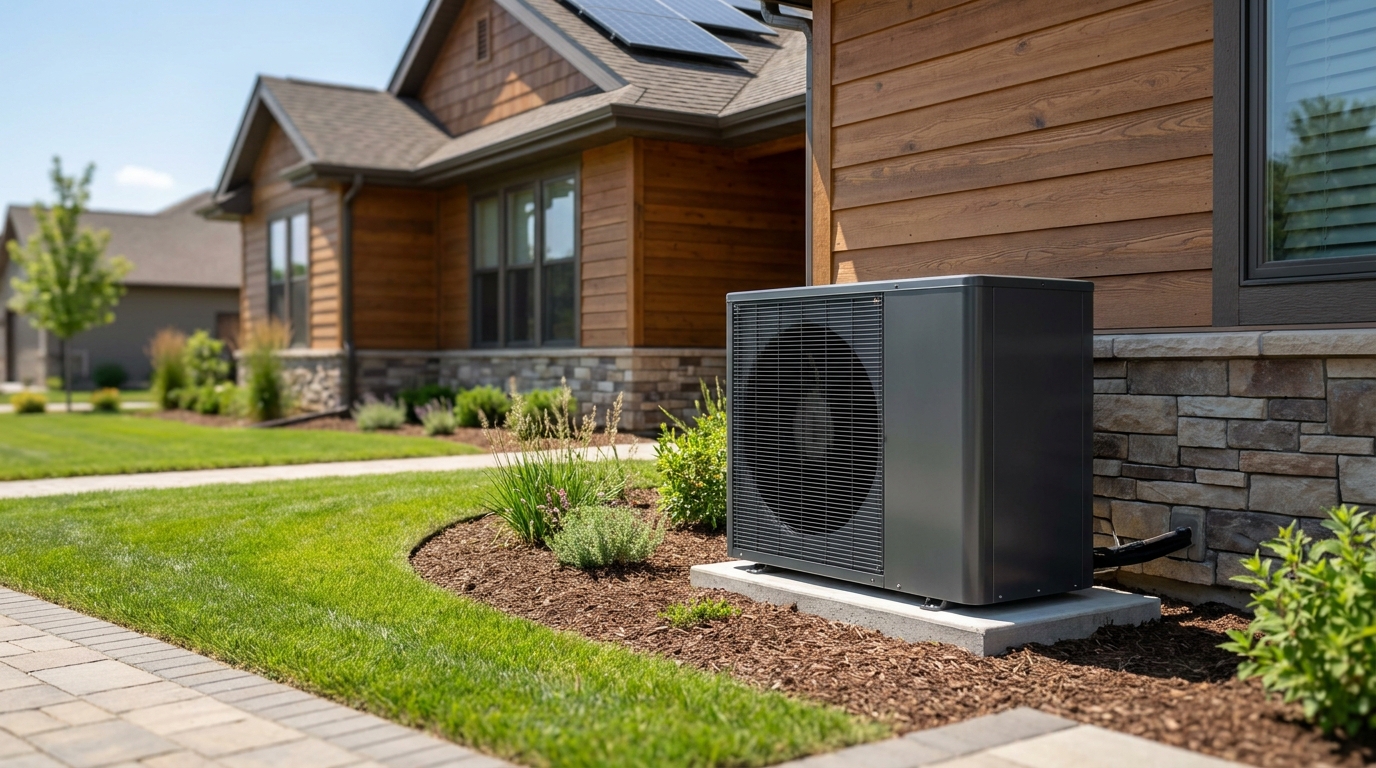
Most homeowners leave thousands of dollars on the table every year simply because their homes leak conditioned air, waste energy heating water inefficiently, or rely on outdated technology that costs far more to operate than modern alternatives. The good news is that a strategic sequence of energy-efficient upgrades can dramatically reduce utility bills, improve comfort, and pay for themselves — often within just a few years. Thanks to extended federal tax credits under the Inflation Reduction Act (IRA), which remain active through 2032, and a growing number of state-level rebate programs, 2026 is one of the best years in recent memory to invest in home energy efficiency. This guide walks through the most impactful upgrades, what they cost, what they save, and — critically — the order in which you should tackle them.
The Order of Operations: Why Sequence Matters
Before spending money on any equipment upgrade, it is essential to reduce the energy load your home requires in the first place. Installing a heat pump in a leaky, under-insulated house is like buying a high-efficiency car engine and leaving the doors open while you drive. The correct sequence is: seal and insulate first, then upgrade mechanical systems, then consider generation (solar). This approach maximizes the efficiency of every piece of equipment you install and often allows you to purchase smaller — and cheaper — systems.
1. Attic Insulation Top-Up
Why it matters: Heat rises, and in most American homes, the attic is the single biggest source of heat loss in winter and heat gain in summer. The Department of Energy recommends R-38 to R-60 for most U.S. climate zones, yet the average existing home has R-19 or less.
Typical cost: Adding blown-in cellulose or fiberglass insulation to bring an average 1,500 sq ft attic from R-19 to R-49 costs approximately $1,500–$2,500 installed.
Annual savings: Homeowners typically save $200–$600 per year depending on climate, existing insulation levels, and heating/cooling fuel type.
Payback period: Roughly 3–8 years, making this one of the fastest payback upgrades available.
Tax credits and rebates: The IRA’s 25C Energy Efficient Home Improvement Credit covers 30% of insulation costs, up to $1,200 per year. Many utility companies and states (including California, New York, and Massachusetts) offer additional rebates of $0.10–$0.25 per square foot through the forthcoming Home Efficiency Rebates (HOMES) program.
2. Air Sealing
Why it matters: Air sealing is arguably the highest-return efficiency upgrade available, yet it is the most overlooked. A typical older home loses 25–40% of its heating and cooling energy through air leaks — around recessed lights, attic hatches, plumbing penetrations, electrical outlets, and the band joist.
Typical cost: Professional air sealing with blower door testing runs $1,000–$2,500 for most homes. DIY sealing with caulk, spray foam, and weatherstripping can cost as little as $200–$500.
Annual savings: Properly air-sealed homes often save $300–$500 per year on heating and cooling alone.
Payback period: As little as 2–5 years, and often less when combined with insulation work done in the same project.
Tax credits and rebates: Air sealing is covered under the same 25C credit as insulation — 30% back, up to $1,200 per year total across insulation and air sealing. Note that your home needs to be tested to meet a specific air leakage threshold to qualify.
3. Smart Thermostat
Why it matters: You cannot optimize what you do not measure or control. A smart thermostat should be installed early in your efficiency journey so that you begin collecting baseline data on your heating and cooling consumption.
Typical cost: Smart thermostats from brands like Ecobee or Google Nest run $130–$280 installed.
Annual savings: The EPA estimates average savings of about $50–$140 per year through optimized scheduling, geofencing, and demand-response participation.
Payback period: 1–3 years, making this one of the fastest paybacks in the entire list.
Tax credits and rebates: The 25C credit provides $150 toward the cost of a qualifying smart thermostat. Many utilities (including Xcel Energy, Eversource, and Pacific Gas & Electric) offer rebates ranging from $25 to $100.
4. LED Conversion
Why it matters: If your home still has any incandescent or CFL bulbs, replacing them with LEDs is an immediate, no-installation-required upgrade that reduces both lighting energy and waste heat (which adds to cooling load in summer).
Typical cost: A whole-home LED conversion for a 3-bedroom home averages $150–$400 depending on the number and type of fixtures.
Annual savings: Replacing all remaining incandescents with LEDs typically saves $100–$250 per year in electricity.
Payback period: Usually 1–3 years, and LED bulbs last 15,000–25,000 hours, meaning they rarely need replacement.
Tax credits and rebates: LEDs themselves do not qualify for the 25C credit, but many utilities offer instant discounts at point of sale through programs like those run by CLEAResult or Franklin Energy, reducing upfront costs significantly.
5. Heat Pump (Mini-Split or Whole-House)
Why it matters: After sealing and insulating, upgrading your heating and cooling system delivers the largest energy savings of any mechanical upgrade. A heat pump moves heat rather than generating it, achieving efficiencies of 200–400% — meaning for every unit of electricity consumed, it delivers 2–4 units of heat.
Typical cost: A single-zone ductless mini-split costs $3,000–$5,000 installed. A whole-house ducted heat pump replacing a gas furnace and central AC costs $8,000–$15,000 installed, depending on size and contractor.
Annual savings: Switching from electric resistance heat to a heat pump saves $500–$1,200 per year. Switching from natural gas in mild climates saves less; in cold climates with cold-climate heat pumps (rated to -13°F), savings are highly variable but comfort and long-term cost stability are strong advantages.
Payback period: 6–12 years for whole-house systems, often faster with rebates. Mini-splits in targeted zones can pay back in 5–8 years.
Tax credits and rebates: The 25C credit covers 30% of the cost of a qualifying heat pump, up to $2,000 per year — a separate, higher cap from the $1,200 envelope upgrades bucket. Many states offer additional rebates: Massachusetts offers up to $10,000 through MassSave, New York up to $9,700 through NYSERDA, and Colorado up to $3,000 through Xcel Energy. The IRA’s High-Efficiency Electric Home Rebate Act (HEEHRA) program also provides rebates up to $8,000 for heat pumps for low-to-moderate income households.
6. Heat Pump Water Heater
Why it matters: Water heating accounts for roughly 18% of a home’s total energy use. A heat pump water heater (HPWH) uses the same refrigerant-cycle technology as a space heat pump and is 2–4 times more efficient than a standard electric resistance water heater.
Typical cost: Units from brands like Rheem ProTerra or A.O. Smith Voltex cost $1,100–$1,800 for the unit, with installation adding $300–$600 for most straightforward replacements.
Annual savings: Replacing a standard electric water heater with a HPWH saves approximately $300–$550 per year. Replacing gas water heaters saves somewhat less but eliminates gas infrastructure dependency.
Payback period: 3–6 years before incentives; often 2–4 years after the federal tax credit.
Tax credits and rebates: The 25C credit covers 30% of the cost, up to $2,000 per year (in its own category, separate from the space heat pump credit). State utility rebates are widely available — California’s BayREN and SoCalGas programs offer up to $1,000, and New England utilities commonly offer $400–$750.
7. Induction Cooking
Why it matters: Induction cooktops use electromagnetic energy to heat cookware directly, rather than heating a burner or element that then heats the pan. They are roughly 85–90% efficient versus 40% for gas and 74% for standard electric coil, and they eliminate indoor air pollutants from gas combustion including nitrogen dioxide and benzene.
Typical cost: A portable single- or double-burner induction cooktop costs $50–$150, making it an easy entry point. A full induction range runs $1,000–$2,500; high-end slide-in models from brands like GE Profile or Bosch can reach $3,000+.
Annual savings: Energy savings from induction over gas are modest — roughly $50–$150 per year — but health and safety benefits, as well as elimination of gas hookup costs, add substantial non-monetary value.
Payback period: For a portable unit, under 1 year. For a full range, 8–15 years on energy savings alone, though incentives shorten this.
Tax credits and rebates: Under the 25C credit, induction ranges qualify for 30% back, up to $840. The HEEHRA program provides rebates up to $840 for low-to-moderate income households.
8. Window Film vs. Window Replacement
Why it matters: Windows are a significant source of heat gain in summer and heat loss in winter, but full window replacement is expensive and has a very long payback period. Low-emissivity (low-e) window film is a fraction of the cost and can meaningfully reduce solar heat gain.
Window film: Professional installation of low-e window film on a typical home runs $400–$1,200 total. Annual savings of $100–$250 are typical, yielding a payback of 3–6 years.
Window replacement: New double- or triple-pane low-e windows cost $300–$900 per window installed, or $8,000–$20,000 for a whole house. Annual savings are typically $200–$450, yielding payback periods of 20–40 years on energy savings alone — a poor pure-ROI investment, though they add resale value and comfort.
The verdict: Unless your windows are single-pane, severely damaged, or you are doing a full renovation, window film delivers dramatically better ROI than replacement. Save full replacement for when windows are at end of life.
Tax credits and rebates: Replacement windows qualify for the 25C credit at 30%, up to $600 per year. Window film does not qualify for federal credits, though some states and utilities offer rebates.
9. Solar Panels
Why it matters: Once you have reduced your home’s energy load through the upgrades above, solar panels generate clean electricity to offset what remains. Installing solar on a leaky, inefficient home means you are paying to generate power your home wastes — which is why solar comes last in the sequence.
Typical cost: The average residential solar installation in 2025–2026 is approximately $2.80–$3.50 per watt before incentives, making a 8 kW system (sufficient for most electrified homes) cost roughly $22,400–$28,000 before tax credits.
Annual savings: A well-sized system in a sun-rich state like Arizona or California can offset $1,400–$2,200 in electricity costs per year. In cloudier northern states, savings are lower but still meaningful, particularly as electricity rates rise.
Payback period: 7–12 years after the federal tax credit, with panels carrying 25-year warranties and lasting 30+ years.
Tax credits and rebates: The federal Residential Clean Energy Credit (25D) covers 30% of total system cost with no dollar cap — one of the most generous credits in the tax code. On a $25,000 system, that is $7,500 back. Many states add further incentives: New York’s NY-Sun program offers rebates up to $5,000, Massachusetts offers a 15% state credit, and net metering policies in most states allow you to sell excess power back to the grid.
Putting It All Together
Done in the right sequence, these upgrades work synergistically. Air sealing and insulation reduce the load your heat pump must meet, allowing you to install a smaller, less expensive system. A smaller, more efficient home requires a smaller solar array to reach net-zero. The federal 25C credit allows you to claim up to $3,200 per year (the combined $1,200 for envelope improvements plus $2,000 for heat pump equipment), meaning a household spreading these upgrades across three to four years can capture $10,000 or more in federal credits alone.
The total investment for completing all of the upgrades in this guide — air sealing, insulation, smart thermostat, LEDs, heat pump, heat pump water heater, induction range, and solar — might run $40,000–$60,000 for a typical home before incentives, and $25,000–$40,000 after credits and rebates. The resulting annual savings of $3,000–$5,000 in energy costs put the net payback horizon at roughly 8–12 years, after which the savings are essentially permanent income. In an era of rising energy prices, that math only gets better over time.
Sources and Further Reading
- U.S. Department of Energy – Insulation R-Value Recommendations by Climate Zone: energy.gov/energysaver/insulation
- ENERGY STAR – Smart Thermostat Savings Estimates: energystar.gov/products/smart_thermostats
- IRS – 25C Energy Efficient Home Improvement Credit (2023–2032): irs.gov/credits-deductions/energy-efficient-home-improvement-credit
- IRS – 25D Residential Clean Energy Credit: irs.gov/credits-deductions/residential-clean-energy-credit
- DSIRE – Database of State Incentives for Renewables & Efficiency (state rebate lookup): dsireusa.org
- Lawrence Berkeley National Laboratory – Heat Pump Water Heater Cost Analysis: eta.lbl.gov
- EnergySage – 2025–2026 Solar Cost Data and Installer Marketplace: energysage.com/solar/solar-panel-cost
- Rocky Mountain Institute – Electrification and Heat Pump Savings Modeling: rmi.org
- MassSave Heat Pump Rebate Program: masssave.com
- NYSERDA Clean Energy Incentives: nyserda.ny.gov
