
Best Pickup Trucks for Daily Driving and Weekend Work
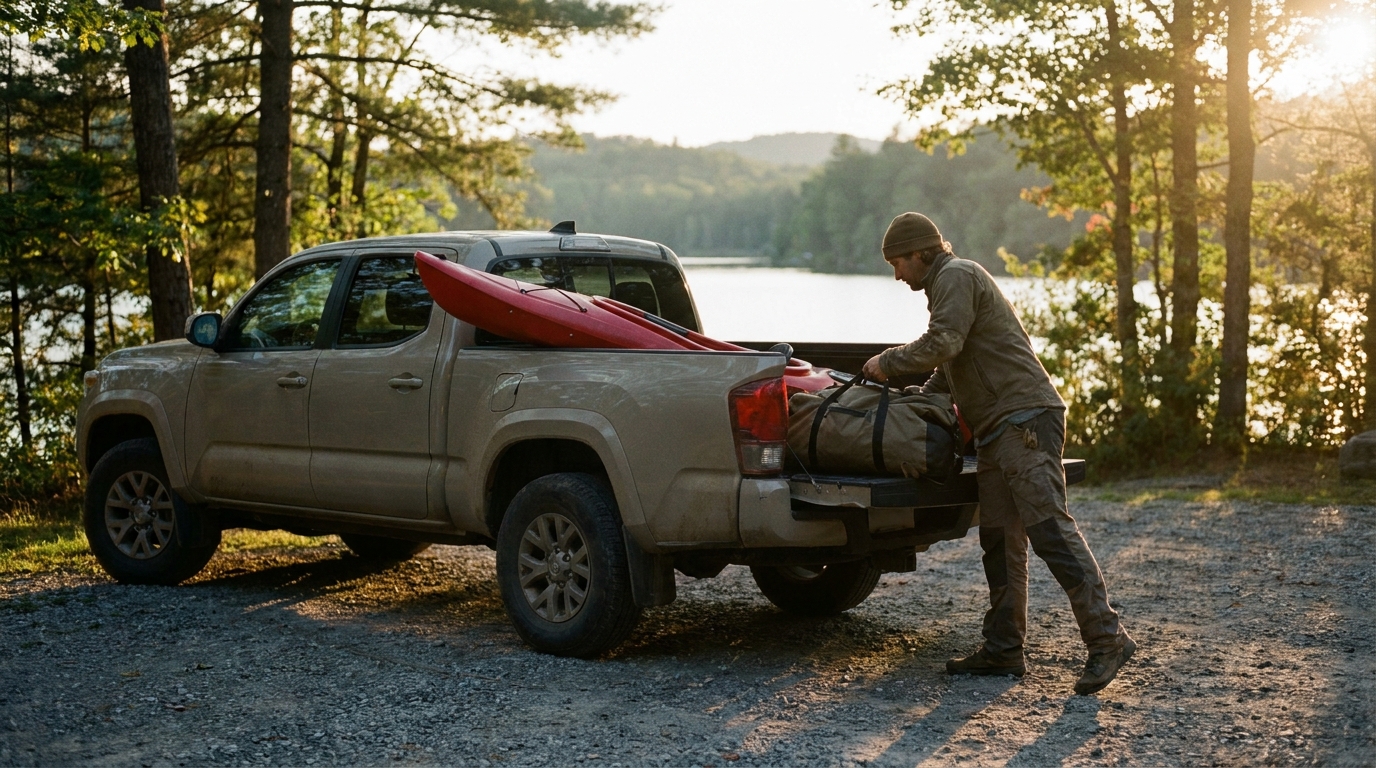
If you use your truck five days a week to commute and still need it ready to haul a trailer or a full load of lumber on Saturday morning, you’re shopping for something very specific: a vehicle that doesn’t punish you at the gas pump Monday through Friday but doesn’t flinch when the real work starts on the weekend. That combination used to mean settling for one or the other, but the current pickup market has narrowed that gap considerably. This guide breaks down six of the best dual-purpose trucks available today, covering everything from fuel economy and towing numbers to ride quality and what you’ll actually spend at the pump over a year of normal driving.
Mid-Size vs. Full-Size: The Core Trade-Off
Before diving into individual models, it’s worth understanding what you give up and what you gain by going smaller. Mid-size trucks like the Ford Ranger, Toyota Tacoma, and Chevy Colorado offer meaningful advantages in daily driving: easier parking in urban environments, lower base prices, and in most cases, better fuel economy. Their wheelbases are shorter, which makes city maneuvering genuinely easier, and their lighter curb weights reduce fuel consumption on surface streets.
The trade-offs are real, though. Mid-size trucks typically cap out between 5,000 and 7,700 pounds of towing capacity, which is fine for a boat or a small enclosed trailer but limiting if you’re pulling a fifth wheel or heavy equipment. Payload ratings are also lower — most mid-sizers land between 1,200 and 1,500 pounds — and their bed lengths are more restricted. If your weekend work regularly involves a full-size flatbed of materials, a mid-size truck will have you making more trips or strapping things down creatively.
Full-size trucks like the F-150, Ram 1500, and Chevy Silverado 1500 push towing capacity above 10,000 pounds in many configurations, offer payload over 2,000 pounds in work-spec trims, and come with longer bed options that mid-sizers simply can’t match. The trade-offs are a higher base price, worse fuel economy in stop-and-go traffic, and a larger footprint that some drivers genuinely find inconvenient in dense areas.
The Trucks: Side-by-Side Breakdown
1. Ford Ranger (Mid-Size)
MPG: 20 city / 24 highway (2.3L EcoBoost)
Towing Capacity: Up to 7,500 lbs
Payload: Up to 1,860 lbs
Bed Length Options: 5-foot box (standard)
Ride Quality: Firm but manageable; the independent front suspension takes the edge off daily commuting, though you’ll feel rough pavement
Tech Package: Sync 4 infotainment (8-inch standard, 12-inch available), wireless Apple CarPlay and Android Auto, available BlueCruise hands-free highway driving
MSRP: Starting at approximately $34,000 (XL) up to $46,000+ (Raptor trim)
Best For: Urban commuters who occasionally tow boats or ATVs on weekends
The Ranger is genuinely comfortable as a daily driver and punches above its weight on towing for a mid-sizer. Its payload numbers are competitive with some half-tons. The one notable limitation is bed length — you’re getting 5 feet regardless of trim, which restricts what you can haul flat.
2. Toyota Tacoma (Mid-Size)
MPG: 20 city / 23 highway (2.4L turbo-four, 2024+); hybrid variant available at approximately 33 combined
Towing Capacity: Up to 6,500 lbs
Payload: Up to 1,440 lbs
Bed Length Options: 5-foot or 6-foot bed depending on cab configuration
Ride Quality: Notably stiff compared to the Ranger; the solid rear axle contributes to a choppy feel over bumps with an empty bed, but off-road capability is class-leading
Tech Package: 8-inch or 14-inch touchscreen (trim dependent), wireless CarPlay, standard safety suite (Toyota Safety Sense 3.0), available multi-terrain monitor
MSRP: Starting around $32,000 (SR) to $58,000+ (TRD Pro)
Best For: Buyers who want legendary long-term reliability and occasional off-road use alongside weekend hauling
The Tacoma’s reputation for durability and resale value is unmatched in the segment. Its hybrid option is the most fuel-efficient choice in this entire guide for a non-EV. The payload number is the weakest here, and the ride remains polarizing, but for buyers who plan to keep a truck for 200,000 miles, the Tacoma’s track record is hard to argue against.
3. Chevrolet Colorado (Mid-Size)
MPG: 18 city / 22 highway (2.7L turbo-four base); 22 city / 29 highway (Trail Boss and higher trims with different tuning)
Towing Capacity: Up to 7,700 lbs
Payload: Up to 1,584 lbs
Bed Length Options: 5-foot or 6-foot
Ride Quality: Among the most refined mid-size options; the 2023 redesign brought significant improvements in cabin isolation and suspension tuning
Tech Package: 11.3-inch diagonal infotainment screen standard on most trims, Google built-in navigation, wireless CarPlay and Android Auto, available Super Cruise on higher trims
MSRP: Starting around $33,000 (WT) to $46,000+ (ZR2)
Best For: Mid-size buyers who want the most car-like daily experience without giving up weekend capability
The Colorado’s redesign made it one of the more pleasant mid-size trucks to live with daily. Its tech stack — particularly the large standard screen and available Super Cruise — rivals what you’d find in full-size trucks at lower price points. Towing capacity sits at the top of the mid-size class.
4. Ford F-150 (Full-Size)
MPG: 20 city / 24 highway (2.7L EcoBoost V6); 24 city / 30 highway (PowerBoost hybrid)
Towing Capacity: Up to 13,000 lbs (2.7L); up to 12,700 lbs (PowerBoost)
Payload: Up to 2,238 lbs
Bed Length Options: 5.5-foot, 6.5-foot, or 8-foot
Ride Quality: Excellent for a full-size truck; the independent rear suspension (unique in full-size segment alongside the Ram) provides noticeably smoother ride quality than solid-axle competitors
Tech Package: SYNC 4A with available 15.5-inch screen, Pro Power Onboard generator (available up to 7.2kW), wireless CarPlay, available BlueCruise 1.3
MSRP: Starting around $35,000 (XL) to $80,000+ (Raptor R and Limited trims)
Best For: Buyers who need genuine work capability five days a week and want the widest selection of powertrain and bed configurations
The F-150 remains the best-selling vehicle in the United States for a reason. Its combination of towing capacity, payload, powertrain variety, and technology breadth is unmatched. The hybrid option makes it the most fuel-efficient full-size non-EV option in the class and eliminates much of the daily-driver MPG penalty of going full-size.
5. Ram 1500 (Full-Size)
MPG: 17 city / 22 highway (3.6L V6); 22 city / 32 highway (eTorque mild hybrid V6)
Towing Capacity: Up to 12,750 lbs
Payload: Up to 2,300 lbs
Bed Length Options: 5.7-foot or 6.4-foot (8-foot available on Classic)
Ride Quality: The class benchmark; the available air suspension with five selectable ride heights and the coil-spring rear setup give the Ram 1500 a car-like ride that surprises most first-time drivers
Tech Package: Available 12-inch portrait or 10.1-inch landscape Uconnect screen, wireless CarPlay and Android Auto, available hands-free driving assist on select trims
MSRP: Starting around $38,000 (Tradesman) to $75,000+ (TRX and Longhorn trims)
Best For: Buyers who prioritize daily comfort and want a truck that doesn’t feel like work to drive every morning
If ride quality is your top priority, the Ram 1500 wins the full-size segment outright. The air suspension is genuinely transformative and makes highway miles in an empty pickup feel more like a luxury sedan than a work vehicle. The eTorque mild hybrid doesn’t deliver dramatic fuel savings but smooths throttle response noticeably.
6. Chevrolet Silverado 1500 (Full-Size)
MPG: 16 city / 21 highway (5.3L V8); 23 city / 30 highway (3.0L Duramax diesel)
Towing Capacity: Up to 13,300 lbs
Payload: Up to 2,280 lbs
Bed Length Options: 5.75-foot, 6.56-foot, or 8-foot
Ride Quality: Solid and predictable; the Silverado sits between the F-150’s refinement and a traditional truck feel — competent without being exceptional
Tech Package: 13.4-inch diagonal touchscreen (LT trim and above), Google built-in, wireless CarPlay, available Super Cruise on LTZ and High Country
MSRP: Starting around $37,000 (WT) to $68,000+ (High Country)
Best For: V8 or diesel loyalists who want strong towing numbers and maximum bed length options
The Silverado’s diesel option is worth highlighting for dual-purpose buyers specifically. The 3.0L Duramax delivers 30 MPG highway in a full-size truck — numbers that rival mid-size competitors — while retaining full-size towing capability. If your commute is predominantly highway, the diesel Silverado closes the mid-size fuel economy gap almost entirely.
Fuel Cost Reality Check: 15,000 Miles Per Year
At 15,000 miles annually with a national average gas price of approximately $3.40/gallon (regular unleaded, 2024 average), here’s what each truck costs to fuel per year based on a combined city/highway estimate:
| Truck | Est. Combined MPG | Gallons/Year | Annual Fuel Cost |
|---|---|---|---|
| Tacoma Hybrid | 33 | 455 | ~$1,547 |
| F-150 PowerBoost Hybrid | 27 | 556 | ~$1,890 |
| Colorado (higher trims) | 25 | 600 | ~$2,040 |
| Silverado Diesel | 26 | 577 | ~$1,962* |
| Ranger | 22 | 682 | ~$2,319 |
| Ram 1500 eTorque | 24 | 625 | ~$2,125 |
| F-150 (2.7L EcoBoost) | 22 | 682 | ~$2,319 |
| Silverado (5.3L V8) | 18 | 833 | ~$2,832 |
*Diesel prices average approximately $0.15–0.25 more per gallon, which narrows the Silverado diesel’s advantage slightly. At $3.65/gallon diesel, annual cost rises to approximately $2,106.
The Tacoma hybrid’s fuel savings over the base Silverado V8 add up to over $1,200 per year — enough to close a significant chunk of the price gap between trims in just a few years of ownership.
Trim Recommendations by Use Case
Best daily driver with light weekend towing (under 5,000 lbs): Toyota Tacoma TRD Sport or Chevrolet Colorado LT. Both offer the right balance of efficiency, reliability, and capability without overpaying for towing headroom you won’t use.
Best for frequent heavy towing (above 8,000 lbs): Ford F-150 XLT with the 2.7L EcoBoost or Silverado 1500 LT with the Duramax diesel. These are the trims where you get serious work capability without crossing into luxury pricing.
Best for highway-heavy commuters: Silverado 1500 LTZ Diesel or F-150 XLT PowerBoost. Both deliver near-30 MPG on the highway while retaining full-size work capability — the diesel and hybrid options essentially eliminate the efficiency argument for going mid-size if your miles are predominantly highway.
Best for comfort-first commuters who occasionally work the truck: Ram 1500 Big Horn or Laramie with the air suspension option. The ride quality difference on daily roads is substantial enough to justify the slightly higher price if you’re spending 45+ minutes a day in the cab.
Best overall value for dual-purpose use: Ford F-150 XLT with the 2.7L EcoBoost. Strong towing, excellent payload, competitive fuel economy, broad dealer and service network, and configurability across bed and cab options make it the most versatile single recommendation.
Final Thoughts
There’s no objectively wrong answer in the current pickup market for daily/weekend use — the question is really about where your priorities land. If you live in a city, do most of your towing under 6,000 pounds, and want the most efficient option, a mid-size truck handles daily life more gracefully and costs less to operate. If your weekends regularly involve heavy trailers, full payloads, or long beds’ worth of material, a full-size truck’s capability margins give you meaningful headroom that mid-size trucks simply can’t match. The hybrid and diesel options on both ends of the size spectrum have meaningfully closed the fuel economy gap, making it increasingly possible to own a real work truck without a fuel cost that makes daily driving painful. Run the numbers against your actual towing needs, your commute distance, and your budget ceiling — the right truck will become clear quickly.
Sources and Pricing References
- Ford F-150 MSRP and specs: Ford Official Build & Price
- Ram 1500 MSRP and specs: Ram Trucks Official Site
- Chevrolet Silverado 1500 MSRP and specs: Chevrolet Official Site
- Toyota Tacoma MSRP and specs: Toyota Official Site
- Ford Ranger MSRP and specs: Ford Official Site
- Chevrolet Colorado MSRP and specs: Chevrolet Official Site
- Fuel economy data: U.S. Department of Energy — fueleconomy.gov
- National average fuel prices: U.S. Energy Information Administration
- F-150 towing and payload specs: Ford Truck Towing Guide 2024
