
The Hidden Costs of Owning an Electric Vehicle
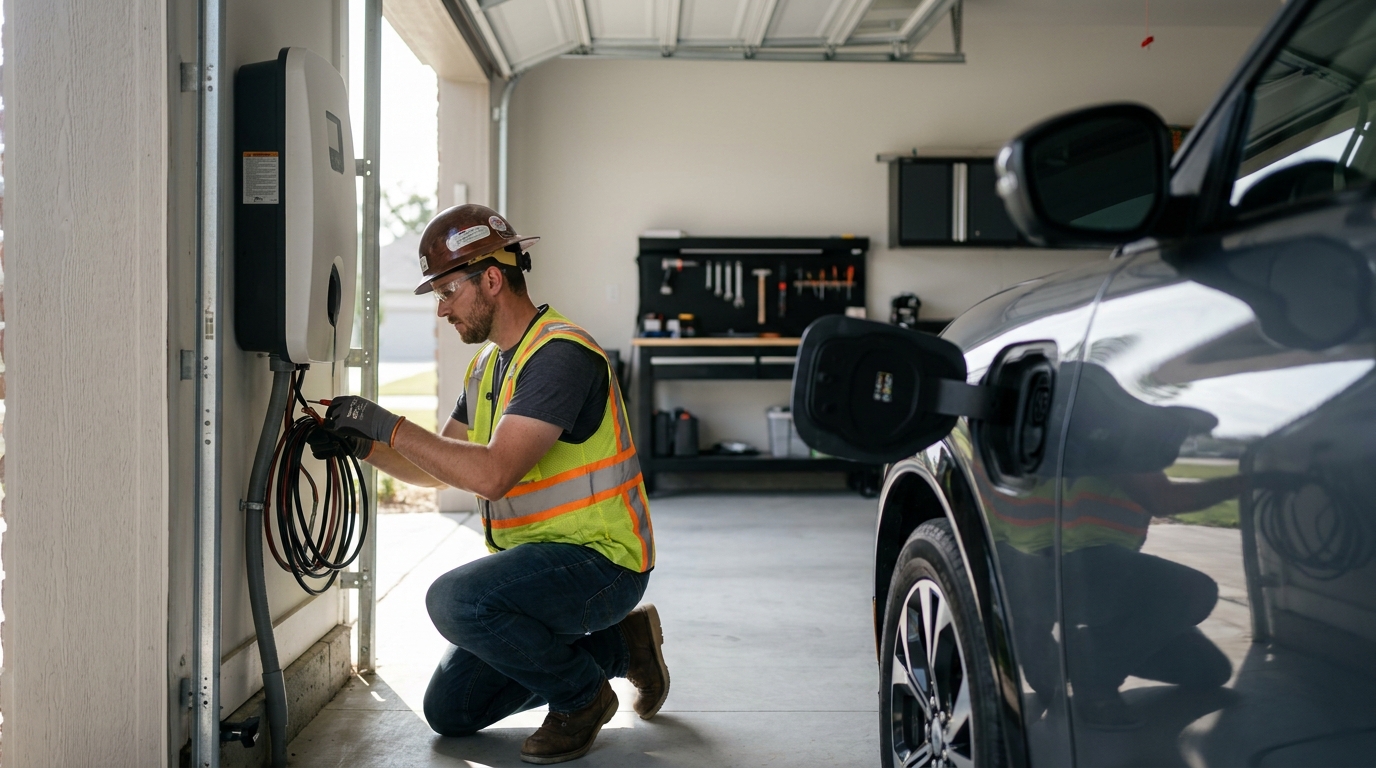
Many drivers make the switch to electric vehicles expecting immediate savings—lower fuel costs, fewer oil changes, and a smarter environmental footprint. And those savings are real. But the full financial picture of EV ownership is more complicated than the sticker price and a quick calculation of electricity versus gasoline costs. Several significant expenses tend to fly under the radar during the buying process, quietly adding thousands of dollars to your total cost of ownership over a five-year period. Understanding these hidden costs before you sign isn’t pessimism—it’s smart financial planning.
The Level 2 Home Charger: More Than Just a Purchase
Most new EV owners quickly discover that relying on a standard 120-volt household outlet—what the industry calls Level 1 charging—is impractical for daily life. Level 1 charging adds roughly 3 to 5 miles of range per hour, meaning a full charge on a 250-mile-range vehicle could take 50+ hours. The realistic solution is installing a Level 2 charger, which operates at 240 volts and can restore 20 to 30 miles of range per hour.
The hardware itself typically costs between $400 and $900 for a quality unit from brands like ChargePoint, Grizzl-E, or Emporia. But the hardware is only part of the expense. Professional installation—which involves running new wiring, potentially upgrading your electrical panel, obtaining permits, and hiring a licensed electrician—brings the total to $1,200 to $2,500 for most homeowners. In older homes with outdated panels, costs can push closer to $3,500 to $4,500 once a panel upgrade is factored in.
Federal tax credits under the Inflation Reduction Act can offset 30% of equipment and installation costs (up to $1,000), and many utility companies offer additional rebates. But even after credits, most EV buyers are looking at an out-of-pocket installation expense they hadn’t fully budgeted for.
Insurance Premiums: The Quiet 15–25% Bump
Insurance companies have spent decades building actuarial models around internal combustion engine vehicles. EVs disrupt those models in several ways: they’re more expensive to repair (specialized parts, high-voltage systems, fewer trained technicians), their large battery packs make even minor underbody damage potentially catastrophic, and replacement parts can have longer lead times.
The result is that EV drivers typically pay 15 to 25% more in annual insurance premiums compared to equivalent gasoline-powered vehicles. A 2023 analysis by Insurify found that EVs cost an average of $206 more per year to insure than gas-powered cars. For a Tesla Model 3, average annual premiums can run $2,200 to $2,800 depending on location and driving history—compared to roughly $1,800 for a comparable sedan like a Toyota Camry.
Over five years, that premium gap can easily add $1,000 to $4,000 to your total ownership cost before you’ve driven a single extra mile.
Tire Wear: The Heavy Vehicle Problem
EVs are significantly heavier than their gas-powered counterparts—primarily because of their large battery packs. A Tesla Model Y weighs approximately 4,400 pounds. A comparable Toyota RAV4 weighs around 3,600 pounds. That extra 800 pounds doesn’t disappear; it transfers directly to your tires.
Combined with the instant torque delivery that makes EVs feel thrilling to drive, this weight leads to measurably faster tire wear. Studies have indicated that EV tires may wear out 20 to 50% faster than tires on comparable ICE vehicles. EV-specific tires—which are designed to handle the weight and reduce road noise—also tend to cost more than standard tires, often running $150 to $250 per tire for mainstream models.
If a typical driver replaces tires every 40,000 miles on a gas car, the same driver might need replacements every 25,000 to 30,000 miles on an EV. Over five years and 75,000 miles of driving, this could mean one extra full set of tires—an added cost of $600 to $1,000 or more depending on the vehicle.
Battery Replacement and Warranty: What Happens After Year 8?
Battery degradation is a normal and unavoidable part of EV ownership. Most manufacturers warrant their battery packs for 8 years or 100,000 miles, guaranteeing they won’t fall below a certain capacity threshold (typically 70%). That warranty is meaningful protection during the coverage window, but it doesn’t eliminate the long-term concern.
After the warranty expires, battery replacement costs remain significant. Depending on the vehicle, a full battery pack replacement can run $10,000 to $20,000 or more. Tesla battery replacements have been quoted between $13,000 and $20,000. A Chevy Bolt battery replacement has come in around $15,000 to $16,000 before labor costs. While battery prices have fallen considerably over the past decade and continue to decline, they remain one of the most serious financial risks of EV ownership for high-mileage drivers or those holding onto a vehicle beyond the 10-year mark.
It’s worth noting that most mainstream EV owners won’t need a full battery replacement within the typical 5 to 7 year ownership window. But for buyers purchasing used EVs out of warranty, or planning long-term ownership, this cost must be part of the calculation.
Depreciation: EVs Drop Fast in Early Years
Depreciation is the single largest cost in most vehicle ownership models, and EVs have shown an accelerated depreciation curve compared to many gasoline vehicles. Rapid technology advancement is a double-edged sword: it means newer models are constantly more capable, which makes older models less desirable on the resale market.
A 2023 report from iSeeCars found that EVs depreciated an average of 49.1% over five years, compared to approximately 38.8% for all vehicles. Some models have depreciated even more sharply. The Nissan Leaf, for example, has historically lost close to 60% of its value in five years, partly because its older battery technology is viewed as dated relative to newer competitors.
High-end Tesla models have shown better value retention than some competitors, but even they aren’t immune. The broader EV market’s depreciation problem reflects consumer uncertainty about battery longevity, charging infrastructure, and how quickly the technology is evolving. For buyers financing a vehicle, rapid depreciation also increases the risk of being underwater on a loan—owing more than the car is worth.
Public vs. Home Charging Rates: Not Always the Deal You Think
One of the most cited advantages of EV ownership is the lower cost per mile for energy. Charging at home on average U.S. residential electricity rates (roughly $0.16 per kWh as of 2024) is genuinely cheaper than buying gasoline. For a vehicle consuming 3 miles per kWh, home charging works out to about $0.05 per mile, versus $0.12 to $0.15 per mile for a 30 mpg gas car at $4 per gallon.
But public fast charging flips that math considerably. DC fast-charging networks like Electrify America, EVgo, and even Tesla’s Supercharger network (for non-Tesla vehicles) charge anywhere from $0.30 to $0.48 per kWh, with some peak-time pricing pushing higher. At those rates, the per-mile cost approaches or even exceeds what you’d pay for gasoline.
Drivers who frequently travel, live in apartments without home charging access, or rely heavily on fast charging in their daily routine may find their actual energy savings far smaller than advertised. It’s also worth noting that many EV pricing comparisons use optimistic assumptions about home charging rates and don’t account for the fact that charging overnight during peak summer months in warm climates can shift electricity costs into higher tiers.
EV-Specific Registration Fees: The State-by-State Tax
As EV adoption has grown, many states have introduced additional annual registration fees specifically targeting electric vehicles. The logic from legislators is straightforward: EV drivers don’t pay gasoline taxes, which traditionally fund road maintenance. To compensate, states are adding flat annual fees ranging from modest to significant.
As of 2024, some of the highest EV registration fees include:
- Georgia: $211.49 annually
- Washington: $225 annually
- Illinois: $248 annually
- West Virginia: $200 annually
- Alabama, Arkansas, Ohio, Wyoming: $200 annually
Several other states charge between $50 and $150 per year. A handful of states, including Alaska, have no additional EV fee. Over five years, these fees can add $500 to $1,250 or more to your cost of ownership depending on where you live—an expense most buyers don’t factor into their initial calculations.
Software Subscriptions and Feature Unlocks
The automotive software subscription model has followed the same path as streaming entertainment—slowly but surely making features that once came standard into recurring expenses. This trend is particularly prevalent among EV manufacturers, who have embraced over-the-air update architecture as a platform for ongoing revenue.
BMW made headlines for charging $18/month to enable heated seats that were physically installed in the vehicle. Tesla charges $99/month or $1,200/year for its Full Self-Driving (FSD) package. GM’s Super Cruise driver assistance system runs $25/month after a trial period. Some manufacturers charge for premium navigation, enhanced audio, faster charging speeds, or app connectivity features.
While not every EV buyer will opt into these subscriptions, the architecture exists and is expanding. A driver who opts into even one mid-tier software subscription over five years is looking at an additional $600 to $1,500 in costs—for capabilities that were once either standard or didn’t exist as separate line items.
The 5-Year True Cost Example
Let’s assemble a realistic five-year cost snapshot for a hypothetical buyer purchasing a mid-range EV—think a 2024 Tesla Model 3 Standard Range or a Chevrolet Equinox EV—at approximately $42,000, driving 15,000 miles per year.
| Cost Category | Estimated 5-Year Cost |
|---|---|
| Level 2 Charger + Installation | $1,800 |
| Insurance Premium Increase (20% avg.) | $2,200 |
| Accelerated Tire Wear (1 extra set) | $800 |
| Battery (under warranty; no replacement, but degradation monitoring) | $0–$500 |
| Depreciation (49% of $42,000) | $20,580 |
| Public Charging Supplement (30% of charging at public rates) | $1,800 |
| State EV Registration Fees ($150/yr average) | $750 |
| Software Subscriptions (1 mid-tier service) | $900 |
| Total Hidden/Underestimated Costs | ~$29,330 |
Against these costs, you’d subtract genuine savings: roughly $6,000 to $9,000 in fuel savings over five years compared to a 30 mpg gas vehicle at $4/gallon, plus $1,500 to $2,500 in reduced maintenance (no oil changes, fewer brake jobs due to regenerative braking, no transmission service). Federal tax credits of up to $7,500 on eligible new EVs can significantly offset purchase costs.
The net picture is nuanced—not a clear loss, but not the simple win that showroom math often suggests. Many buyers will come out ahead overall, particularly those who can charge at home, live in states with favorable electricity rates, and take advantage of available tax incentives. But those who go in without accounting for these categories may find their five-year experience financially surprising.
The Bottom Line
Electric vehicles represent a genuine shift in how we think about transportation costs—front-loading infrastructure expenses, shifting savings into fuel and routine maintenance, and introducing new variables like battery health and software ecosystems. The math can absolutely work in an EV owner’s favor. But it works best when you’ve run the real numbers: charger installation, insurance adjustments, tire replacement cycles, state fees, and the realistic depreciation curve for the specific model you’re considering.
Buying an EV without accounting for these costs isn’t just leaving money on the table—it’s setting yourself up for budget surprises in years two, three, and four. Do the full calculation first, and the decision you make will be one you’re genuinely comfortable with.
Sources and Further Reading
- Insurify EV Insurance Analysis: https://insurify.com/insights/electric-vehicle-insurance-cost
- iSeeCars EV Depreciation Study: https://www.iseecars.com/depreciation-study
- U.S. Department of Energy – EV Charging Basics: https://www.energy.gov/eere/electricvehicles/charging-home
- IRS EV Tax Credit Information (Form 8936): https://www.irs.gov/credits-deductions/credits-for-new-clean-vehicles-purchased-in-2023-or-after
- Alternative Fuels Station Locator & Charging Costs (DOE): https://afdc.energy.gov
- State EV Registration Fee Tracker (NCSL): https://www.ncsl.org/energy/electric-vehicle-fees
- Electrify America Pricing: https://www.electrifyamerica.com/charging-your-ev/
- Tesla Supercharger Pricing: https://www.tesla.com/support/charging
- U.S. EIA Average Retail Electricity Prices: https://www.eia.gov/electricity/monthly/
